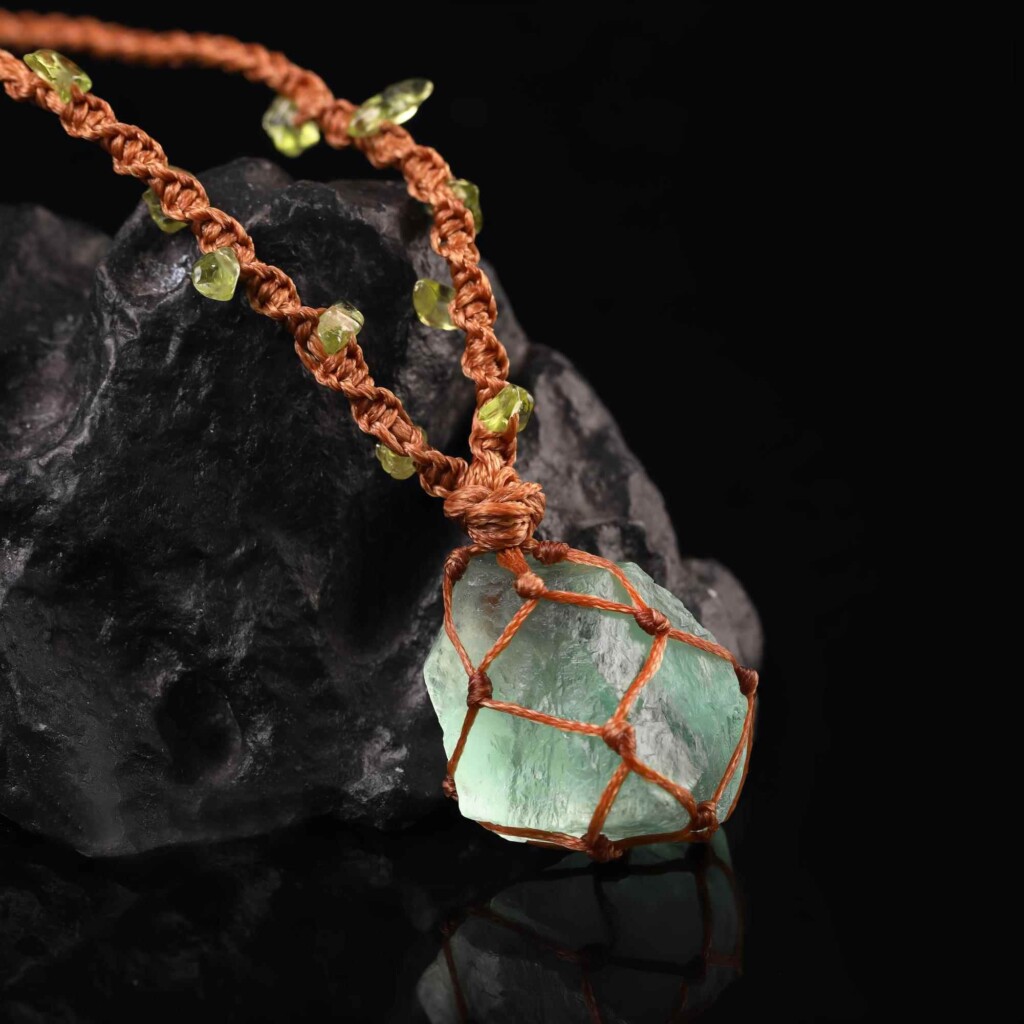
Every stone has its own silence.
Spend enough hours at a carving bench and you stop thinking of stones as materials. They behave more like people — each one does a job, and each one does it without saying much. We work with four of them at Z-OATH, and after a few hundred pendants, we’ve learned to tell them apart the way you tell old friends apart: by how they handle the quiet.
This is not a meaning chart. Meaning charts are for fortune cookies. This is what four stones actually do — on the bench, in the hand, and on the chest of the person who ends up wearing them.
Obsidian Doesn’t Talk
Obsidian stands between you and what’s coming.
It’s the friend who says nothing at the bar — and walks you to your car. There’s a reason nearly every ancient culture that found this volcanic glass reached for it when they needed a boundary: blades, mirrors, wards. Obsidian is not a conversation. It’s a door that closes in the right direction.
On the bench it behaves the same way. Obsidian is honest — too honest. It doesn’t hide a bad cut, it doesn’t forgive a lazy line, and it polishes to a black so complete it looks like a held breath. That’s why our Cthulhu, the Great Dreamer only works in this stone: an ancient thing, asleep under black water, doesn’t belong in anything that sparkles.
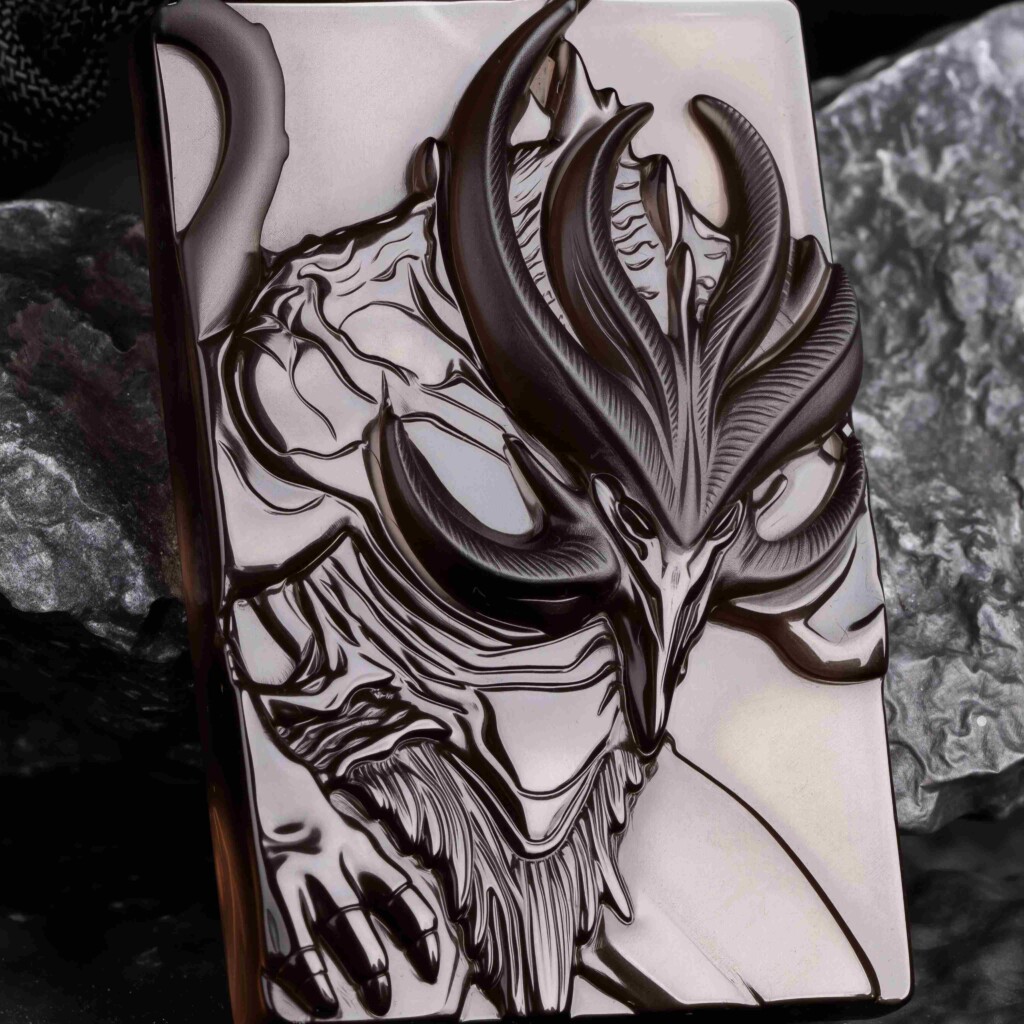
People who end up with obsidian rarely describe it as “pretty.” They say they feel watched over. Same thing, fewer words.
Purple Agate Never Chases
Purple agate is the person who walks into a room and does nothing — and everyone turns.
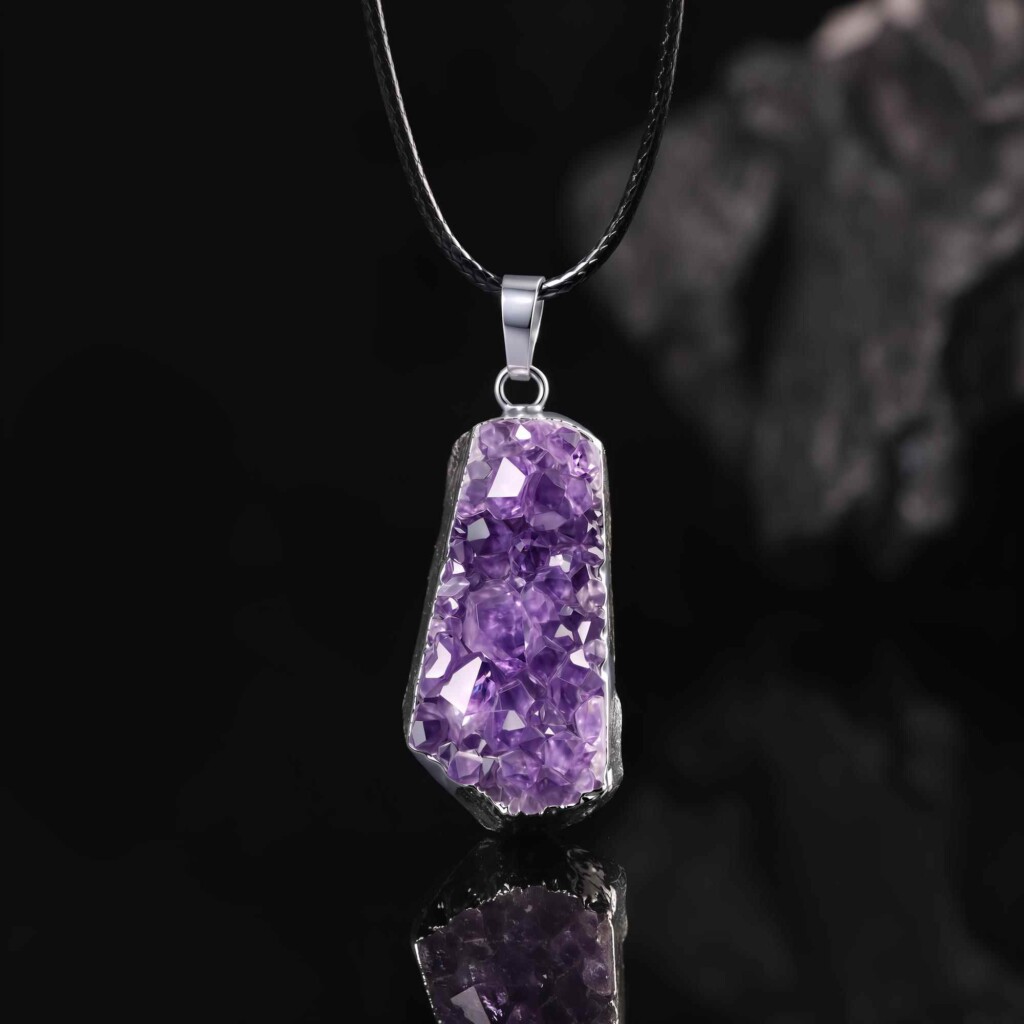
Agate forms slowly, layer over layer, band over band, in the hollows of old volcanic rock. Nothing about it is in a hurry, and it shows. Where obsidian absorbs light, purple agate holds it — a deep, low violet that doesn’t ask for attention because it already has it. In the trade this is called presence. On the street it’s called “wait, what is that?”
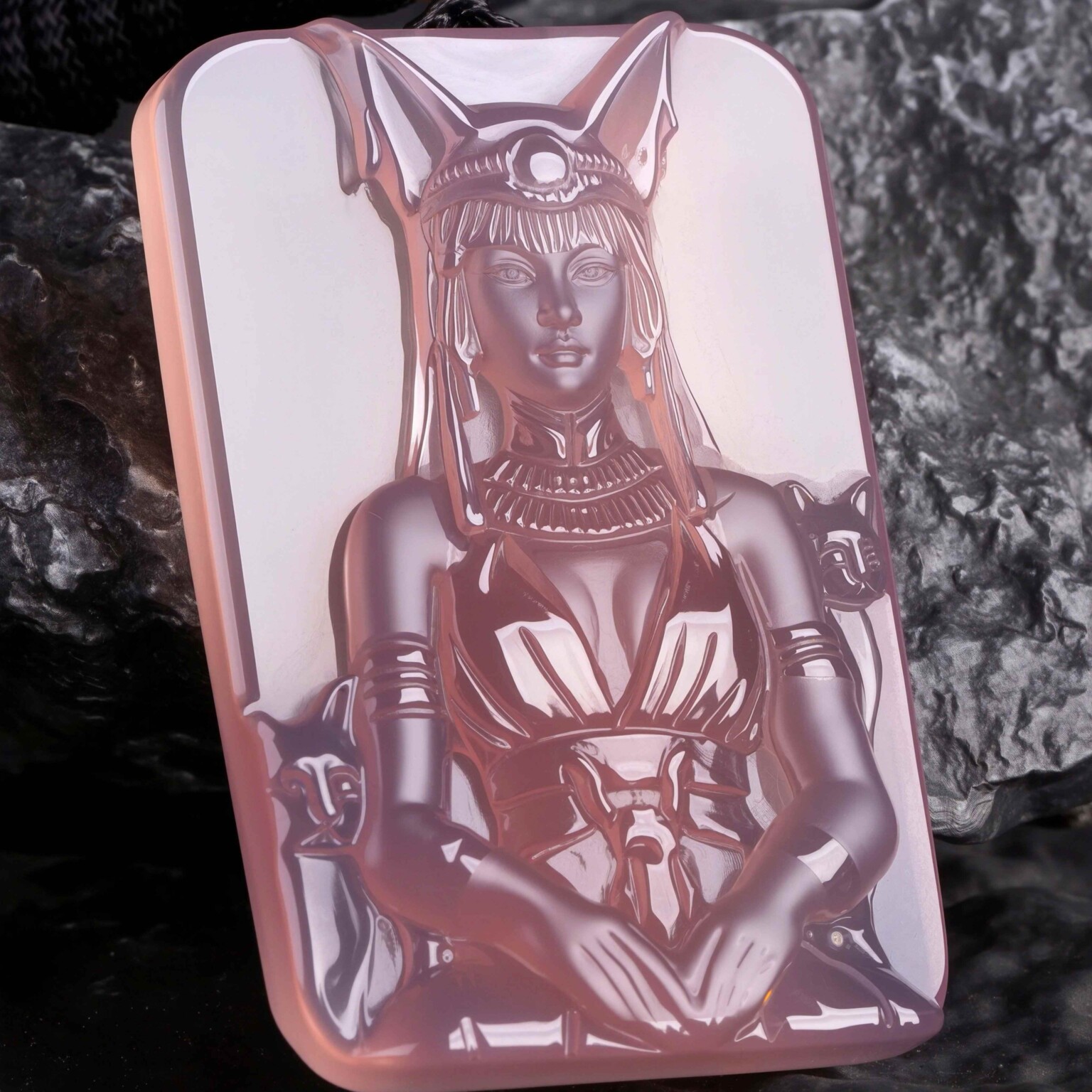
It’s the stone we reach for when a design needs authority without aggression — which is why the Egyptian Cat Goddess pendant is carved from it. Bastet was a protector who never raised her voice. Neither does the stone.
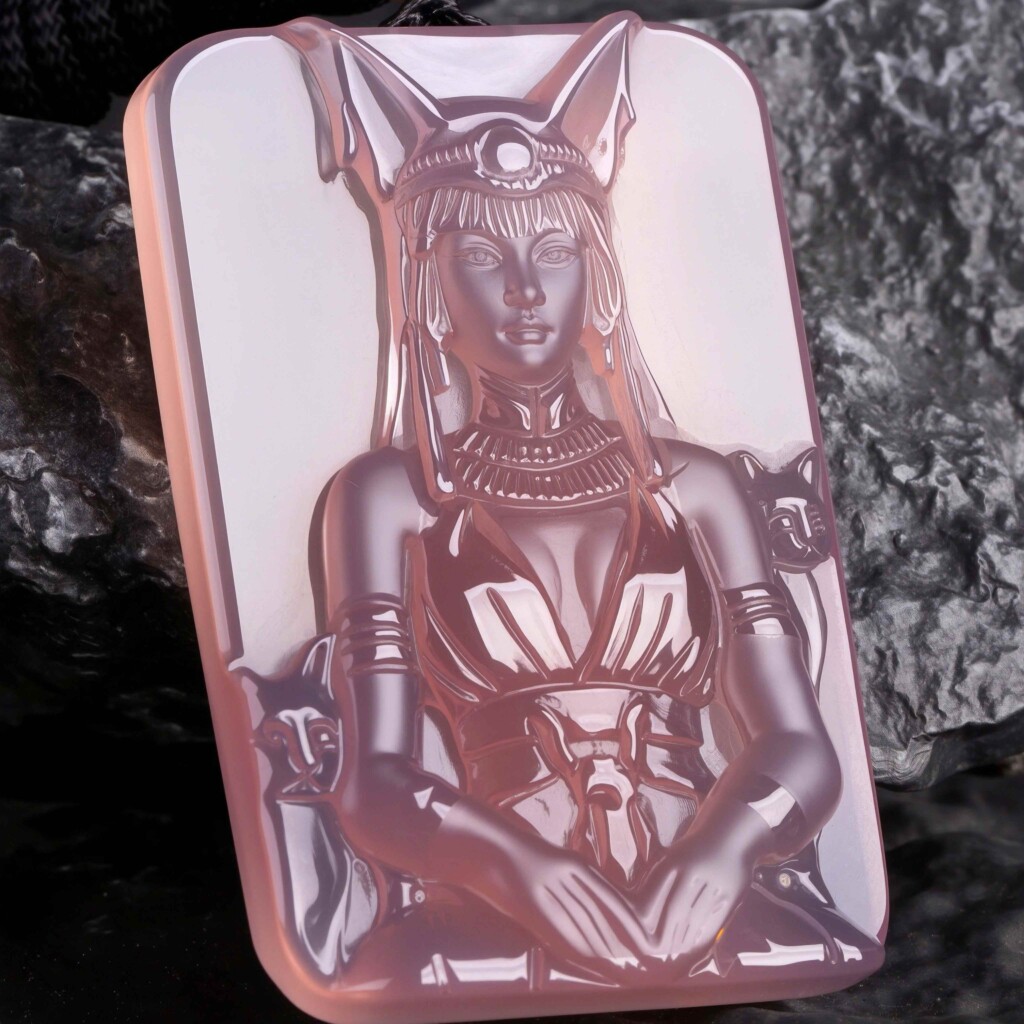
If you’ve ever been told you’re “a lot,” purple agate is the rebuttal: presence isn’t volume. It’s gravity.
Blue Chalcedony Speaks Last
Blue chalcedony speaks last, and lowest. It’s the one voice in the argument that makes everyone else go quiet.
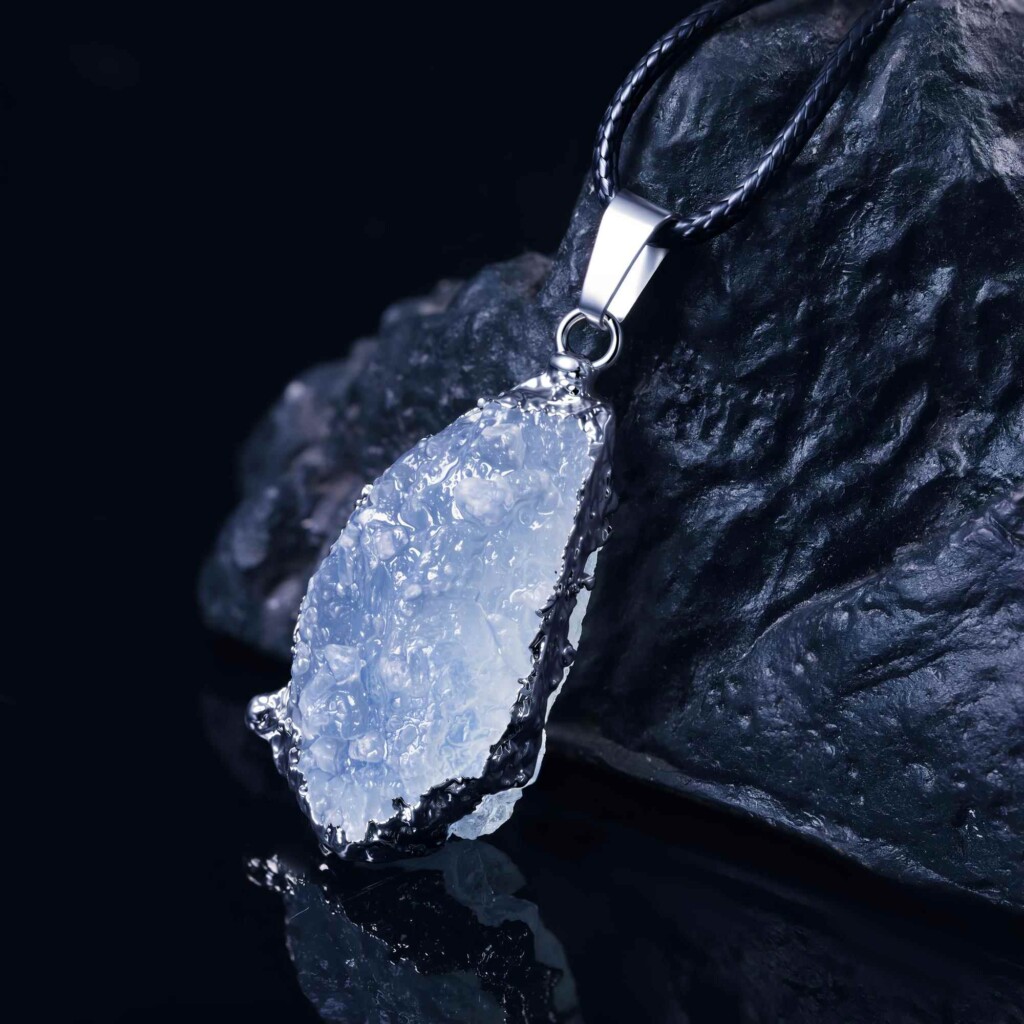
Of the four stones, this is the one first-time visitors pick up and put down the longest. Light doesn’t sit on blue chalcedony — it sinks about a millimeter in and glows there, a dusk-blue that looks like the last ten minutes before full dark. Gem cutters call that soft inner light “adularescent calm’s quieter cousin.” We just call it the stone that de-escalates.
Carving it is an exercise in restraint. Push too hard and the stone bruises; stay patient and it gives you depths no paint could fake. It carried the face of a pharaoh who ruled by silence in our Black Pharaoh pendant — a design about the kind of power that never needs to announce itself.
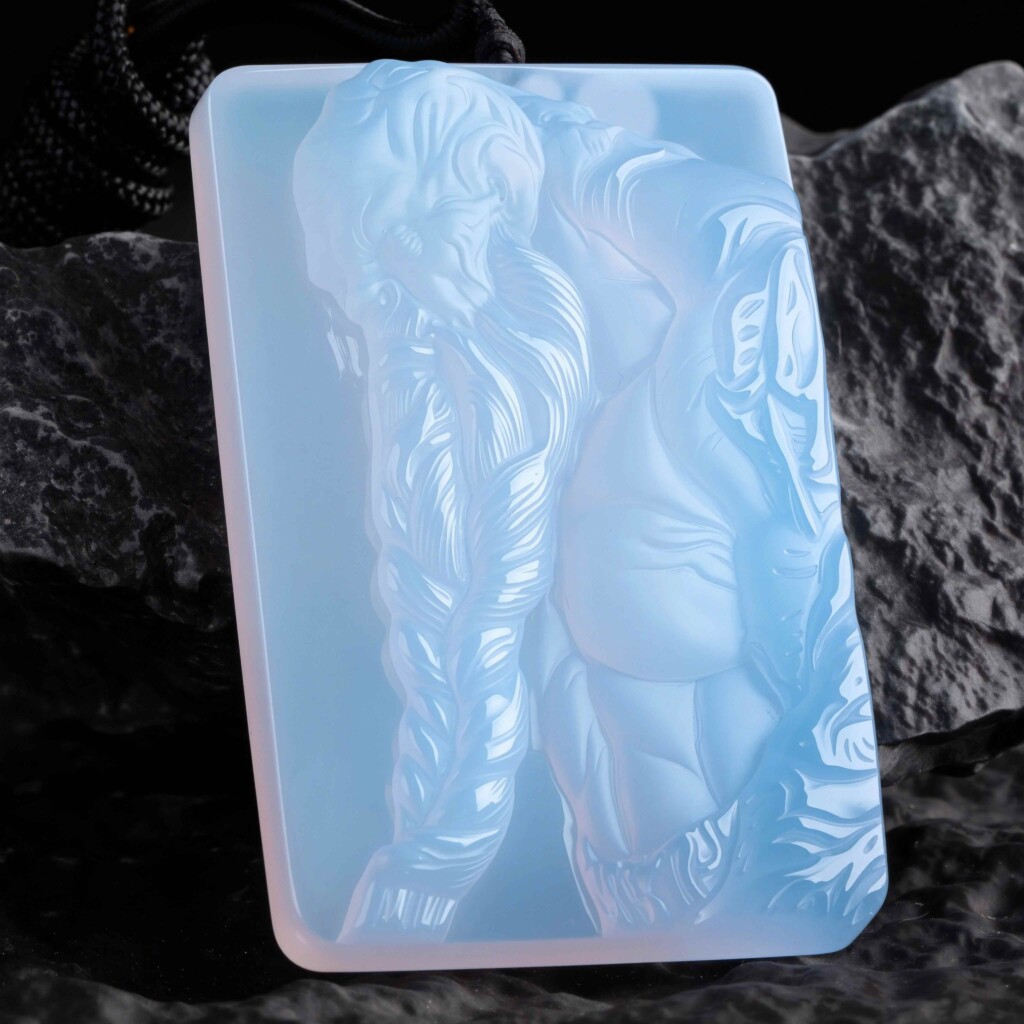
The people who claim this stone tend to be the ones their friends call when things get loud. They know who they are.
White Agate Is a Clean Page
White agate is the friend who listens to your whole mess, then says: start over. I’ll be here.
It’s the most underestimated of the four — no black drama, no violet gravity, no dusk glow. Just a milky, translucent calm that takes light the way fresh paper takes ink. Cultures from Mesopotamia to the Silk Road carried white agate as a traveler’s stone: not a weapon, not a ward — a reset button you could hold.
On the bench it’s the most unforgiving about clutter. Every unnecessary line shows, so the carving has to be clean or it has to be redone. That discipline is exactly why The Silent One lives in white agate: a design about saying only what matters, in a stone that tolerates nothing extra.
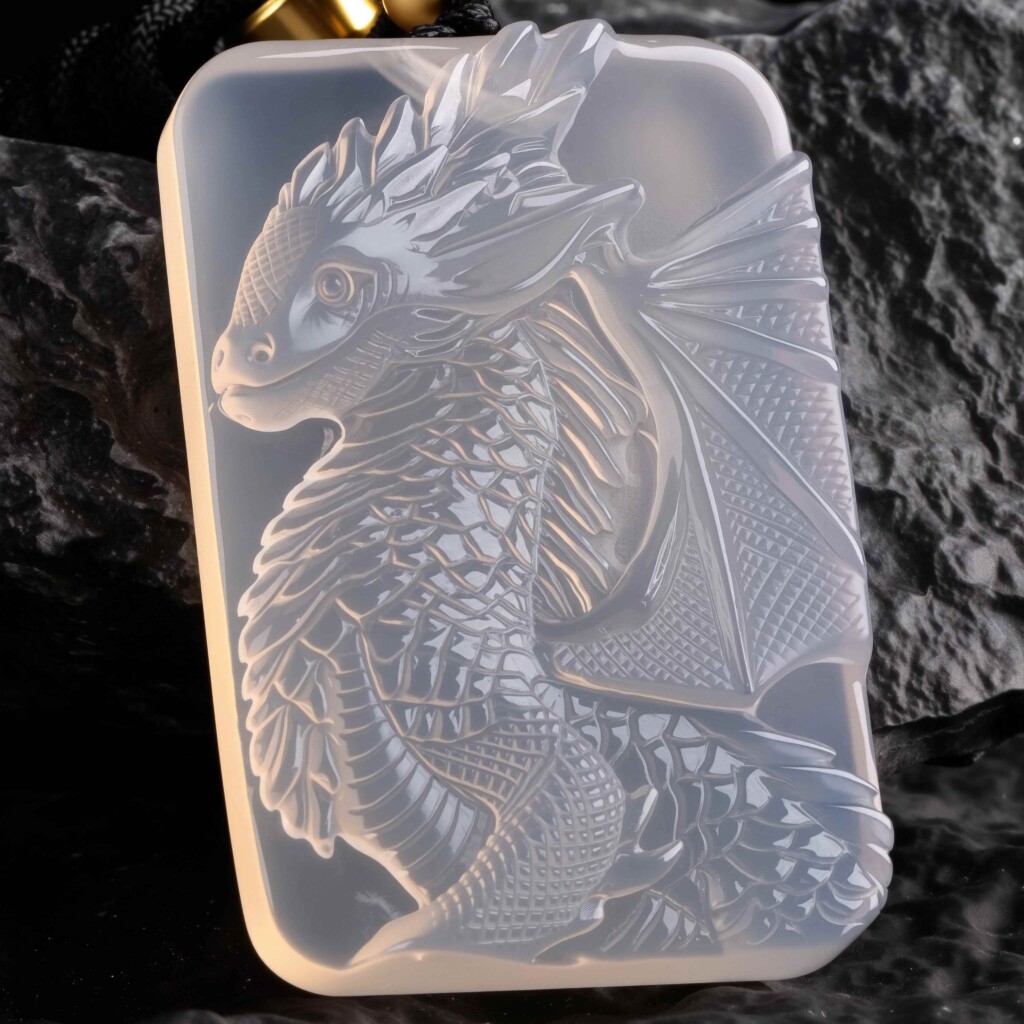
People choose white agate at beginnings: new city, new year, new self. It doesn’t judge the old draft. It just holds the new one.
Four Silences, Four Jobs
From the workbench: a raw stone cannot be cast the way metal is. The only way a god enters the material is through the blade, the thumb, and the hours.
You don’t choose a stone. It claims you.
We’ve watched it happen hundreds of times now — someone arrives looking for the dramatic black one and leaves with the quiet blue. Someone buys the “pretty” violet and realizes weeks later they reach for it on the days they need to feel unshakable. The stone knows its job before you do.
Which silence is yours? The boundary, the gravity, the calm, or the clean page — the full collection is here. Take your time. They’re not going anywhere. They’ve already waited a few hundred million years.
Frequently Asked Questions
Which stone should I choose if I can’t decide?
Don’t choose from a chart. Read the four descriptions and notice which one makes you quietly nod — that’s the one. People rarely pick the stone they wish they were; they pick the one that already does their job. If two pull at you, take the quieter pull. It’s usually the honest one.
Is every pendant really hand carved?
Yes — no molds, no batches. Each piece begins as a raw slab of natural stone and a pencil sketch, then is cut line by line with hand tools, machine rough-polished, and hand-finished. Figure roughly nine hours of bench work per pendant, plus a few hundred million years for the stone.
Are these stones natural?
Yes. We work with natural obsidian, purple agate, blue chalcedony, and white agate. Natural stone carries its own veining, bands, and translucency — the carving is planned around what the slab already shows, which is why hand work suits these materials better than casting ever could.
How do I care for a carved stone pendant?
Keep it simple: wipe with a soft dry cloth after wearing, store it away from harder gems that could scratch it, and avoid ultrasonic cleaners and harsh chemicals. Stone is durable, but carved detail deserves the same respect you’d give any small sculpture.
Is a stone pendant a good gift if I don’t know their “vibe”?
That’s the trick — you probably do. Think of them as a friend: the one who walks you to your car (obsidian), the one who enters a room and turns it (purple agate), the one whose quiet ends arguments (blue chalcedony), or the one who tells you to start over and stays (white agate). You’re not guessing a stone; you’re recognizing a person.