TL;DR
- An amulet necklace is a pendant worn for personal meaning — the word comes from the Latin amuletum, an object carried for what it represents to its wearer.
- Amulets have been worn for at least 5,000 years, from Egyptian scarabs to Roman bullae to medieval pilgrim badges; the full timeline appears in the history table below.
- Black obsidian became a classic amulet stone because ancient cultures valued its glass-dark surface and sharpness, not because of any verified modern property.
- A hand-carved stone amulet takes roughly nine hours of blade work from rough selection to final polish; the process section explains what that means for the piece on your chest.
- Choosing an amulet necklace comes down to stone, subject, weight, and chain — the final section gives a practical checklist, plus examples from our Occult Amulets collection.
What Is an Amulet Necklace?
An amulet necklace is a necklace whose pendant carries meaning for the person wearing it. The English word “amulet” traces back to the Latin amuletum, used by Roman writers such as Pliny the Elder for objects people carried for personal significance.
The definition matters because it separates an amulet necklace from ordinary fashion jewelry. A fashion pendant exists to decorate. An amulet pendant exists to be chosen — the wearer picks a figure, a stone, or a symbol and assigns it a private meaning. That meaning belongs to the wearer, not to the maker.
Three traits mark an amulet necklace in practice:
- A chosen subject. The pendant depicts something specific — a deity, an animal, a mythic figure, a sign.
- A deliberate material. Stone, metal, bone, or clay is selected for what it is, not only for how it shines.
- A personal reason. The wearer knows why this piece and not another.
How Did Amulet Necklaces Evolve Through History?
Amulet necklaces have appeared in nearly every documented culture for roughly five millennia. The table below summarizes the major stages, based on standard archaeological and museum records.
| Period | Region | Typical amulet form |
|---|---|---|
| c. 3000 BCE | Ancient Egypt | Scarab and deity pendants in stone and faience |
| c. 2000 BCE | Mesopotamia | Cylinder-seal pendants worn on cords |
| c. 700 BCE | Ancient Rome | The bulla, a locket-style pendant given to children |
| c. 500 BCE | Ancient Greece | Carved gem pendants depicting gods and gorgons |
| Middle Ages | Europe | Pilgrim badges and reliquary pendants |
| 1500s–1800s | Global trade era | Carved stone and coral talismanic jewelry across continents |
| Today | Worldwide | Hand-carved stone pendants chosen for personal meaning |
The Egyptian scarab is the most documented early example. Scarab amulets in steatite and other stones have been excavated in large numbers, and many were drilled or mounted for suspension on a cord — in other words, worn as necklaces.
The Greek gorgon is the example most relevant to our own work. Gorgoneion images — the face of Medusa — appeared on pendants, coins, and armor across the Greek world. The motif survives today in hand-carved Medusa necklaces, which continue a design lineage over two thousand years old.
Why Did Black Obsidian Become the Classic Amulet Stone?
Black obsidian became a classic amulet material because ancient cultures prized its appearance and its working properties. Obsidian is volcanic glass, and a polished obsidian surface holds a deep, mirror-dark black that few other stones can match.
Mesoamerican cultures worked obsidian extensively. Aztec and earlier Mexican artisans knapped obsidian into blades, mirrors, and ritual objects, and obsidian from Mexican sources moved along trade routes across the region. Historical records describe obsidian mirrors used by figures such as the Aztec deity Tezcatlipoca, whose name translates roughly as “Smoking Mirror.”
None of this history proves anything about what obsidian does for a modern wearer. Historical belief is context, not evidence. What the history does explain is why a black stone pendant still reads as serious and deliberate today — the visual language of dark stone as meaningful material is thousands of years old and widely recognized.
From a carver’s perspective, obsidian also sets the terms of the work. Obsidian is as brittle as glass, and a careless cut chips an edge that no polish will hide. That brittleness is one reason a hand-carved obsidian pendant carries more labor value than its size suggests.
How Is a Hand-Carved Stone Amulet Necklace Made Today?
A hand-carved stone amulet necklace at Z-OATH takes roughly nine hours of carving per piece. That single figure covers the full making process from rough selection to final polish; design sketches happen before the clock starts.
The work is done with electric rotary carving tools guided entirely by hand. The carver controls the angle, depth, and direction of every cut, and four to five different tools rotate in and out as the detail level changes.
Faces demand the most attention. A fraction too much pressure collapses a cheek or a brow, and stone does not forgive — a cut too deep cannot be unmade. Obsidian adds its own risk: the material is brittle enough that a piece can snap near the end of the process, and a broken corner means the entire pendant is scrapped rather than repaired.
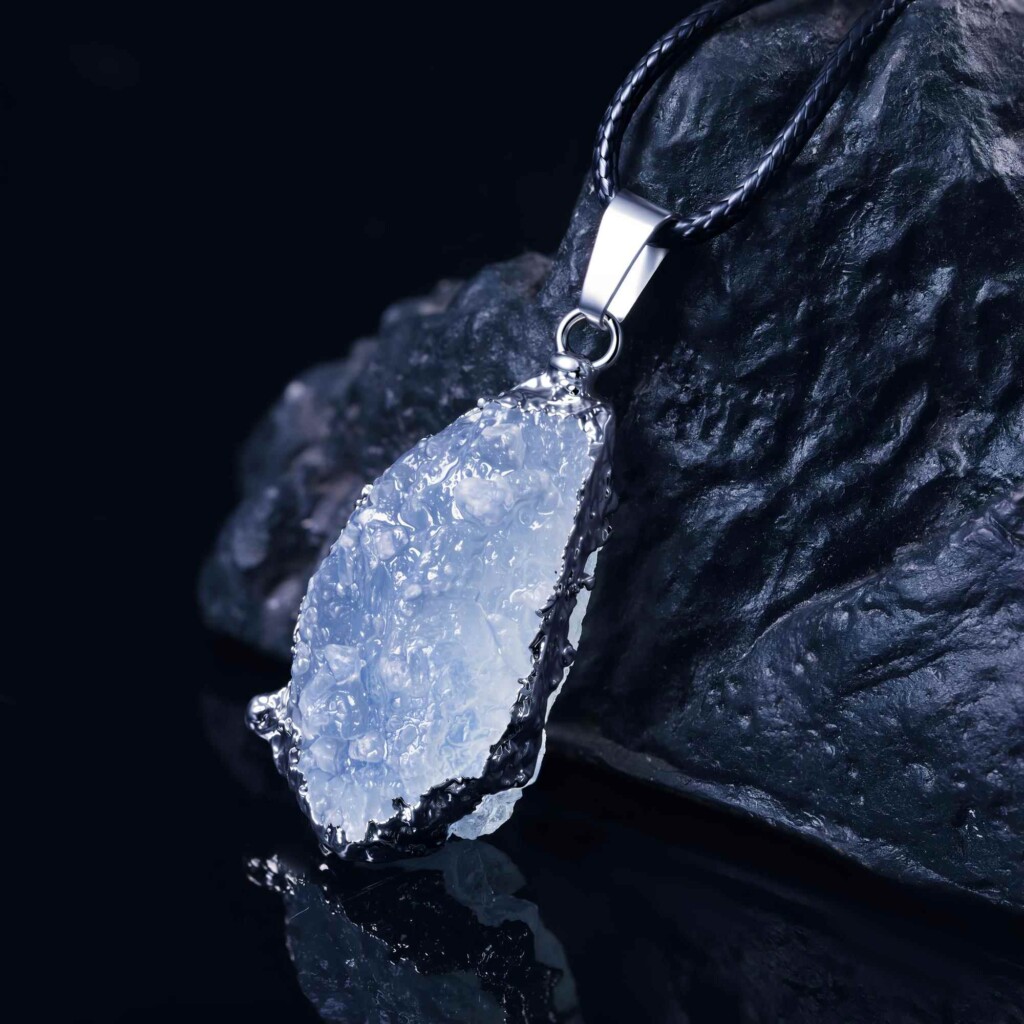
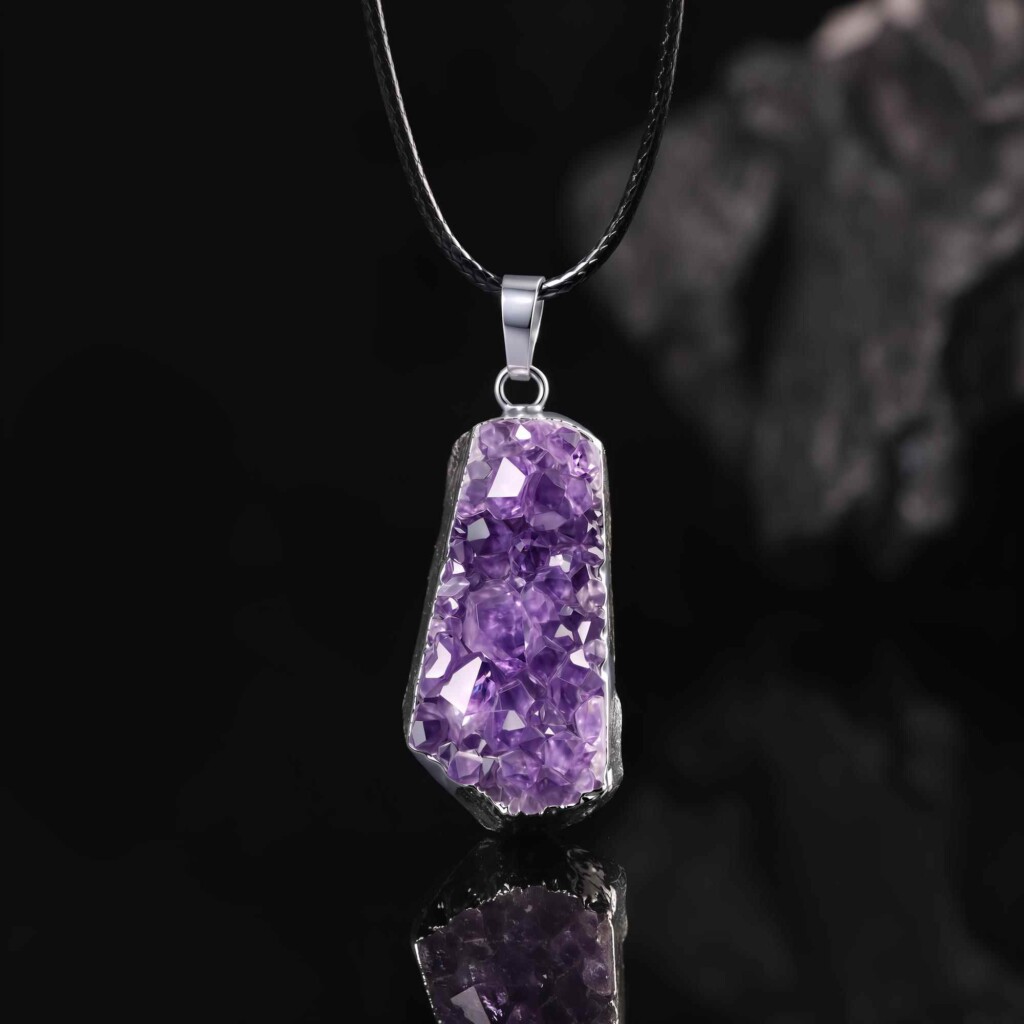
Our studio comes from a Chinese jade-carving background, and that training shows in the discipline of the cuts rather than in the material. None of our pieces are jade. Every Z-OATH pendant is carved from one of four natural stones: black obsidian from Mexico and the United States, purple agate from Brazil, blue chalcedony from Turkey, and white agate from Madagascar.
How Do You Choose an Amulet Necklace You Will Actually Wear?
Choosing an amulet necklace works best as a short, honest checklist. The right piece is the one that survives contact with your actual wardrobe and your actual habits.
- Pick the subject first. A figure you already think about — Medusa, a zodiac sign, a mythic creature — will outlast a figure chosen only for looks.
- Match the stone to your palette. Black obsidian pairs with almost anything; purple agate and blue chalcedony ask for more deliberate outfits.
- Respect the weight. Stone is heavier than metal of the same size; a pendant you forget you are wearing gets worn, and a pendant that pulls at your collar stays in a drawer.
- Check the chain length against your collars. A pendant should land where your shirts open, not fight with them.
- Decide your own meaning. An amulet necklace holds whatever reason you bring to it, and no maker can assign that reason for you.
Our Occult Amulets collection gathers the darker end of our range — gorgons, elder gods, and dream-witches carved in obsidian and agate. For a specific example of obsidian work, The Patient One shows what nine hours of blade work looks like in black volcanic glass.
Why Does the Amulet Necklace Still Matter?
The amulet necklace has survived five thousand years because it answers a need that fashion jewelry does not. Clothing decorates the body; an amulet records a decision. People have always wanted one object that says this is mine, and I chose why.
Stone remains the honest material for that job. Stone is older than any brand, heavier than any trend, and indifferent to seasons. A hand-carved stone pendant does not promise anything — it simply keeps whatever meaning its wearer has sworn into it.
If that idea fits you, browse the Occult Amulets collection and take your time. Wear your oath.