TL;DR
- Obsidian is natural volcanic glass, and most jewelry-grade obsidian comes from Mexico and the United States.
- A good obsidian pendant shows a deep, even black body with a glossy, scratch-free polish on both faces.
- Obsidian is brittle like glass, so the carving method decides whether fine detail survives at all.
- Every Z-OATH pendant takes about 9 hours of hand carving from rough stone selection to final polish.
- Obsidian pendants need simple care: avoid hard knocks, store the pendant alone, and clean the stone with a soft damp cloth.
What Is Obsidian, Exactly?
Obsidian is natural volcanic glass. Lava cools so fast that crystals never form, and the result is an amorphous glass with a deep black body.
Most jewelry-grade obsidian comes from Mexico and the United States. Ancient Mesoamerican cultures shaped obsidian into blades, mirrors, and ritual objects because the stone fractures into edges sharper than steel. Historical belief is context, not evidence — what obsidian means to a wearer today is the wearer’s own choice.
Obsidian breaks with a conchoidal fracture. A conchoidal fracture is the same shell-shaped break you see on window glass. This single property explains both the stone’s beauty and its difficulty.
How Do You Judge the Quality of an Obsidian Pendant?
A buyer can judge an obsidian pendant with three visible checks:
- Body color. Quality obsidian shows a deep, even black across the whole face. Brown or gray patches are natural variations, and strong patches distract from a carved face or figure.
- Polish. A well-finished pendant reflects light in a clean, glossy plane. Dull patches or visible tool haze mean the final polishing stage was rushed.
- Edge integrity. Thin details such as hair strands, fingers, or wing tips should end in clean lines. Chipped or rounded-off edges signal either careless carving or a knock after finishing.
These three checks work in person and in close-up product photographs. A seller who avoids macro photographs is a seller worth questioning.
Why Does the Carving Method Decide What Obsidian Can Become?
Obsidian is brittle like glass. A carving tool that pushes too hard or too fast does not cut the stone — it snaps the stone.
Machine casting dominates the jewelry industry because casting is fast and repeatable. Casting also rounds every edge, because molten metal fills a mold without resistance. Obsidian cannot be cast at all, so obsidian jewelry is either carved or pressed from powder.
Hand carving works with the stone’s brittleness instead of against it. A carver controls the angle, depth, and direction of every pass. The carver feels the moment the stone starts to resist and changes approach before the stone breaks.
Every Z-OATH pendant takes about 9 hours of hand carving, from rough stone selection to final polish. Roughly 15% of pieces break or crack during carving and never reach the store — that figure is the founder’s own workshop report, not an industry statistic. A crack near the end of 9 hours of work means the whole piece is lost, because obsidian cannot be repaired invisibly.
The carver’s background matters here. Z-OATH’s founder trained in Chinese jade carving, a tradition built on stones harder than jade itself — agate and chalcedony routinely chip carving blades. That discipline transfers directly to obsidian: slow passes, shallow cuts, and constant attention to stress lines. No Z-OATH product is jade; the jade-carving background describes where the craft comes from, not the material.
How Does Obsidian Compare to Other Pendant Stones?
Obsidian is one of four natural stones Z-OATH carves. Each stone suits a different wearer:
| Stone | Origin | Look | Best fit |
|---|---|---|---|
| Obsidian | Mexico / USA | Deep black, glass-gloss finish | Dark, sculptural designs; sharp shadow contrast |
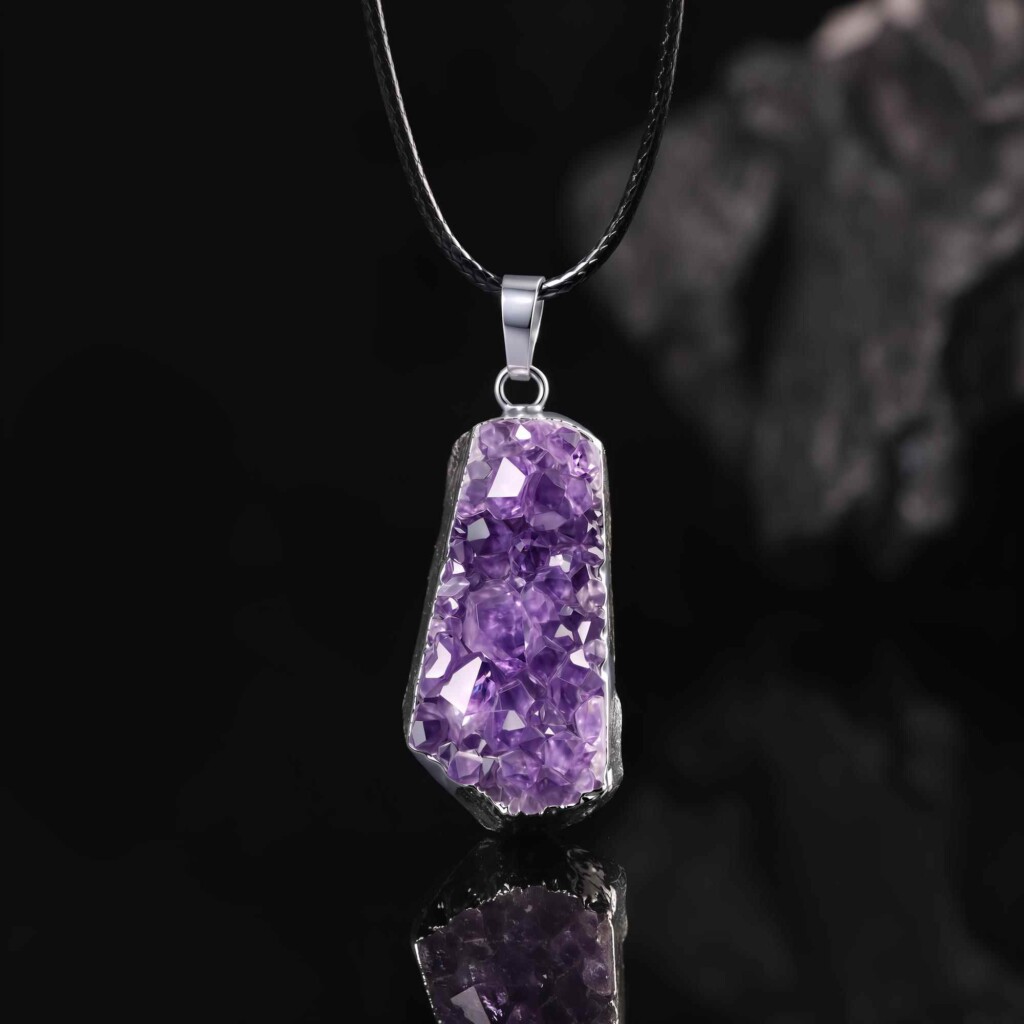
| Purple agate | Single vein in Brazil | Violet to lavender banding | Wearers who want color with the same carved depth |
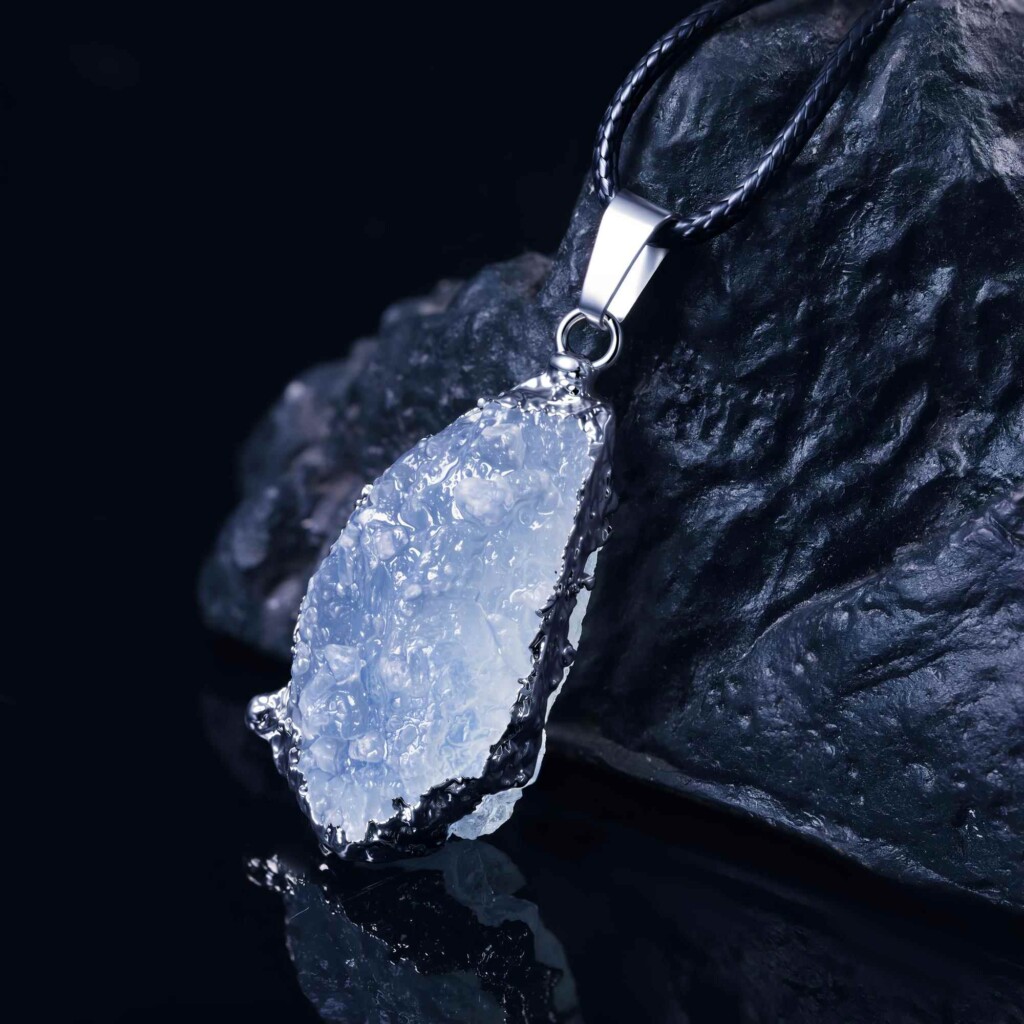
| Blue chalcedony | Turkey | Soft translucent blue | Lighter, calmer pieces; lower yield per rough stone |
| White agate | Madagascar | Milky white, sometimes warm-toned | High-contrast carving; clean minimal look |
Obsidian gives the strongest silhouette of the four stones. A carved face in obsidian reads clearly from across a room because the black body throws every highlight forward.
How Do You Care for an Obsidian Pendant?
Obsidian care is simple, and obsidian care is mostly about avoiding impacts:
- Avoid hard knocks. Obsidian chips when the stone strikes tile, stone counters, or another pendant.
- Store the pendant alone. A separate pouch or box keeps obsidian away from metal chains and harder stones.
- Clean with a soft damp cloth. Mild soap and water are safe; ultrasonic cleaners are not, because vibration can open existing micro-fractures.
- Check the bail and cord monthly. The stone usually outlasts the hardware.
Z-OATH orders carry a 30-day return policy, so a pendant that arrives with a problem goes back without argument.
Where Should You Start?
A first obsidian pendant should match the wearer’s taste in stories, because the stone itself will outlast any trend. The Z-OATH occult amulets collection gathers the dark mythology line in one place, and Cthulhu the Great Dreamer ($69) shows exactly what 9 hours of hand carving does to black glass — every tentacle ends in a clean, deliberate line.
Choose the figure that means something to you. The meaning is yours to give; the craft is already there.