TL;DR
- Agate is a banded microcrystalline quartz, hard enough to hold fine carved detail for decades — the section “What is agate?” covers the material basics.
- Z-OATH works two agates: purple agate from a single Brazilian vein and white agate from Madagascar — the comparison table below shows how they differ from obsidian and blue chalcedony.
- Hand carving matters more on agate than on softer stones because agate is harder than jadeite and snaps cutting blades — the carving section explains what roughly 9 hours of hand work actually buys you.
- Judging an agate pendant comes down to four checks: color evenness, banding, face detail, and edge finishing — the checklist section lists them one by one.
- Agate pendants need almost no special care beyond a soft cloth and a separate pouch — the care section gives the full routine.
What is agate, and why do carvers use it for pendants?
Agate is a variety of chalcedony, which is a microcrystalline form of quartz. Agate forms in layers, and those layers produce the bands and color zones that make every agate pendant visually distinct.
Agate ranks around 6.5 to 7 on the Mohs hardness scale. That hardness means an agate pendant resists scratches from daily wear, including contact with keys, zippers, and other jewelry in a drawer.
Carvers value agate for a specific reason: hardness holds detail. A face carved into agate keeps its eyelids, lips, and brow lines crisp after years of wear. A face carved into a softer material rounds off over time.
Historical records show agate carved into seals, beads, and amulets across Mesopotamia, Egypt, and Rome. Historical belief is context, not evidence — those traditions tell us people valued the stone, not that the stone does anything for a wearer today. Whatever an agate pendant means now is meaning the wearer assigns to it.
Purple agate vs. white agate: what is the difference?
Z-OATH carves two members of the agate family, and the two behave differently in the studio and on the neck.
| Stone | Origin | Look | Studio notes |
|---|---|---|---|
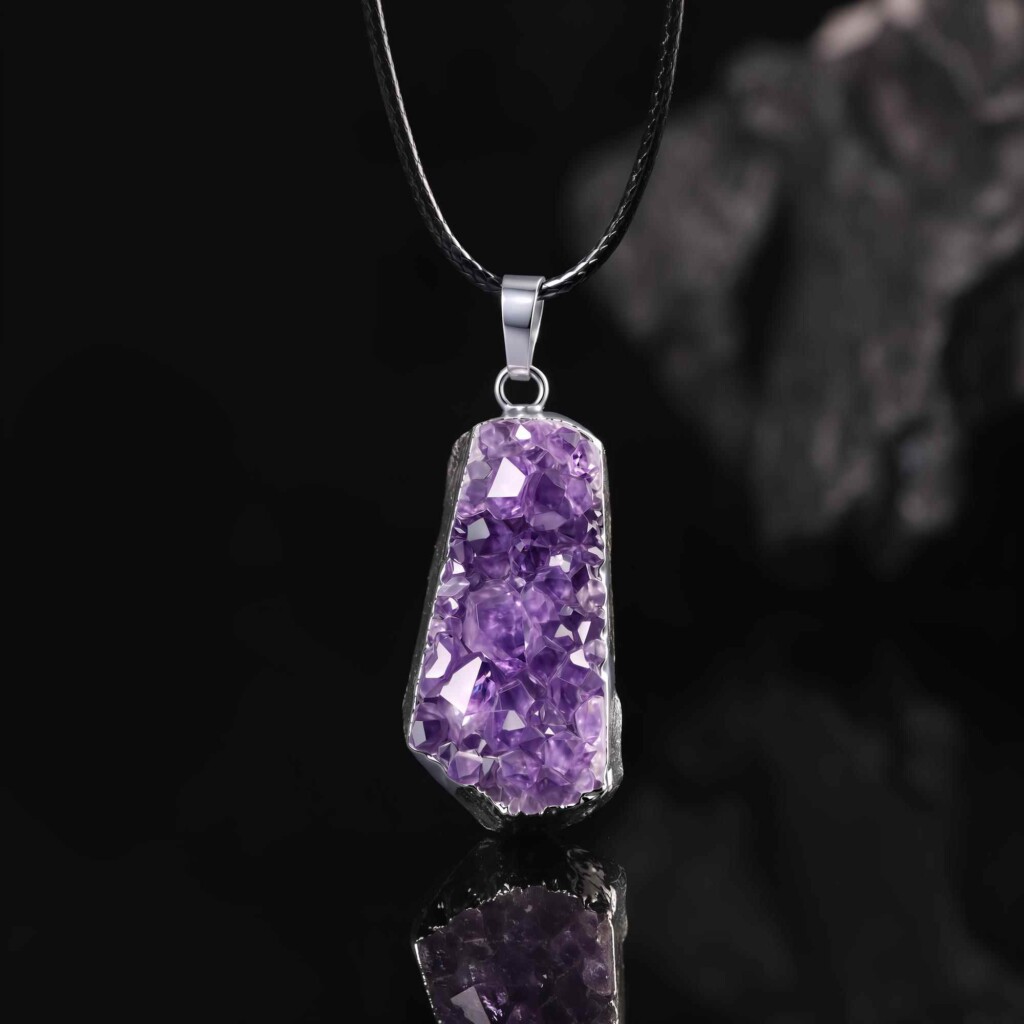
| Purple agate | Brazil, single vein | Deep violet to lavender | Consistent color is the exception; strong purple rough is a small share of the vein |
| White agate | Madagascar | Milky white, can drift yellow-red | Color drift toward yellow or red tones is a known trait of this material |
| Black obsidian (for contrast) | Mexico / USA | Glassy black | Brittle like glass; chips if a cut goes too deep |
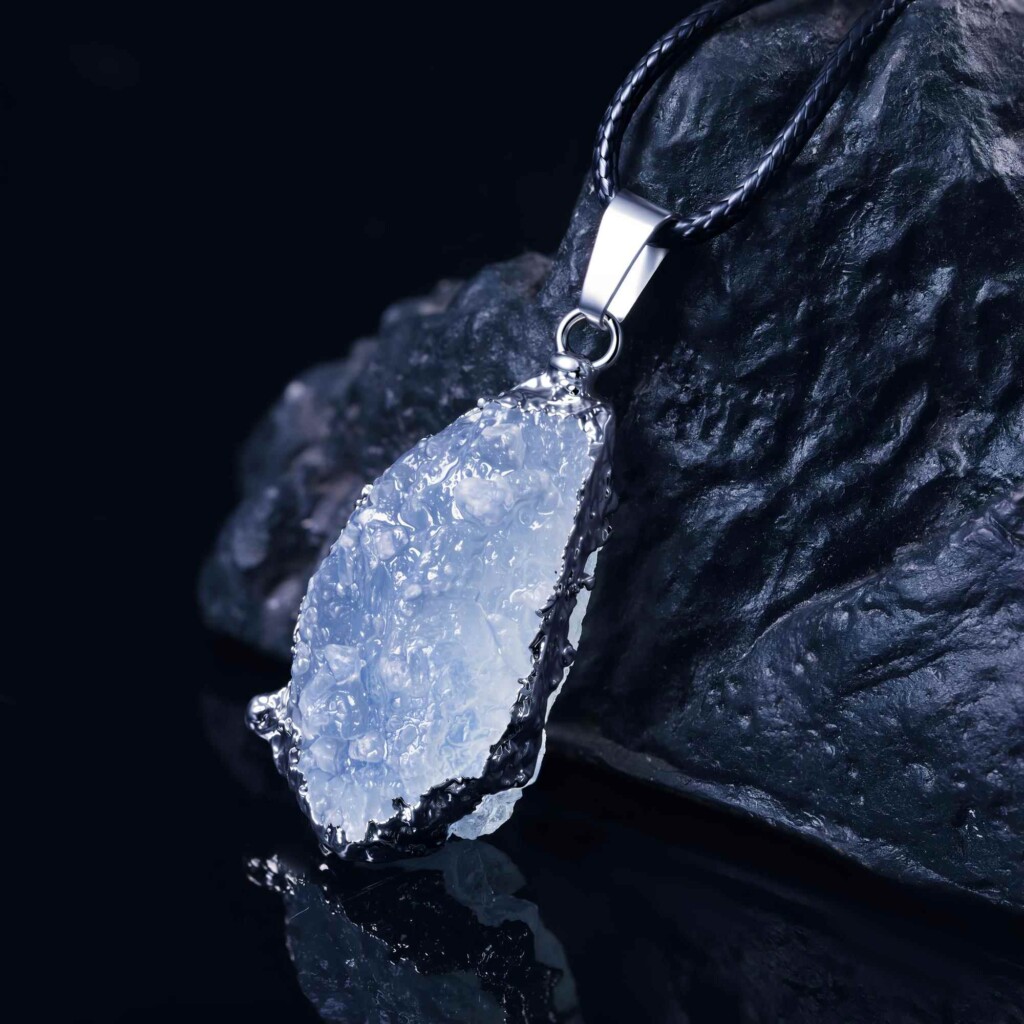
| Blue chalcedony (for contrast) | Turkey | Pale sky blue | Low yield rate; color often fades toward pale white |
Purple agate suits designs that need a sense of weight and ceremony — zodiac figures and elder gods read well in violet. White agate suits designs that rely on light passing near the surface, because the milky body softens shadows inside the carving.
Neither stone is jade. The studio’s carvers come from a Chinese jade-carving background, and that background is why they can work stones harder than jadeite — but no Z-OATH product is jade, and the product pages say so plainly.
Why does hand carving matter more on agate than on softer stones?
Agate and chalcedony are harder than jadeite, and that hardness breaks carving blades. Studio practice confirms it: cutting tips snap on agate at a rate that softer stones never produce.
Every Z-OATH pendant takes roughly 9 hours of hand carving, from rough selection to final polish. That single figure is the whole public account of the work — the studio does not publish step-by-step hour breakdowns, because the number that matters is the total.
The face is where those hours concentrate. A face carved one cut too deep cannot be undone, and a crack in the final hour means the whole piece is scrapped. The studio’s author-reported scrap rate runs around 15%, and most of that loss happens on faces and fine edges.
Casting is the mainstream practice in mythological jewelry, and cast pieces serve many buyers well. Hand carving simply does something casting cannot: the blade follows the actual banding of the actual stone, so the carving and the material agree with each other.
How do you judge an agate pendant before buying?
Four checks separate a strong agate pendant from a weak one. Each check takes seconds once you know where to look.
- Color evenness. Turn the pendant under light. Strong purple agate holds violet across the face; weak material washes out to gray at the edges.
- Banding placement. Good carving uses the stone’s bands on purpose — a band crossing a brow or a wing reads as intent, not accident.
- Face detail. Zoom the product photos to the face. Eyelids, nostrils, and lip lines should be separate cuts, not one rounded suggestion of a face.
- Edge finishing. Run your eye along the silhouette. Hand-finished edges are smooth and deliberate; rushed work leaves flats and chatter marks.
Price is a fair secondary signal. Z-OATH agate pendants run $48 to $89 depending on the design, and every piece on the site stays under the studio’s $149 ceiling.
How do you wear and care for an agate pendant?
Agate asks very little of its owner. The care routine fits on one line: wipe the pendant with a soft dry cloth after wear, and store it in its own pouch.
Two habits extend the life of any stone pendant:
- Keep the pendant away from harder stones in storage, because quartz-family stones can still scratch each other.
- Put the pendant on after perfume or hairspray, not before, because chemical film dulls polish over time.
Z-OATH ships every pendant with a 30-day return window, so a buyer can judge the stone in hand and in person rather than trusting a screen.
Where should you start?
Start with the designs, not the gemology. The Occult Amulets collection gathers the studio’s carved gods, monsters, and guardians in one place, and most pieces in it are agate.
For a concrete example of purple agate carving, look at Nyarlathotep, the Many-Faced God — an $89 hand-carved purple agate necklace where the face detail described above is easy to inspect in the photos.
An agate pendant is not a purchase that needs urgency. Pick the face you want to look at for years, check the four points above, and let the stone earn the oath you give it.