TL;DR
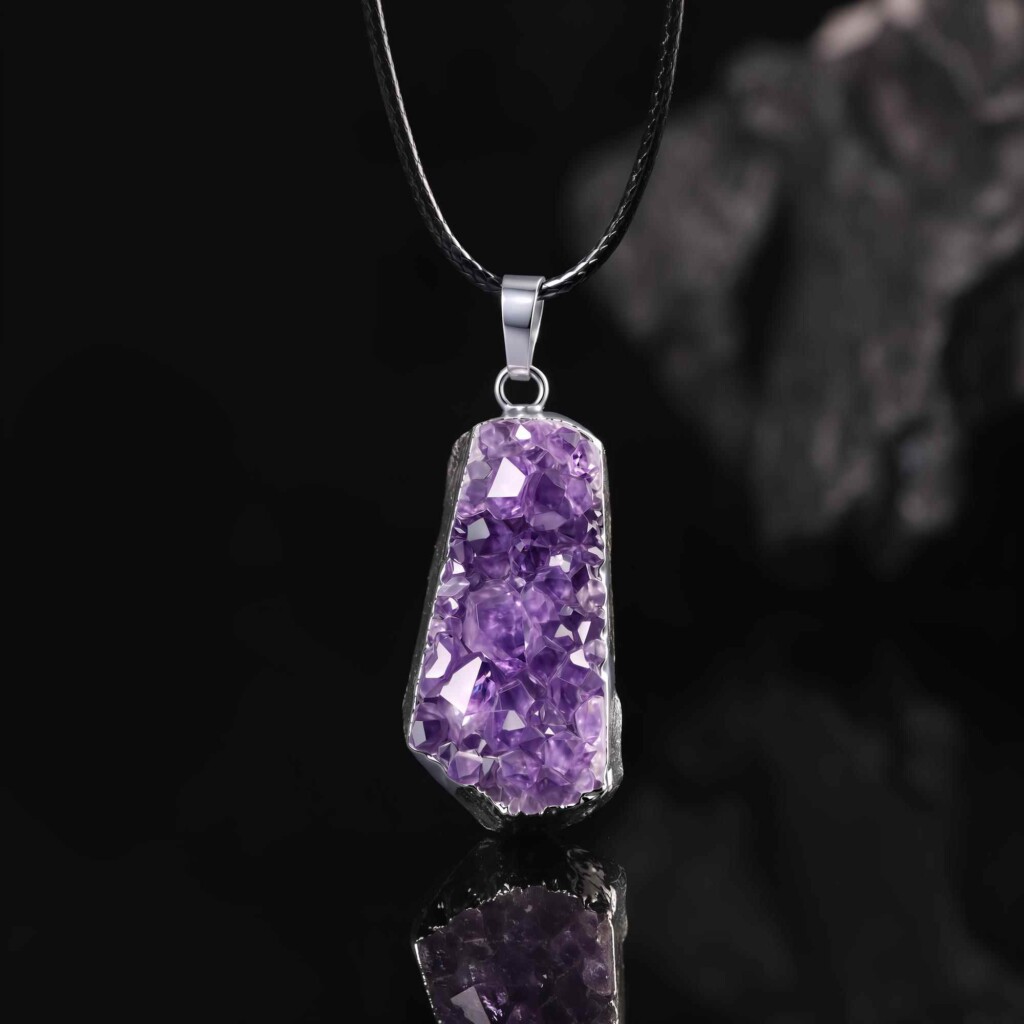
- A raw amethyst necklace is an uncut, unpolished piece of natural purple quartz worn on a cord or chain.
- Raw stone wears differently from carved or tumbled stone, because the surface keeps its natural crystal points and fractures.
- Before buying, check color depth, surface texture, the mounting, the weight, and the cord material.
- Amethyst is the February birthstone, so a raw amethyst necklace makes a natural zodiac necklace gift for Pisces-season birthdays.
- Raw amethyst needs simple care: keep it out of prolonged direct sunlight and protect it from hard knocks.
- Z-OATH sells a raw amethyst necklace for $39, in stock, covered by a 30-day return window.
What Is a Raw Amethyst Necklace?
A raw amethyst necklace is a pendant made from amethyst that has not been cut, tumbled, or polished.
Amethyst is the purple variety of quartz. The purple color comes from trace iron inside the quartz crystal, changed by natural radiation over geological time. Color ranges from pale lilac to deep violet, and uneven color inside one stone is normal.
“Raw” describes the state of the stone. A raw amethyst pendant is taken from the rough crystal, cleaned, drilled or fitted with a bail, and strung on a cord or chain. The stone keeps its original crystal points, growth lines, and small natural fractures.
How Is a Raw Amethyst Necklace Different from Carved or Tumbled Stone?
Three finishes dominate stone jewelry, and each one wears differently on the body.
| Finish | Surface | Shape | How it is made |
|---|---|---|---|
| Raw | Natural points and fractures | As the crystal grew | Cleaned, drilled or bailed, no shaping |
| Tumbled | Smooth and rounded | Pebble-like | Rotated with grit in a tumbler |
| Hand carved | Cut lines and sculpted detail | A deliberate figure | Shaped by a carver with rotary tools |
Tumbled stone is smooth because a machine rounds it. Hand carved stone is smooth in the places a carver chose to cut. Raw stone is neither; raw stone keeps the surface the crystal grew with.
Z-OATH’s main line is hand carved stone jewelry, and each carved piece takes about nine hours of hand work from rough selection to polishing. The raw line is a separate idea: the stone is left uncarved on purpose, so no carving hours go into a raw piece.
What Should You Check Before Buying a Raw Amethyst Necklace?
Six checks separate a good raw amethyst necklace from a disappointing one.
- Color depth. Deep violet stones are rarer than pale lilac ones. Pick the depth you like, but look at photos in neutral light, because warm light makes pale amethyst look richer than it is.
- Color zoning. Uneven bands of purple and clear quartz are normal in raw amethyst. Zoning is a growth feature, not a defect.
- Surface texture. Natural crystal points and small chips are expected on a raw stone. Large fresh-looking breaks are a different story and usually mean rough handling.
- The mounting. A drilled pendant hangs from a hole through the stone. A bailed pendant hangs from a metal fitting. Check that drill holes have clean edges and that bails grip the stone firmly.
- Weight. Raw chunks are heavier than cut cabochons of the same visual size. Check the listed weight in grams if you plan to wear the necklace all day.
- Cord or chain. An adjustable cord suits casual wear and most necklines. A metal chain suits sensitive skin better than some base-metal findings.
Price is a useful final check. Raw amethyst is an affordable stone, and a simple raw amethyst pendant typically costs far less than carved gemstone jewelry. Z-OATH prices its raw amethyst necklace at $39.
Is a Raw Amethyst Necklace a Good Zodiac Necklace Gift?
A raw amethyst necklace is one of the easiest zodiac necklaces to give, because amethyst is the February birthstone on the modern birthstone list.
Pisces season runs from February 19 to March 20, and most February birthdays fall under Aquarius or Pisces. A February birthday and an amethyst gift line up without any guesswork about the recipient’s sign.
The stone also carries one of the oldest story hooks in jewelry. The Greek word amethystos means “not intoxicated,” and ancient Greek and Roman drinkers believed amethyst could keep them sober. Historical belief is context, not evidence. Z-OATH does not claim that any stone protects, heals, or affects the wearer; the meaning of a necklace is assigned by the person who wears it.
For gifting, the practical details matter more than the lore. Purple pairs cleanly with silver-tone metal and black cord. Raw amethyst reads unisex, so the same pendant works across genders and styles.
How Do You Care for a Raw Amethyst Necklace?
Raw amethyst is durable quartz, but two habits keep it looking good for years.
First, keep the stone out of prolonged direct sunlight. Amethyst can fade under sustained ultraviolet exposure, so store the necklace in a box or drawer rather than on a sunny windowsill.
Second, protect the crystal points. Quartz rates 7 on the Mohs hardness scale, but the fine tips of a raw crystal are thin and can chip if the pendant is dropped on a hard floor.
Cleaning is simple. Wipe the stone with a soft, slightly damp cloth and dry it afterward. Skip harsh chemical cleaners, which can cloud the surface of the quartz and corrode the metal bail.
Where Can You See a Real Raw Amethyst Necklace?
Z-OATH keeps a small raw stone line alongside its hand carved work, and the full selection sits in the raw stone necklaces collection.
The Raw Amethyst Necklace is in stock at $39. Every order is covered by a 30-day return window, so you can judge the color and weight of the real stone in your own light before you commit.
If you want a first piece of uncut stone jewelry, amethyst is a forgiving place to start: the color is honest, the price is low, and the stone asks for almost nothing in return.