TL;DR
- Couples necklaces are two pendants that share one design language; the meaning comes from the people wearing them, not from the jewelry itself.
- Paired jewelry has a long history, from engraved posy rings in medieval England to the split-heart pendants of the twentieth century.
- The strongest matching sets are two complete pendants in dialogue, not one shape broken into halves.
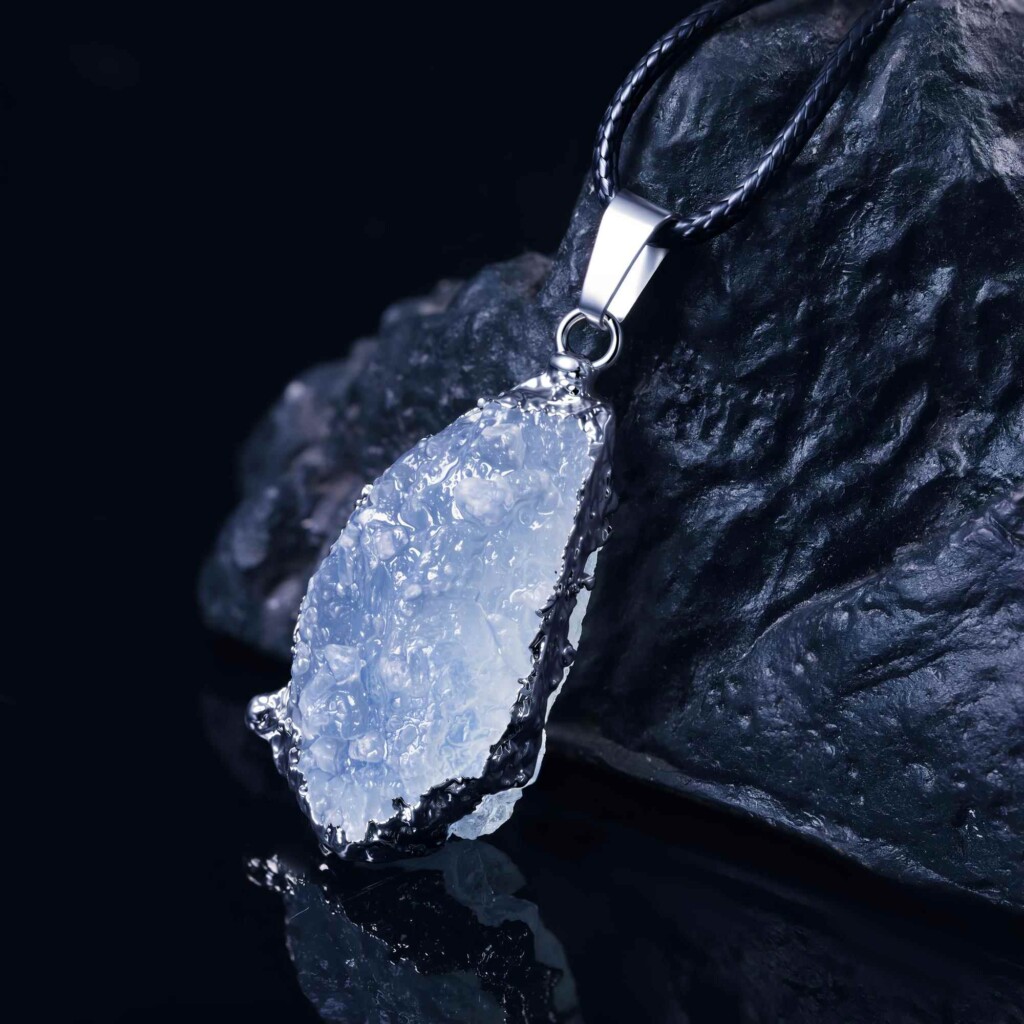
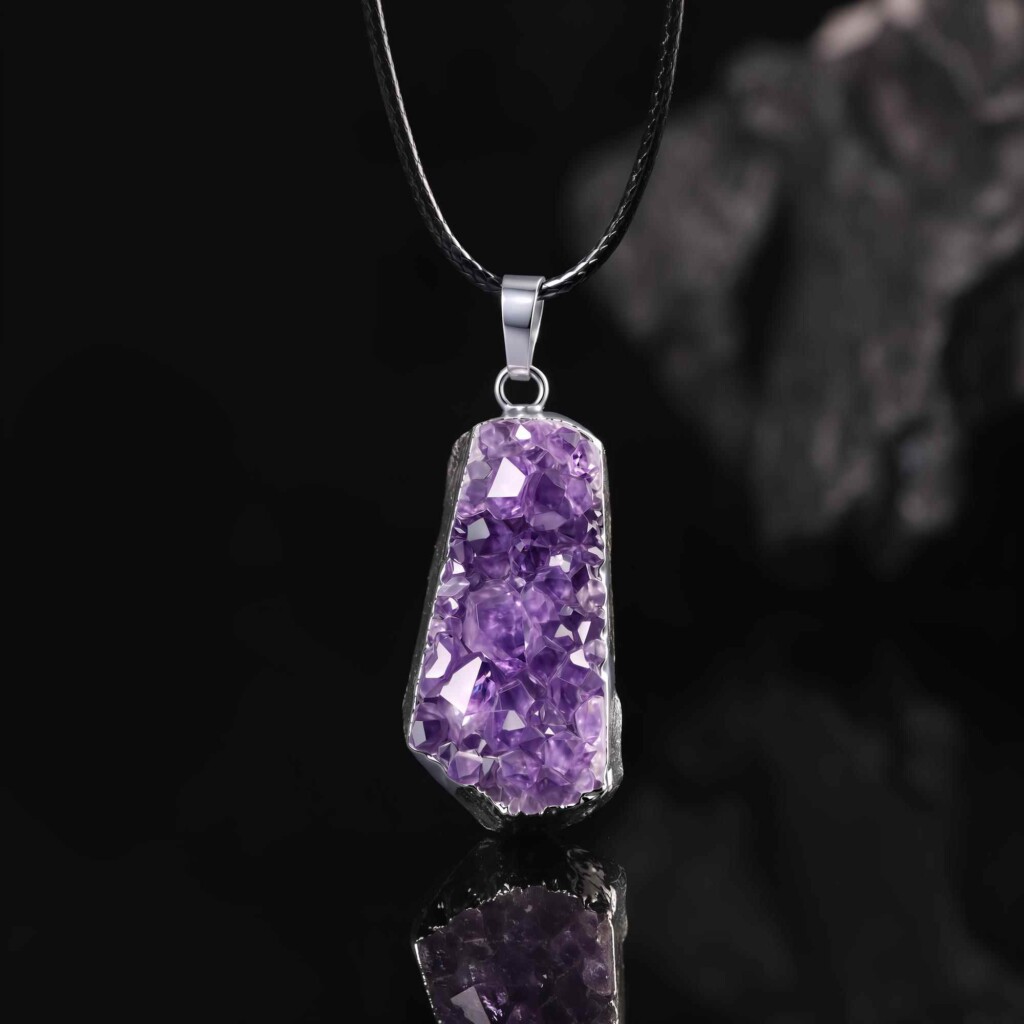
- Obsidian, purple agate, blue chalcedony, and white agate each give a couples set a different visual character.
- Weight, chain length, and finish decide whether both partners actually wear the set.
- Anniversaries, long-distance goodbyes, milestones, and ordinary days are all valid occasions for the gift.
What do couples necklaces actually mean?
Couples necklaces are a pair of pendants designed to belong together. Two people each wear one piece, and the pair shares a symbol, a story, or a design language.
The meaning of a couples necklace is not built into the object. A pendant does not arrive with a fixed message; the two wearers decide what it stands for. For one couple a pair of necklaces marks an anniversary. For another couple the same pair marks a private joke, a shared fandom, or a promise made on an ordinary Tuesday.
Z-OATH does not claim that any necklace protects, heals, or affects a relationship. The meaning of a couples necklace is the meaning the two wearers give it.
Where did paired jewelry come from?
The idea of jewelry shared between two people is centuries old.
- Posy rings were gold bands engraved with short verses, exchanged in England from roughly the fifteenth to the seventeenth century. The engraving carried the message; the ring carried the engraving.
- Victorian lockets held portraits or locks of hair. The locket turned a person into something wearable.
- Split-heart pendants became mass-market staples in the twentieth century. One heart, broken into two jagged halves, each half worn by one person.
In folklore, shared tokens were often believed to bind or protect the pair who wore them. Historical belief is context, not evidence. What the history shows clearly is a durable human habit: people keep making small objects that stand for a bond between two people.
The modern shift is a design shift. Paired jewelry has moved from identical trinkets toward considered pairs, where design quality matters as much as the gesture.
What makes matching couple necklaces different from wearing the same pendant twice?
Matching couple necklaces usually follow one of three structures.
- Identical pairs give both partners the same pendant. The approach is simple, but it ignores differences in build, style, and taste between two people.
- Split shapes divide one outline, usually a heart, into two halves. Each half looks unfinished on its own, and the pendant reads as broken whenever one partner is not wearing it.
- Complementary pairs give each partner a complete pendant that stands alone. The two designs answer each other: an angel wing and a demon wing, a sun and a moon, two faces of one story.
The complementary structure is the strongest of the three for daily wear. Each pendant works as a finished piece of jewelry on its own. Together, the two pendants tell one story. The Angel & Demon set in the Z-OATH Couples collection follows this logic: two whole carvings in black obsidian, each complete, clearly made for each other.
Which stones work well for couples necklaces?
Stone choice for a couples set is mostly an aesthetic decision. Four natural stones cover most tastes.
| Stone | Look | Carving character |
|---|---|---|
| Black obsidian | Deep, glassy black | Holds crisp lines; brittle like glass, so fine work is slow |
| Purple agate | Violet bands from a single Brazilian vein | Harder than jadeite; wears carving blades down quickly |
| Blue chalcedony | Cool, translucent blue from Turkey | Low yield; color can run pale in the rough |
| White agate | Pale body from Madagascar, sometimes warming toward red or yellow | A quiet canvas for high-relief faces |
Black obsidian is the natural home of dark mythology designs. Purple agate and blue chalcedony suit couples who want color rather than shadow. White agate sits between the two.
How do you choose a set you will both actually wear?
A couples set only works if both pendants leave the jewelry box. A few practical checks decide that.
- Weight: A pendant should feel present without pulling on the chain. Stone pendants are denser than hollow metal ones, so size and weight deserve a real look before ordering.
- Chain length: Two partners rarely share one ideal chain length. Check the measurements for each wearer rather than assuming one length fits both.
- Finish: A polished face and a matte face read very differently on the same stone. Agree on one finish language for the pair.
- One design language: The strongest sets share an obvious artistic hand across both pendants.
- A way back: A 30-day return window takes the risk out of a gift that misses. Z-OATH offers 30-day returns across the store.
Craft is the final check. Each Z-OATH pendant takes about nine hours of hand carving, from rough selection to polishing. The carvers come from a Chinese jade-carving tradition, although no Z-OATH product is jade, and agate and chalcedony are harder than jadeite. Cast pieces can be attractive and affordable, but a mold repeats the same surface forever; a hand tool leaves a path that belongs to one piece only.
When is the right occasion to give couples necklaces?
- Anniversaries are the classic occasion, and a carved pair outlasts most anniversary gifts.
- Long-distance goodbyes suit paired pendants well. Each partner carries one half of the shared design. A pendant is a reminder, not a remedy, and a physical reminder is exactly what some partings need.
- Milestones such as moving in together or choosing each other again after a hard year deserve an object with some permanence.
- Ordinary days need no calendar permission. A gift given for no reason often lands hardest.
- The holiday season rewards early ordering. Handmade pieces take real hours at the bench, and November is the right month to think about December.
The bottom line
Couples necklaces work when the design is strong enough for two separate people and meaningful enough for one shared story. History has been making room for that idea for five hundred years.
If the idea fits, browse the Couples collection to see how the concept looks in stone. The Angel & Demon hand-carved obsidian set ($89) is the clearest example of the complementary-pair approach described above. Wear your oath — together.