TL;DR
- Gothic necklaces are defined by motif and mood — darkness, mortality, and quiet rebellion — not by membership in any subculture. (Section 1)
- Five styles translate best into carved stone: crosses, winged creatures, skulls, mythic beasts, and dark deities. (Section 2)
- An obsidian necklace is the default gothic choice because of its true-black color and glassy luster. (Section 3)
- One statement pendant at the right chain length beats a pile of competing layers. (Section 4)
- Before buying online, check the named stone, scale photos, chain inclusion, and the return window. (Section 5)
- Hand carving gives gothic motifs a depth that molds cannot repeat; each Z-OATH piece takes about 9 hours under the blade. (Section 6)
What Makes a Necklace “Gothic”?
A gothic necklace is defined by its visual language, not by who is allowed to wear it.
The gothic vocabulary draws on a short list of recurring themes:
- Darkness — black or deep-toned materials, shadow, night imagery.
- Mortality — skulls, hourglasses, and other memento mori symbols.
- Medieval and romantic echoes — crosses, cathedral arches, ravens.
- The occult and the mythic — old gods, monsters, and symbols from folklore.
Material does half the work. A black stone pendant reads as gothic before any symbol is even recognized, while the same shape in polished silver reads as decorative. That is why carved natural stone and gothic style fit together so naturally.
Gothic is a style choice, not a membership card. A person does not need to dress head-to-toe in black to wear a dark pendant with a plain shirt.
Which 5 Gothic Necklace Styles Work Best in Stone?
Stone rewards bold, legible shapes. These five styles have survived every fashion cycle since the 1980s, and each one carves well.
| Style | Classic motifs | Best stone match | Everyday pairing |
|---|---|---|---|
| Crosses and crucifixes | Latin cross, ornate baroque cross | White agate or obsidian | Open collars, plain tees |
| Winged creatures | Bats, ravens, fallen angels | Obsidian | Leather, denim, dark knits |
| Skulls and memento mori | Skull, hourglass, wilting rose | White agate (bone tone) | Monochrome outfits |
| Mythic beasts | Dragons, serpents, krakens | Blue chalcedony, purple agate | Simple chains, layered looks |
| Dark deities and occult figures | Medusa, Bastet, Cthulhu | Obsidian | Worn alone as a statement |
Crosses and crucifixes are the oldest gothic motif. In stone, the appeal is weight and texture rather than shine.
Winged creatures — bats, ravens, fallen angels — give the carver feathers and membranes to work with. Fine wing detail is where hand carving separates itself from casting.
Skulls are the most direct memento mori symbol. A pale stone like white agate gives a skull a bone-like tone that metal cannot imitate.
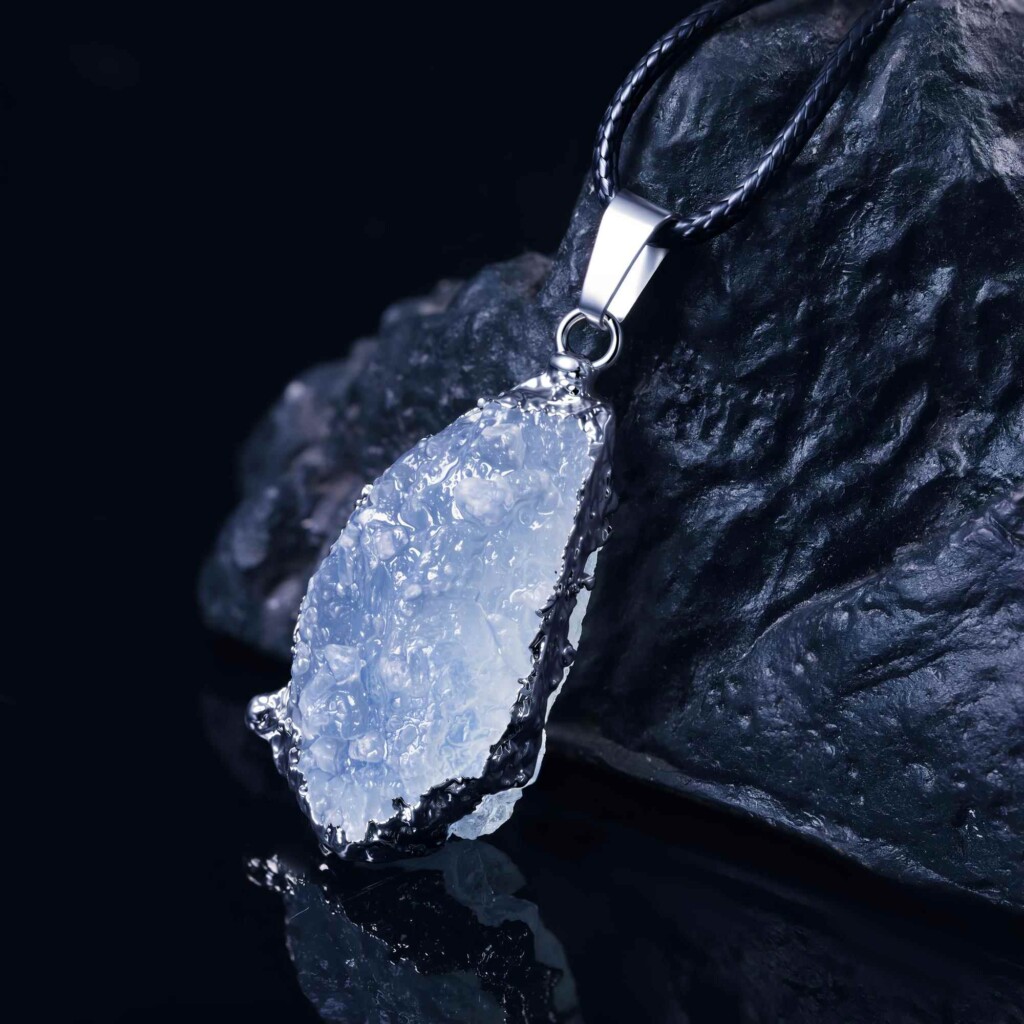
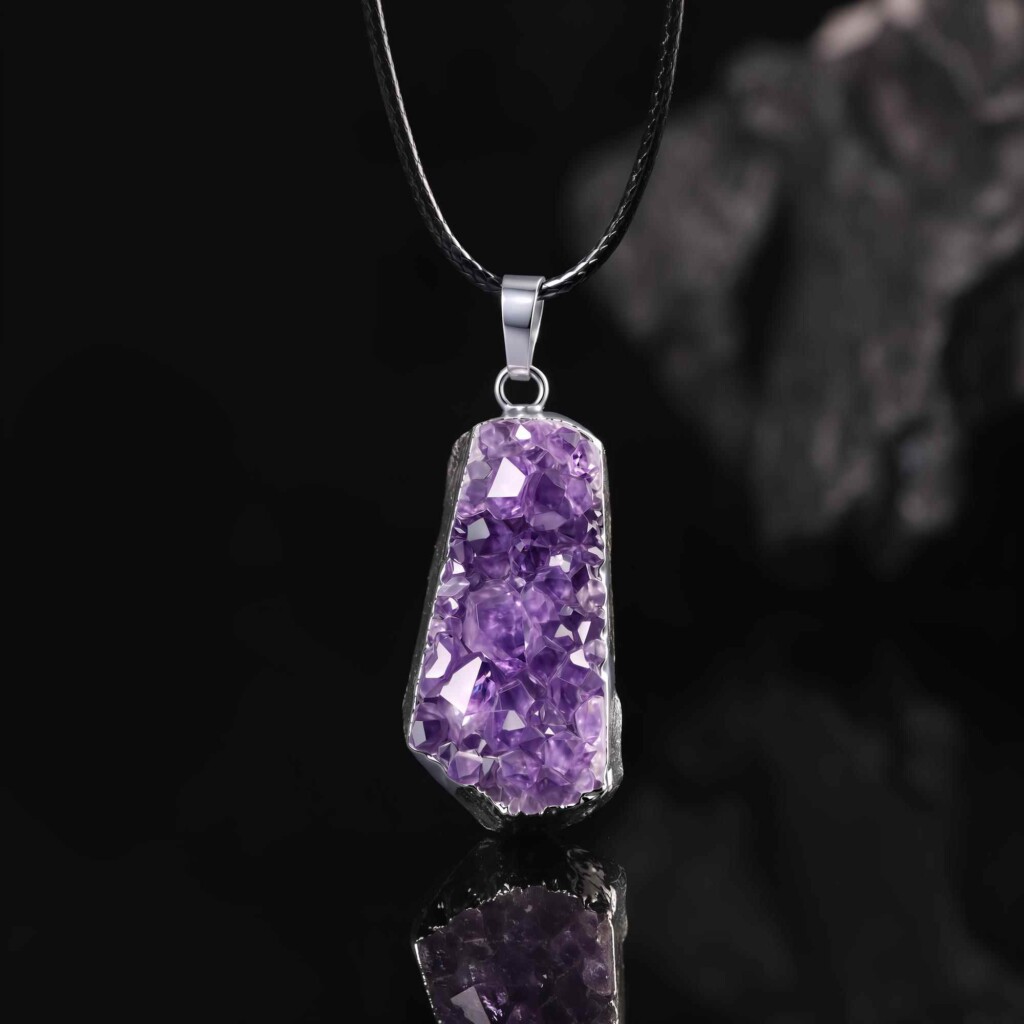
Mythic beasts suit colored stones. A blue chalcedony dragon or a purple agate serpent keeps the gothic mood while stepping outside pure black.
Dark deities and occult figures — Medusa, Bastet, Cthulhu — are the most narrative choice. Each pendant carries a specific story. Z-OATH keeps a dedicated collection of these figures in its occult amulets category.
Why Is an Obsidian Necklace the Default Gothic Stone?
An obsidian necklace is the default gothic stone choice for three practical reasons.
- Color. Obsidian is a true, deep black. Most “black” stones are actually dark gray or dark green; obsidian is black in almost any light.
- Luster. Obsidian is natural volcanic glass. Its polished surface has a glassy shine that contrasts with matte carved recesses, so carved details stay visible.
- History. Obsidian has been worked into blades and mirrors since prehistory. In several traditions, obsidian was believed to absorb or deflect harmful influences. Historical belief is context, not evidence: Z-OATH does not claim that any stone protects, heals, or affects the wearer. A pendant is a reminder, not a remedy, and its meaning is assigned by the person wearing it.
Obsidian also behaves like glass under the carving tool. It is brittle, it chips if rushed, and it holds extremely fine detail when handled patiently. Those properties reward slow hand work and punish shortcuts.
How Should You Style Gothic Necklaces Day to Day?
Styling a gothic necklace is simpler than the subculture imagery suggests.
- Wear one statement piece. A single carved pendant draws the eye; three competing pendants divide it.
- Match chain length to neckline. A pendant on an 18–20 inch chain sits cleanly over a crew neck; longer chains suit open collars and deep V-necks.
- Let dark stone carry plain outfits. A black obsidian pendant against a white or gray shirt creates contrast with zero effort.
- Layer with plain chains only. If layering, pair the pendant with one or two unadorned chains of different lengths.
A gothic pendant works in offices, classrooms, and dinners. The design speaks; the wearer does not need a costume to translate it.
What Should You Check Before Buying a Gothic Necklace Online?
A gothic necklace bought online should pass five checks before payment.
- The stone is named specifically. “Black stone” is not a material; “black obsidian” is. Vague material descriptions are a warning sign.
- Photos show scale. A pendant photographed alone can look twice its real size. Look for a photo with a ruler, a coin, or a model wearing the piece.
- The chain situation is stated. Some pendants ship with a chain, others do not. The product page should say which.
- The return window is written down. Z-OATH, for example, accepts returns within 30 days. Any serious shop should state an equivalent policy in plain language.
- The price matches the making method. Cast pieces can be attractive and affordable; they simply are not the same object as a hand-carved one. Every Z-OATH piece is hand carved and priced under $149.
A shop that answers these five questions on the product page is usually a shop that has thought about the rest.
How Does Hand Carving Change a Gothic Necklace?
Hand carving changes a gothic necklace in ways a photograph can show but a mold cannot produce.
A mold reproduces one surface exactly. A carver makes hundreds of small decisions per piece: how deep the shadows in a wing should run, where a face needs a lighter touch, when a stone’s natural grain argues with the design. Faces are the hardest part — one cut too deep cannot be undone.
Each Z-OATH piece takes about 9 hours of hand carving, from stone selection to final polishing. The studio’s founder comes from a Chinese jade-carving background, though no Z-OATH product is jade; the training transfers to harder stones like agate and chalcedony, which are tougher on tools than jadeite.
For a reader who wants the full style foundation behind these five categories, the earlier gothic necklace guide covers the history of the style itself.
The Short Version
Gothic necklaces work in stone because stone already speaks the gothic language: weight, darkness, and permanence. The five reliable styles are crosses, winged creatures, skulls, mythic beasts, and dark deities, with obsidian as the default material.
For pieces that apply these principles — dark figures carved one at a time, in about 9 hours each, priced under $149 with 30-day returns — browse the Z-OATH occult collection. Pieces like the obsidian Yibb-Tstll pendant show what patient blade work does to black glass.
Wear your oath.