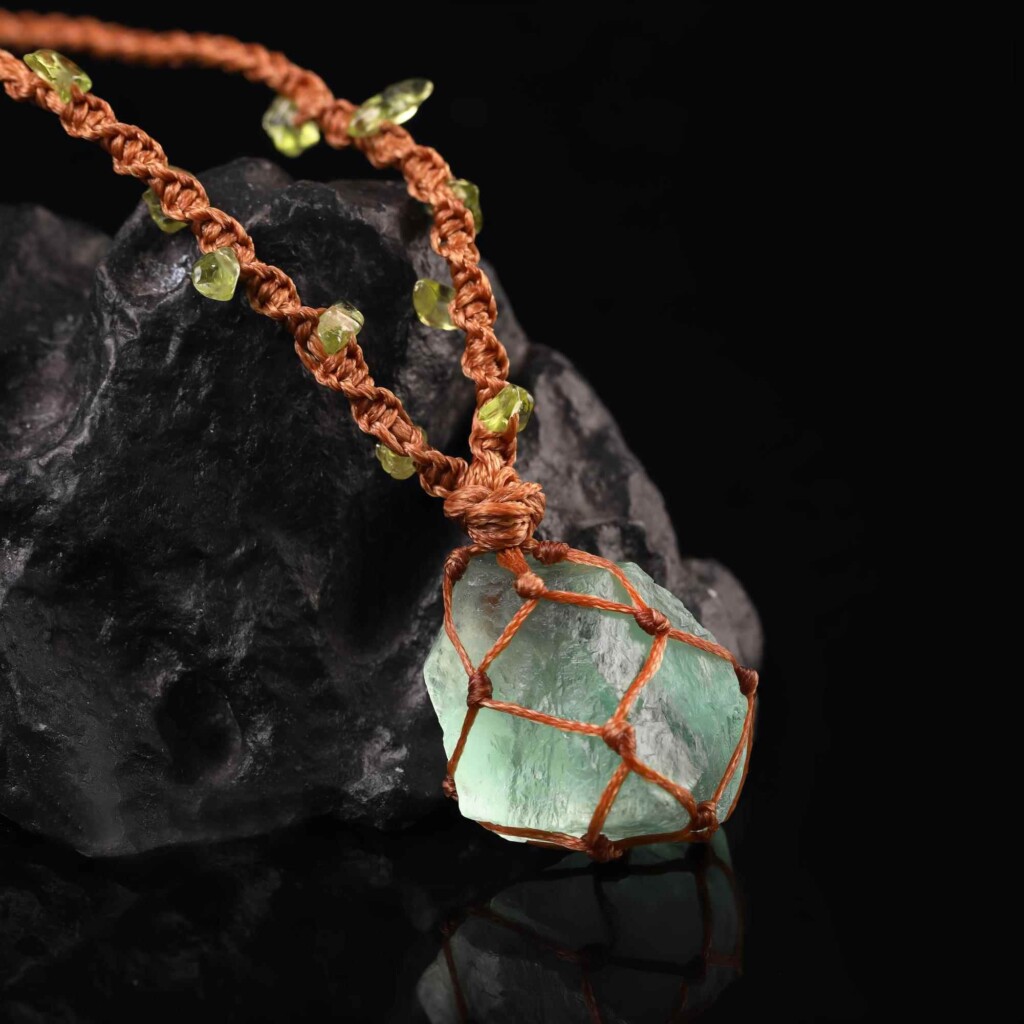
It’s Not Blue Pigment. It’s a Trick of Light.
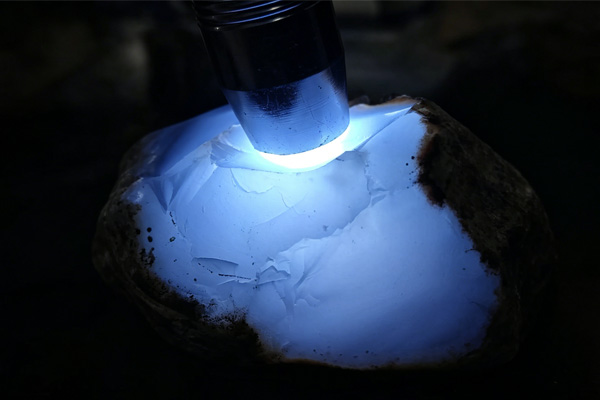
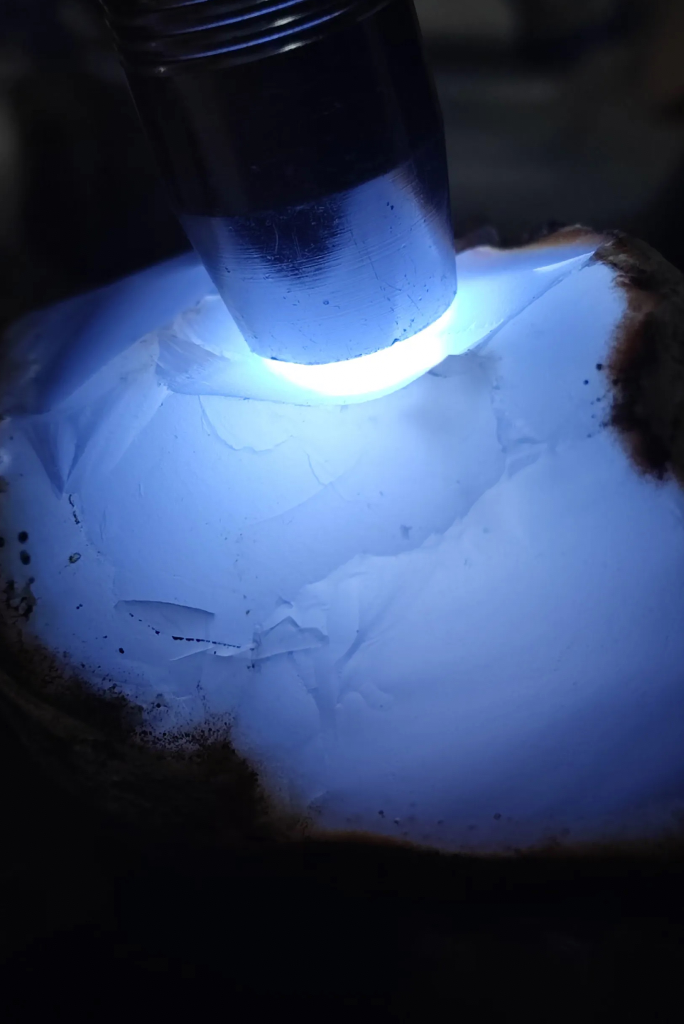
Most blue gemstones rely on impurities — cobalt, copper, iron — trace metals seeping in to create color. Not Blue Chalcedony. Its blue is not dyed by pigment. It happens when light scatters through billions of microscopic pores inside the stone, and only the blue wavelengths escape. Physicists call this the Tyndall Effect — the same reason the sky is blue.
A stone with no pigment, creating color through structure alone. That is dark aesthetics in a nutshell: the truth is not on the surface. It’s where you can’t see.
There is a consequence to this: the blue is alive. Turn a Blue Chalcedony necklace in your hand and the color shifts — pale and misty in shade, electric at the edges under direct light. Dyed stone sits still. This one moves.
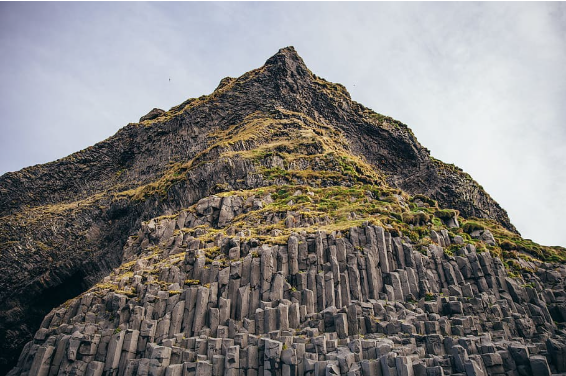
It Came from Volcanoes. Literally.
Blue Chalcedony forms in low-temperature hydrothermal environments — after volcanic eruptions, silica-rich groundwater seeps into cavities and fissures, cooling below 200°C and depositing layer by layer. No violent crystallization. No large crystal columns. It is Cryptocrystalline Quartz: countless nanoscale fibrous crystals interwoven, invisible to the naked eye, yielding only a soft, waxy luster.
Mohs hardness 6.5–7. Harder than steel, tougher than glass. Only diamond and sandpaper can scratch it.
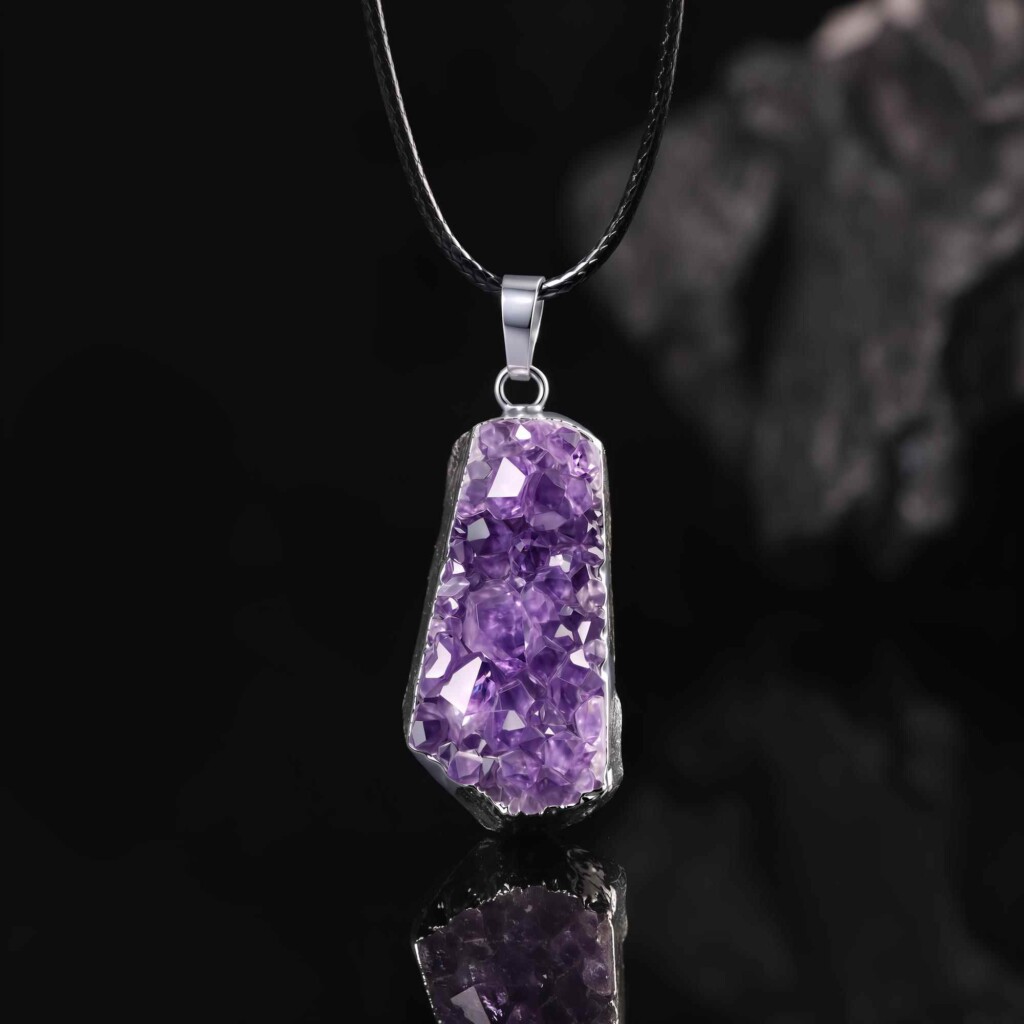
In plain terms: it is quartz that grew too slowly to show its crystals. Where amethyst and citrine announce themselves with points and facets, chalcedony keeps its structure hidden — the same chemistry, a quieter architecture.
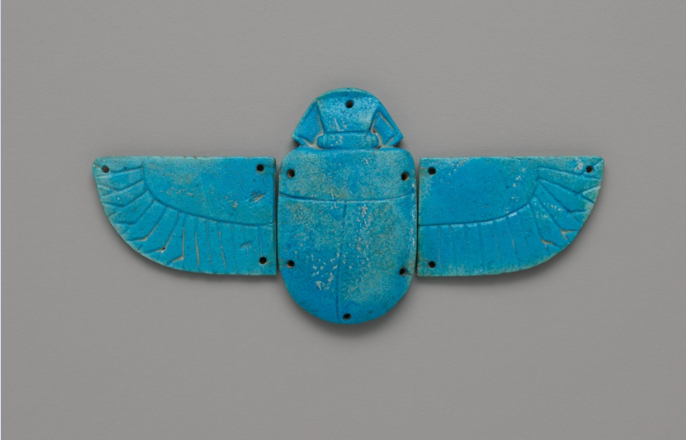
Humans Have Worn It for at Least 2,000 Years.
The Sarıcakaya veins in Turkey’s Eskişehir region have been mined since Roman times. Carbon isotope dating of the mine tunnels points to around 100 AD — by then, Romans were already turning this “Turkish blue” into rings, necklaces, and amulets, worn around the neck.
Around the same time, Egyptians were using chalcedony for scarab amulets. The Chinese were mining Blue Chalcedony from the Dulan Mountain in the Coastal Range — veins still exist today in the andesite fissures of eastern Taiwan.
Three continents. Three civilizations. All using it. This is not a coincidence — that translucent, soft blue, as if lifted from deep water, naturally evokes the feeling of something “from another world.”
The stone’s name carries that history. “Chalcedony” traces back to Chalcedon, the ancient port on the Bosphorus — the trading gate through which this blue stone first entered the Mediterranean world.
What Happened in 65 Million Years?
The formation timeline of Blue Chalcedony spans a wide range. Namibia’s Blue Lace Agate precipitated around 54 million years ago. Blue Chalcedony itself, as a member of the chalcedony family, may have begun forming even earlier — in the Miocene or even the Late Cretaceous.
65 million years is a rough but accurate anchor — the age of the dinosaur extinction, the final splitting of the Atlantic, the era when Earth transformed from a “reptile world” into a “mammal world.” The pale blue stone in your hand was quietly lying deep in the Earth’s crust through all of it, growing layer by layer.
Chalcedony vs. Agate: What’s the Difference?
Geologically, almost nothing. Both are cryptocrystalline quartz — same mineral family, same hardness, same volcanic birth. The trade draws one line: bands. If the stone shows visible banding or layered patterns, it is called agate. If the color is uniform and translucent, it is called chalcedony.
So Blue Chalcedony is, technically, the unbanded member of the agate family — and Blue Lace Agate is its banded sibling. One stone wears its layers on the surface. The other keeps everything underneath. You can guess which one we carve.
Where It Comes From Today
Turkey remains the classic source — the Eskişehir material still sets the standard for saturated, even color. Namibia produces lighter, lacier blues; Malawi and the western United States yield smaller, moodier material. Fine, deeply colored rough is a small fraction of total output, which is why a uniformly blue, cleanly carved piece is rarer than the mineral family name suggests.
Why We Use It for Amulets.
In crystal healing traditions, Blue Chalcedony is associated with the Throat Chakra — communication, expression, calm. It is considered a stone that “quiets anxiety,” suited for those who need to speak important words without being overwhelmed by emotion.
Of course, we are not here to sell spiritual courses. We chose Blue Chalcedony because:
- It’s hard enough — Mohs 6.5–7, no need for delicate daily care.
- It’s beautiful — a blue not dyed by pigment, shifting in light, deepening in shadow.
- It’s old — 65 million years of silence carries more weight than any brand story.
Someone who wears Blue Chalcedony doesn’t need to explain why they chose it. The stone speaks for itself.
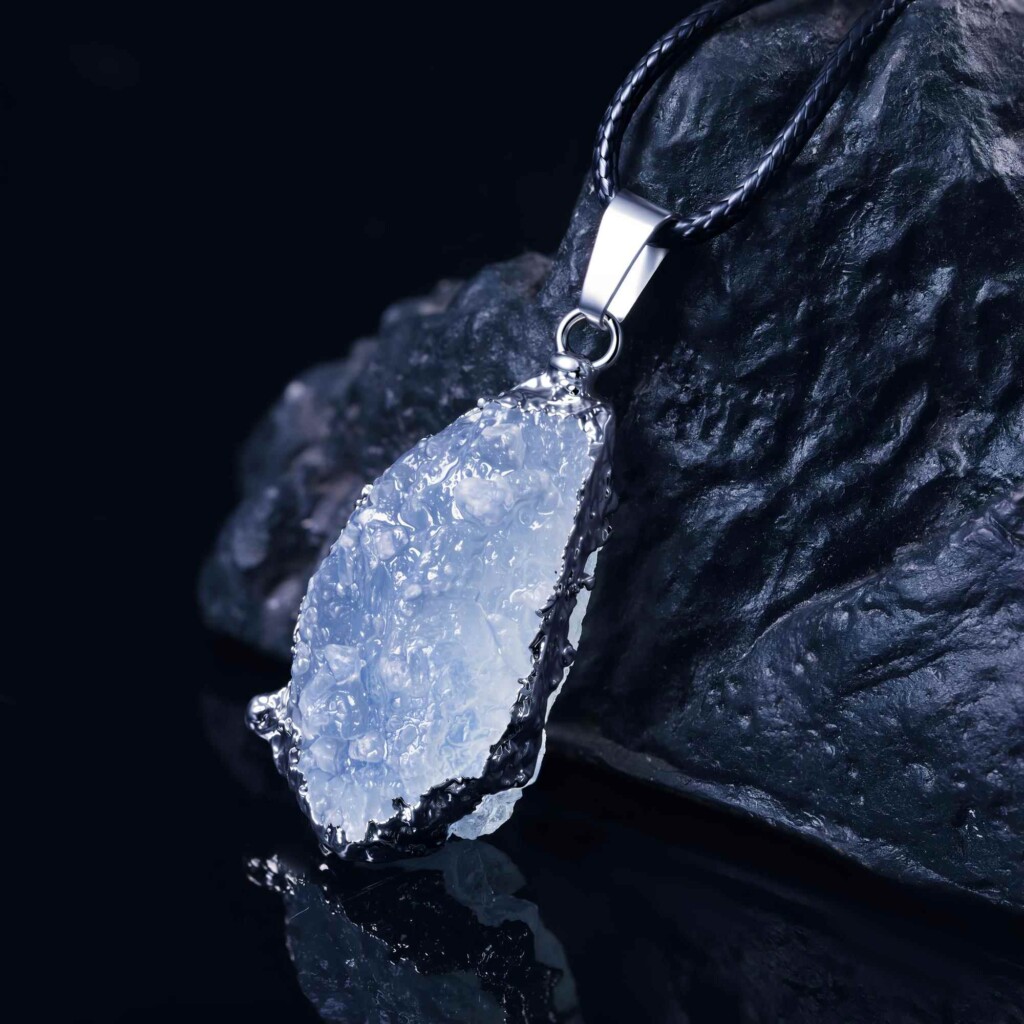
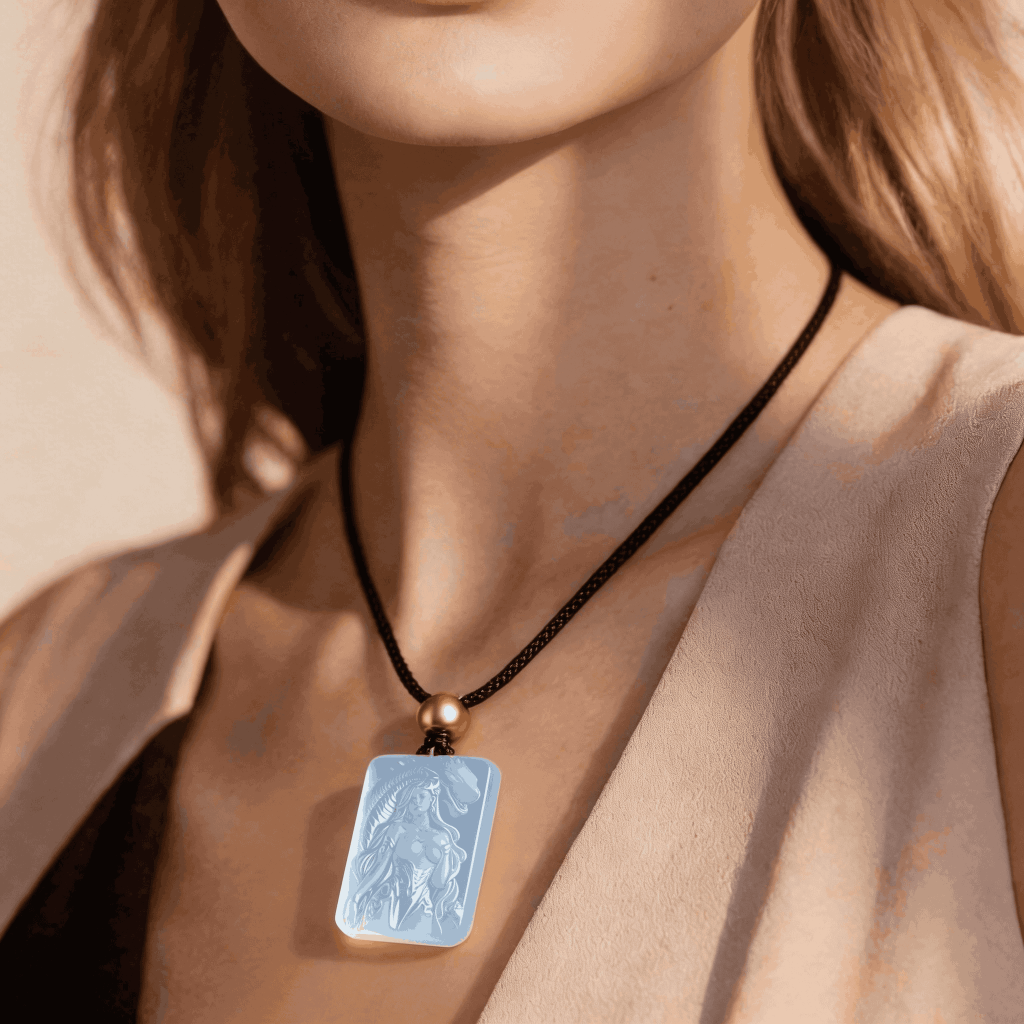
It is also honest under the blade. The cryptocrystalline weave holds fine detail — a carved scale, a wave crest, a face — without crumbling, and takes a soft, waxy polish no glass imitation can fake. Our Ayiig pendant and Dagon pendant are both carved from this stone, each cut from a single natural piece — the blue you see is the blue the Earth made, unbanded and undyed.
Three Things to Remember About Blue Chalcedony
- Its blue comes from light scattering, not pigment — physics is more honest than chemistry.
- Humans began mining it in Roman times — this is not trendy. It’s archaeology.
- It slept underground for tens of millions of years. What you wear is time compressed into stone, older than humanity itself.
The stone doesn’t ask to be worn. It just waits. For 65 million years, that’s been enough.
If you want to carry those 65 million years yourself, our blue chalcedony necklace — the Fae Dragon, hand-carved from a single piece of natural blue chalcedony — is where the silence ends up.
Frequently Asked Questions
What is blue chalcedony good for?
In crystal traditions, it is the stone of calm communication — linked to the Throat Chakra and carried to steady the voice before difficult words. In practical terms, it is also simply an excellent jewelry stone: Mohs 6.5–7, durable enough for daily wear, with a natural blue that needs no dye and never fades.
Is blue chalcedony rare?
Chalcedony itself is common; fine blue chalcedony is not. Evenly colored, translucent, deeply blue rough makes up a small share of what comes out of Turkey, Namibia, and Malawi. That is why quality carved pieces hold their value while dyed imitations flood the low end of the market.
What chakra is blue chalcedony associated with?
The Throat Chakra — the fifth chakra, governing communication, honest expression, and calm speech. Blue stones have been tied to the voice and to spoken truth across traditions; blue chalcedony is simply the oldest and most persistent of them.
How do you cleanse blue chalcedony?
Rinse it briefly under cool running water and dry it with a soft cloth — the stone is stable quartz and handles water without complaint. For the ritual-minded, an hour of moonlight is the traditional reset. Avoid prolonged harsh sun, which can dull the blue over years, and keep it away from ultrasonic cleaners if the piece is carved.