TL;DR
- Blue chalcedony is a translucent blue member of the quartz family, and Turkey produces the rough that most carvers treat as the benchmark.
- A hand-carved blue chalcedony pendant is rare because the stone is harder than jade, wears down carving tools, and yields few clean pieces from each batch of rough.
- Color is the main quality test: even, saturated blue grades high, while pale or washed-out patches grade low.
- Blue chalcedony differs from obsidian and agate in tone, translucency, and carving behavior — the comparison table below lays out the differences side by side.
- Blue chalcedony jewelry needs only simple care: mild soap, a soft cloth, and no ultrasonic cleaners.
A blue chalcedony pendant has a look that no other common pendant stone copies well. The color sits between sky blue and denim, and light passes through the stone instead of stopping at the surface. This guide covers what blue chalcedony is, why hand-carved pieces are uncommon, how to judge color quality, how the stone compares to obsidian and agate, and how to care for one.
What Is Blue Chalcedony, Exactly?
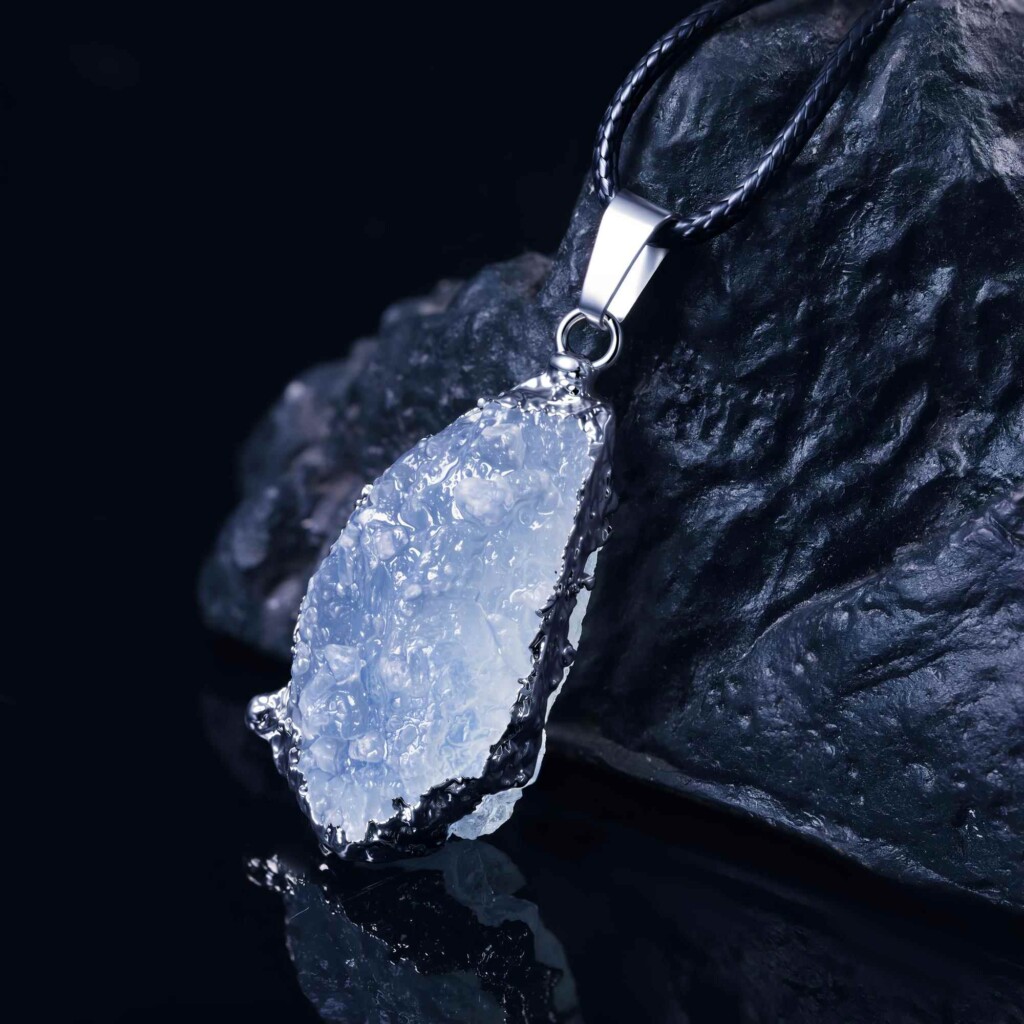
Blue chalcedony is a microcrystalline variety of quartz. The quartz in blue chalcedony grows as millions of tiny interlocking crystals rather than one large crystal, and that structure gives the stone its soft, even glow.
Two details separate blue chalcedony from its close relatives:
- No banding. Blue lace agate shows stripes and swirls. Blue chalcedony shows a single even color, and gem labs use that difference to tell the two stones apart.
- Translucency. Light enters a blue chalcedony pendant and diffuses inside the stone. Obsidian blocks light; blue chalcedony shares it.
Turkey produces the blue chalcedony that carvers and collectors treat as the reference material. Turkish rough ranges from pale, almost white blue to a saturated cornflower tone, and the saturated end of that range is the part worth wearing.
Some traditions associate blue chalcedony with calm and clear speech. Historical belief is context, not evidence — a pendant’s meaning is whatever the wearer decides to give it.
Why Is a Hand-Carved Blue Chalcedony Pendant So Rare?
Most blue chalcedony jewelry on the market is cast metal with a tumbled stone set into it. A fully hand-carved blue chalcedony pendant is a different object, and three material facts explain the rarity:
- The stone is harder than jade. Chalcedony and agate sit above jade on the hardness scale, and rotary carving tools dull or snap against them faster than most buyers expect.
- The yield rate is low. Blue chalcedony rough often runs pale or whitish inside, so a large share of every batch never becomes a pendant.
- The rough hides its flaws. The skin of a rough stone reveals nothing about the cracks and color bands underneath, so selecting rough is a gamble every single time.
At Z-OATH, each pendant takes about 9 hours of hand carving from rough selection to final polish. The carver trained in the Chinese jade-carving tradition, and that background shows in the way faces and fine lines hold up under a magnifier.
How Do You Judge the Color of a Blue Chalcedony Pendant?
Color decides the grade of a blue chalcedony pendant more than any other factor. Four checks cover most of what a buyer needs:
- Saturation. Strong, even blue grades high. Gray or washed-out blue grades low.
- Pale patches. Whitish zones inside the stone signal a lower-grade section of the original rough.
- Light test. Hold the pendant near a window. Good blue chalcedony glows softly; weak material goes flat and dull.
- Indoor check. View the pendant under normal room light as well. A stone that only looks good in direct sun will disappoint at dinner.
How Does Blue Chalcedony Compare to Other Pendant Stones?
Blue chalcedony competes for attention with three other natural stones in the Z-OATH workshop. The table below compares all four on the traits a buyer actually notices:
| Stone | Look | Translucency | Carving behavior | Source |
|---|---|---|---|---|
| Blue chalcedony | Sky-to-denim blue, no banding | Translucent | Harder than jade; low yield; color can run pale | Turkey |
| Black obsidian | Deep glassy black | Opaque to smoky at thin edges | Brittle like glass; snaps at sharp corners | Mexico / USA |
| Purple agate | Violet with banding | Semi-translucent | Harder than jade; wears blades fast | Brazil, single vein |
| White agate | Milky white, sometimes warm-toned | Semi-translucent | Color can drift red-yellow in the rough | Madagascar |
No single stone wins every row. Blue chalcedony wins on glow and softness of tone; obsidian wins on pure dark drama; the agates win on pattern and warmth.
How Should You Care for Blue Chalcedony Jewelry?
Blue chalcedony is durable enough for daily wear, and the care routine stays simple:
- Wash the pendant with mild soap and lukewarm water, then dry the stone with a soft cloth.
- Skip ultrasonic and steam cleaners; the vibration and heat are harder on carved detail than hand washing is.
- Store the pendant in its own pouch or box so harder stones and metal chains cannot scuff the surface.
- Take the pendant off before swimming pools and gym sessions; chlorine and sweat dull a polish over time.
Where Can You Find a Hand-Carved Blue Chalcedony Pendant?
Z-OATH carves blue chalcedony in small numbers because the rough refuses to cooperate on a schedule. Two places in the shop carry the stone right now:
- The Fae Dragon pendant pairs blue chalcedony with a winged guardian design, and the translucency of the stone shows in every scale.
- The Zodiac Guardians collection includes blue chalcedony pieces for water signs, Pisces among them.
Every Z-OATH pendant ships with a 30-day return policy, and no piece in the shop is priced above $149. If the pale blue of chalcedony is the color you keep coming back to, one of these pieces is probably already yours.