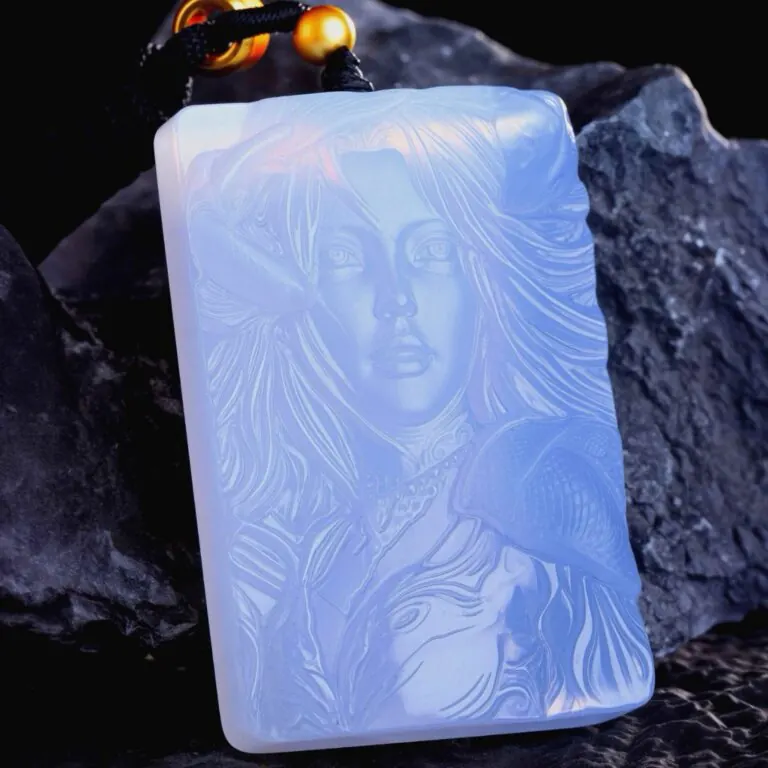
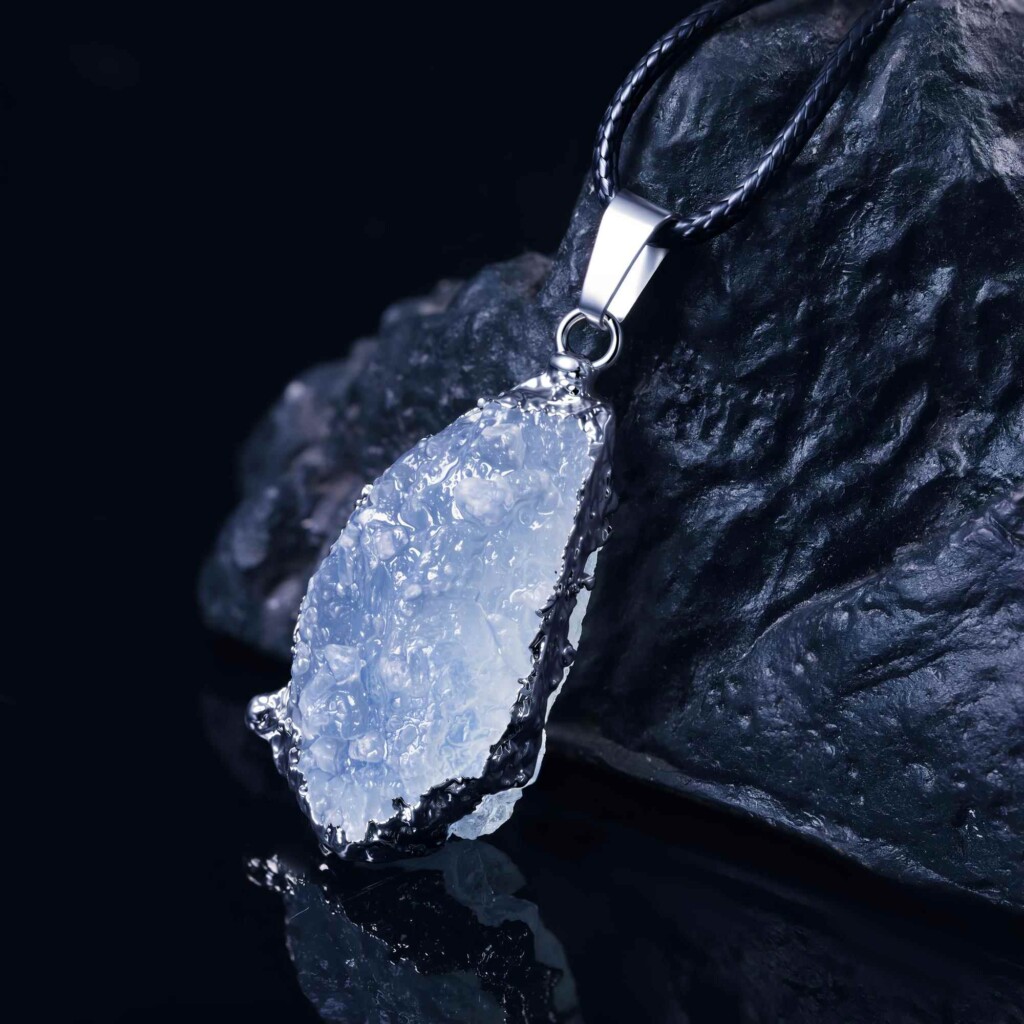
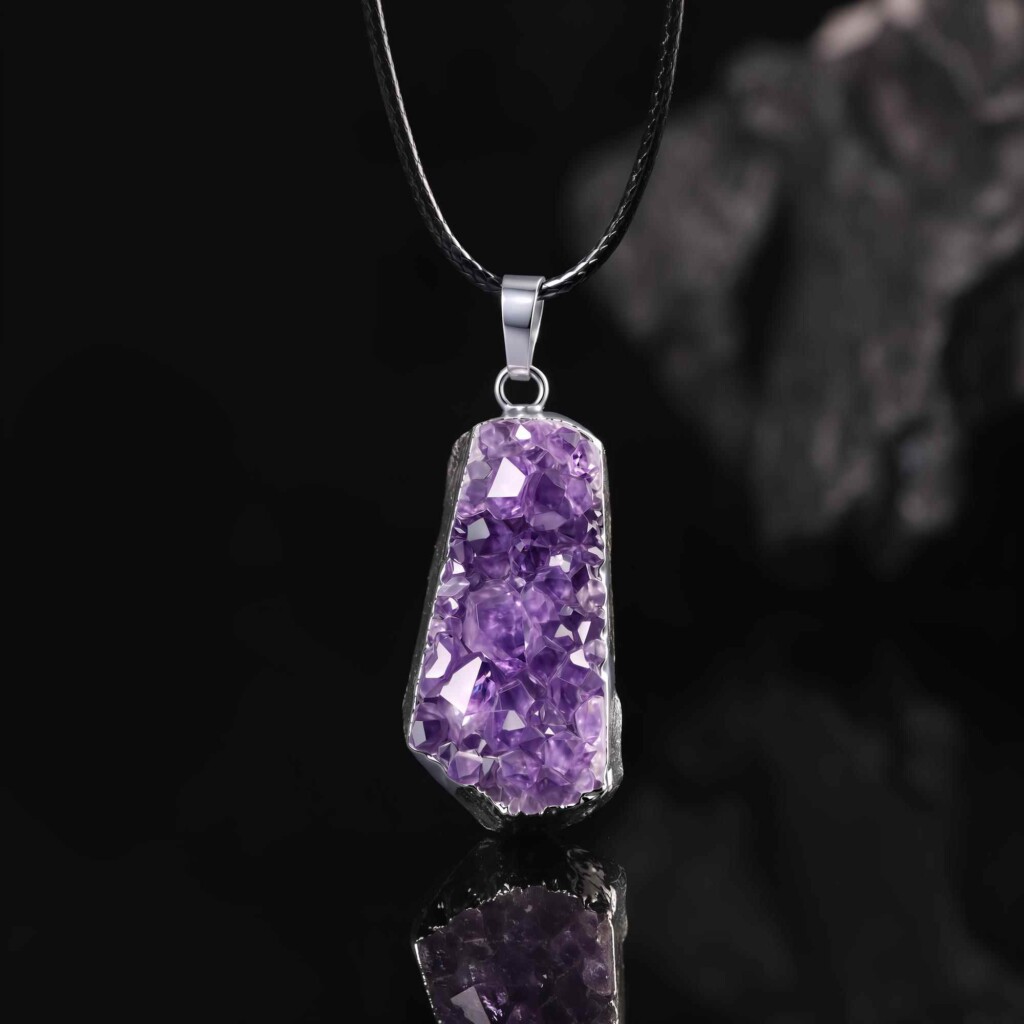
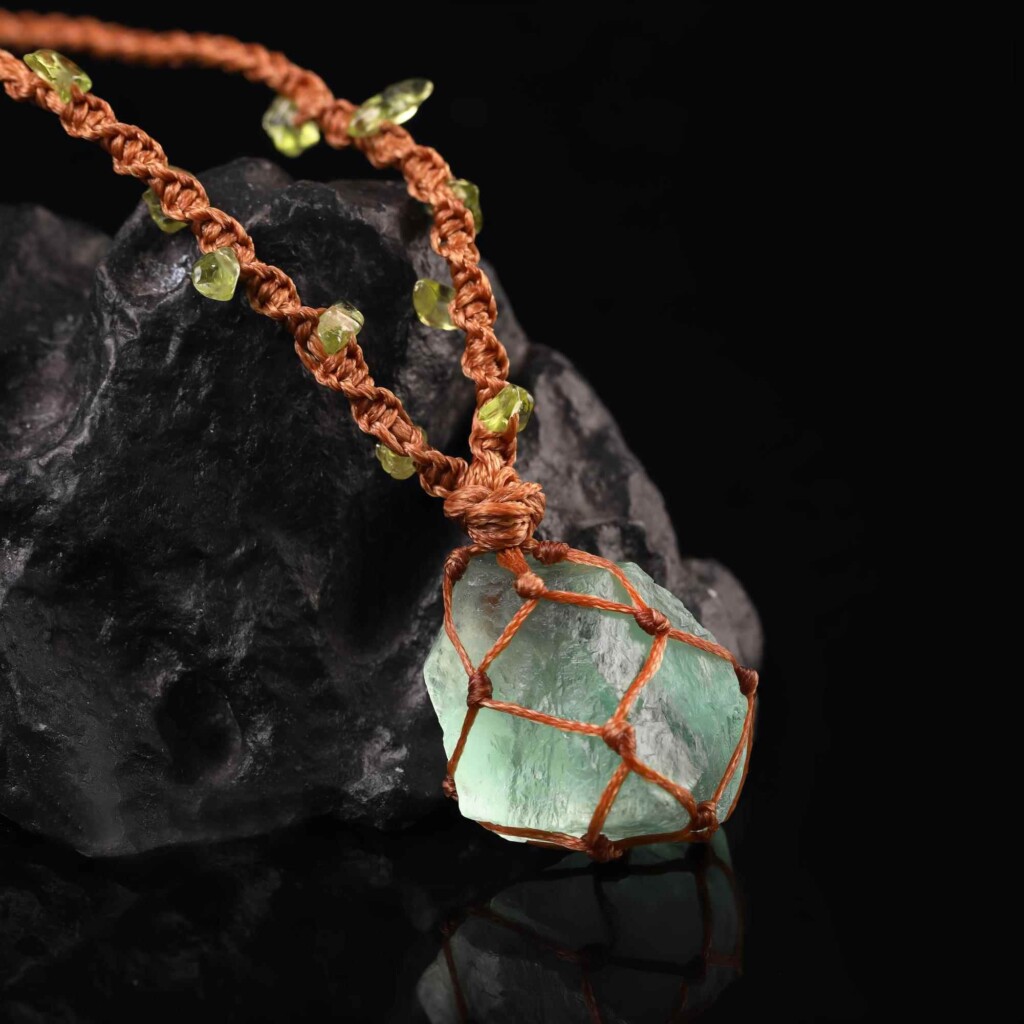
Lava cooled too fast to crystallize forms volcanic glass. A hand carved obsidian pendant carries this ancient volcanic glass, sharpened to three nanometers, serving as the original blade and ultimate guardian stone of human history.
Before metal forged cities and before ink recorded history, humanity reached for the black glass. We did not pick it up for its dark beauty. We claimed it because it was the sharpest substance on Earth. For 700,000 years, this volcanic glass dictated survival. Early humans knapped it into spear points, scrapers, and blades that could slice through bone and hide with zero resistance. It was not a mineral; it was a frozen moment of geological violence.
A modern steel blade measures roughly 30 nanometers at its edge. Obsidian fractures down to three nanometers—nearly a single molecule thick. In the Stone Age, this extreme sharpness made it trade currency. It was the black gold of the ancient world, moving across continents in the hands of early merchants. Archaeologists trace these ancient trade routes by finding obsidian tools hundreds of miles from their volcanic source. People valued it more than food, more than shelter, because it guaranteed the hunt and defended the tribe. When a society collapsed, the obsidian mines remained active. The stone outlived empires.
Why Choose a Hand Carved Obsidian Pendant
Today, we no longer knap this stone into spear points. Yet the instinct to carry it remains deeply wired into our psychology. A hand carved obsidian pendant transitions the material from a tool of physical survival to an anchor for mental endurance. It absorbs negative energy, it shields the wearer from psychic fatigue, and it reflects the unvarnished truth.
From the workbench: Obsidian is distributed across many countries globally, available in both transparent and opaque varieties. Because it is fundamentally volcanic glass, it is extremely brittle; carving it easily causes chipping, demanding immense patience and a steady hand to shape without fracturing the stone.
Modern life is loud, chaotic, and entirely disconnected from the physical earth. We stare at screens that emit light but offer no warmth. We wear synthetic fabrics that trap heat but lack substance. This pendant cuts through that modern numbness. It is heavy. It is dense. It carries the literal weight of the earth’s crust against your chest.
The Myths of the Black Glass
The Aztec priests would polish the stone for weeks using sand and water, achieving a reflective surface so perfect it seemed to hold a portal to the underworld. Tezcatlipoca, the smoking mirror god, looked back at the viewer, revealing their ultimate destiny. One of these original polished stones sits in the British Museum today, still pitch black, still waiting. The mirror does not show your face; it shows the inevitable. It strips away vanity and leaves only truth.
In North America, the legend of Apache tears tells a different, more sorrowful story. Warriors rode off a cliff to avoid capture and enslavement. Where the tribe’s tears hit the earth, the soil turned to black glass. The lore promises that whoever carries one of these stones will never cry again, because those ancient tears have already been shed for them. It is a stone of ultimate sacrifice, crystallized grief turned into protection.
In modern epic fantasy, the only weapon that shatters the frozen dead is dragonglass. That is obsidian. The thing that kills the undead was never alive. It is a stone. This contrast—life destroying the unnatural through something entirely inorganic—captures the exact energy of the material. It is the antithesis of corruption.
The Carving Process: 9 Hours in the Dark
Creating a piece for our Occult Amulets collection requires raw material and relentless focus. Every pendant begins as a rough chunk of volcanic glass. The process involves a rough cut, a meticulous detail pass, and a final hand polish. The dust from the carving process is fine and black, coating the carver’s hands and tools. It requires constant rinsing and careful breathing. The final polish is done not with machines, but with leather and specialized compounds, bringing out the deep, abyssal black that makes the stone so mesmerizing. This takes roughly 9 hours of handcrafting per pendant. Each pendant is individually carved by hand, without molds, ensuring the stone’s natural fractures guide the final shape.
Because the stone is essentially glass, the carver must listen to the material. Push too hard, and the piece shatters. Hesitate, and the edge chips. It is a conversation between human intent and geological stubbornness. The result is a piece that carries the physical memory of the carver’s focus.
When you wear one of these pieces, like the The Patient One Hand Carved Obsidian Necklace, it slips under a collar. It remains invisible to the world until your fingers find it during a stressful meeting or a quiet moment of doubt. The cool, glassy surface grounds you. It is a physical reset button for a scattered mind.
Carrying the Guardian Stone
Across disparate cultures, one belief repeats without fail: obsidian does not decorate. It protects. We stopped making knives out of it, but we never stopped asking it to guard us. Whether you seek the quiet ambition of the Capricorn Zodiac Hand Carved Obsidian Necklace or the silent secrets of a dark mythology piece, the stone demands respect.
It does not amplify your emotions; it grounds them. It does not promise you wealth or luck; it promises you endurance. In a world that constantly demands you to be more, to buy more, to feel more, obsidian simply asks you to be solid. It is the anchor that holds the ship when the storm breaks.
It is a stone that was never alive, yet it holds the memory of the earth’s most violent eruptions. When you give one to the person who is irreplaceable to you, you are not just giving jewelry. You are handing them the first blade of mankind, forged in fire, cooled in the dark, and carved to protect.