TL;DR
- A raw stone necklace carries an uncut, unpolished crystal — the stone keeps the surface it formed with, not a shaped one.
- Raw, tumbled, and carved stone are three different finishes, and each finish changes how a necklace looks, feels, and wears.
- Buyers choose raw stone for visible natural texture, a lighter visual weight, and gentler prices.
- Quality in a raw stone necklace shows in the drill or setting, the honesty of the product photos, and the condition of the edges.
- Raw amethyst is the easiest first raw stone necklace: hard enough for daily wear, instantly recognizable, and affordable.
- Z-OATH sells both uncut raw stone necklaces and hand-carved stone pendants; this guide explains how to choose between the two.
What Does “Raw” Mean in a Raw Stone Necklace?
A raw stone necklace is a pendant made from a crystal that has not been cut, shaped, or polished by a lapidary. The stone is cleaned, sometimes drilled, and set on a cord or chain — nothing more.
The surface you see on a raw stone is the surface the crystal grew with. Points, striations, and natural fractures are part of the piece, not flaws added later.
“Raw” describes a finish, not a quality grade. A well-chosen raw stone is selected for intact crystal form and honest color before it ever becomes a necklace.
How Is Raw Stone Different From Tumbled or Carved Stone?
Raw, tumbled, and carved finishes answer the same question — “what should this stone look like?” — in three different ways.
| Finish | What happens to the stone | What you see | How it wears |
|---|---|---|---|
| Raw | Cleaned and drilled only | Natural crystal faces and texture | Organic, slightly rugged |
| Tumbled | Rotated with abrasive grit for days | Smooth, rounded, glossy | Soft and minimal |
| Carved | Shaped by hand with rotary tools | A deliberate figure or scene | Sculptural, statement-level |
Tumbling removes the crystal’s original shape to make it smooth. Carving replaces the crystal’s shape with a design — at Z-OATH, one carved pendant takes about nine hours of blade work from rough stone to final polish. Raw stone skips both processes and keeps what the earth made.
None of the three finishes is “better.” Each finish suits a different eye and a different budget.
Why Do Some Buyers Prefer Raw Stone?
Raw stone has a loyal audience for practical reasons, not mystical ones.
- The texture is honest. A raw crystal shows growth lines and faces that polishing would erase.
- The look is lighter. A raw point or cluster reads casual and pairs easily with daily clothing.
- The entry price is gentle. Uncut stone skips the carving hours, so raw pieces usually cost less than carved ones.
- No two crystals match exactly. Natural variation means your piece will not be identical to anyone else’s, even within the same product listing.
Z-OATH treats that variation as a material fact, not a marketing promise. The specific necklace in the product photos is the style you receive, with natural stone variation expected.
How Can You Judge a Raw Stone Necklace Before Buying?
Four checks separate a good raw stone necklace from a careless one.
- Drill or bail quality. The hole should be clean, centered, and free of stress cracks around it.
- Edges and points. Natural crystal terminations are crisp; fresh chips look bright and jagged. Listings should show them honestly.
- Photo honesty. Wet stone photographs darker and richer than dry stone. Trust sellers whose photos match the stone’s dry, worn state.
- Stated size and weight. Raw crystals vary, so a serious listing gives actual dimensions rather than a vague “one size.”
A clear return policy matters more for raw stone than for most jewelry, because natural variation is real. Z-OATH offers 30-day returns across the store.
Why Is Raw Amethyst the Easiest First Raw Stone Necklace?
A raw amethyst necklace solves the three worries most first-time buyers have: durability, appearance, and price.
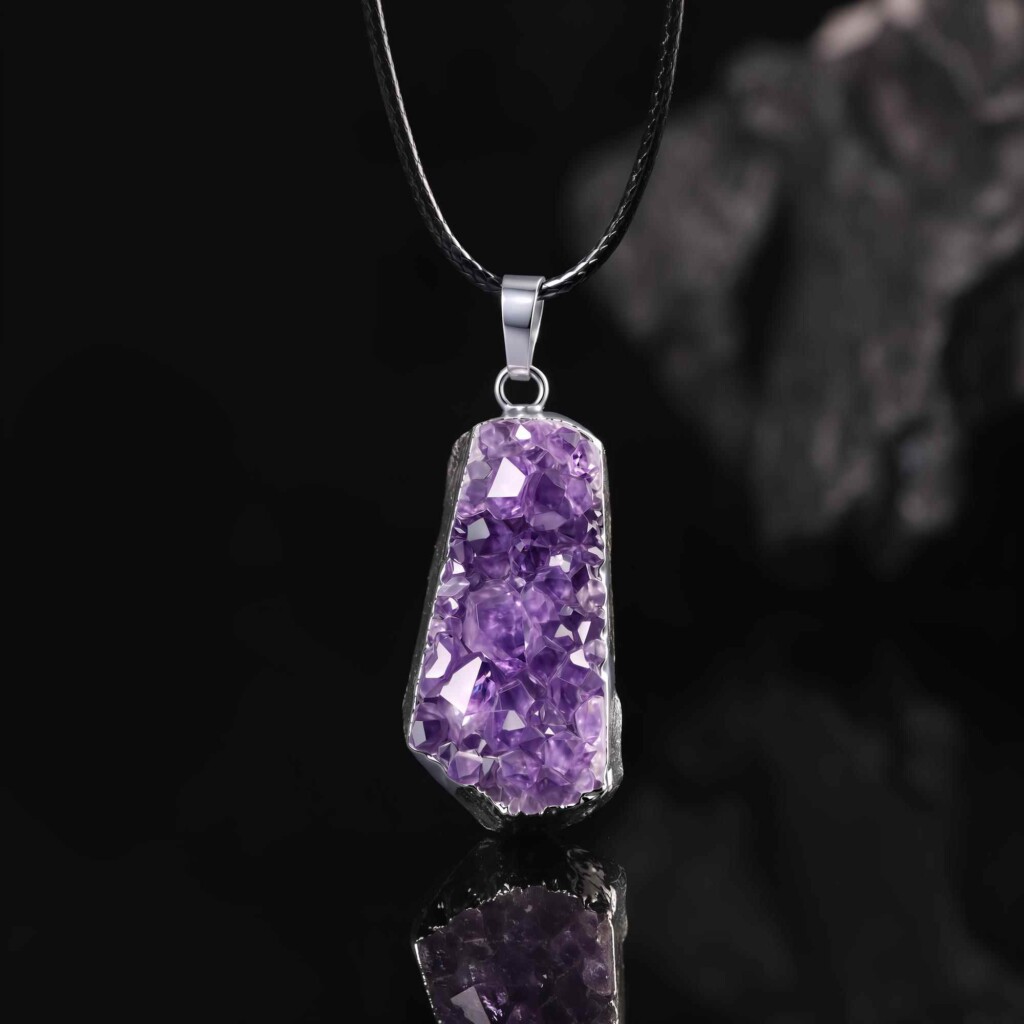
Amethyst sits at 7 on the Mohs hardness scale, which makes an amethyst point tough enough for daily wear. The purple color is recognizable at a glance, even in uncut form. And because amethyst is abundant, a genuine raw amethyst necklace costs far less than most people expect — the Z-OATH raw amethyst necklace is $39 at the time of writing.
The name itself carries a story. The ancient Greeks called the stone “amethystos,” meaning “not drunk,” and believed it kept the wearer clear-headed. Historical belief is context, not evidence; what the stone means to a modern wearer is the wearer’s own choice.
What Does Z-OATH Offer in Raw Stone?
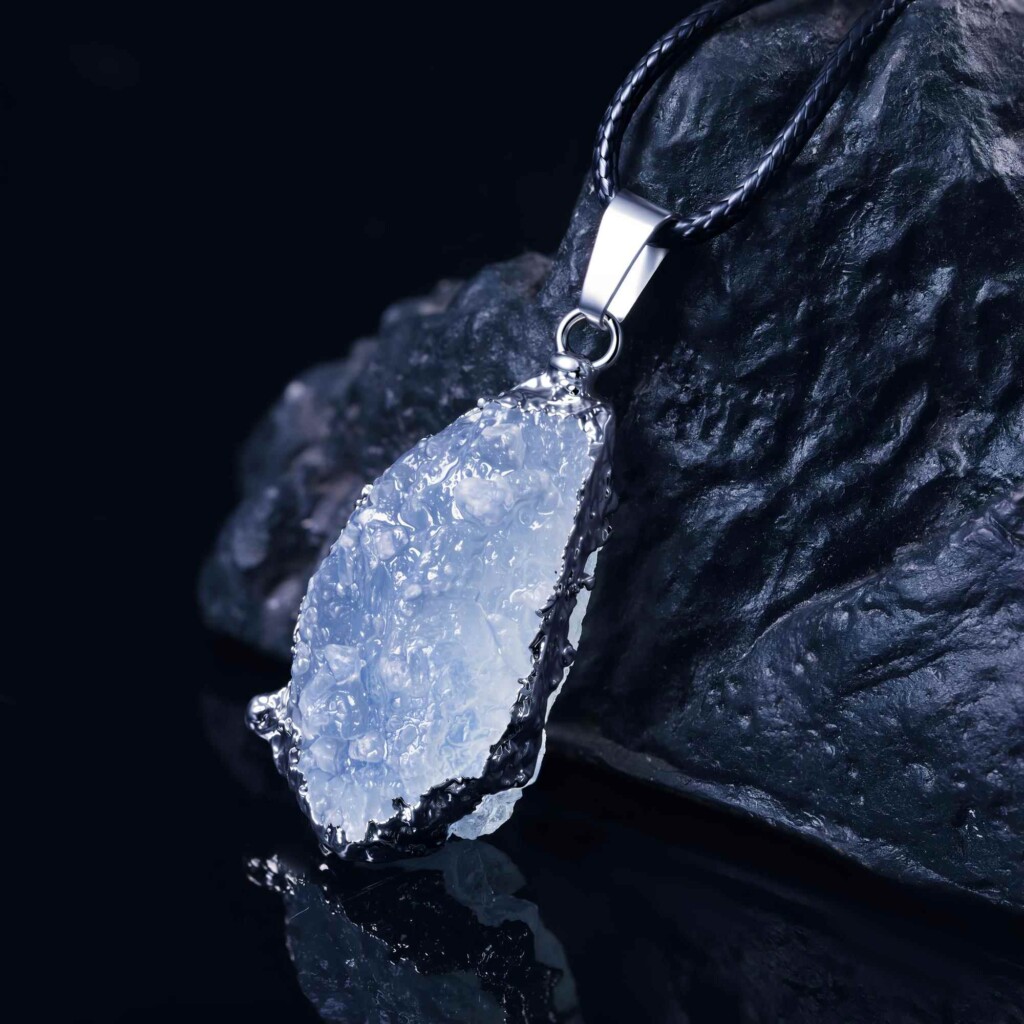
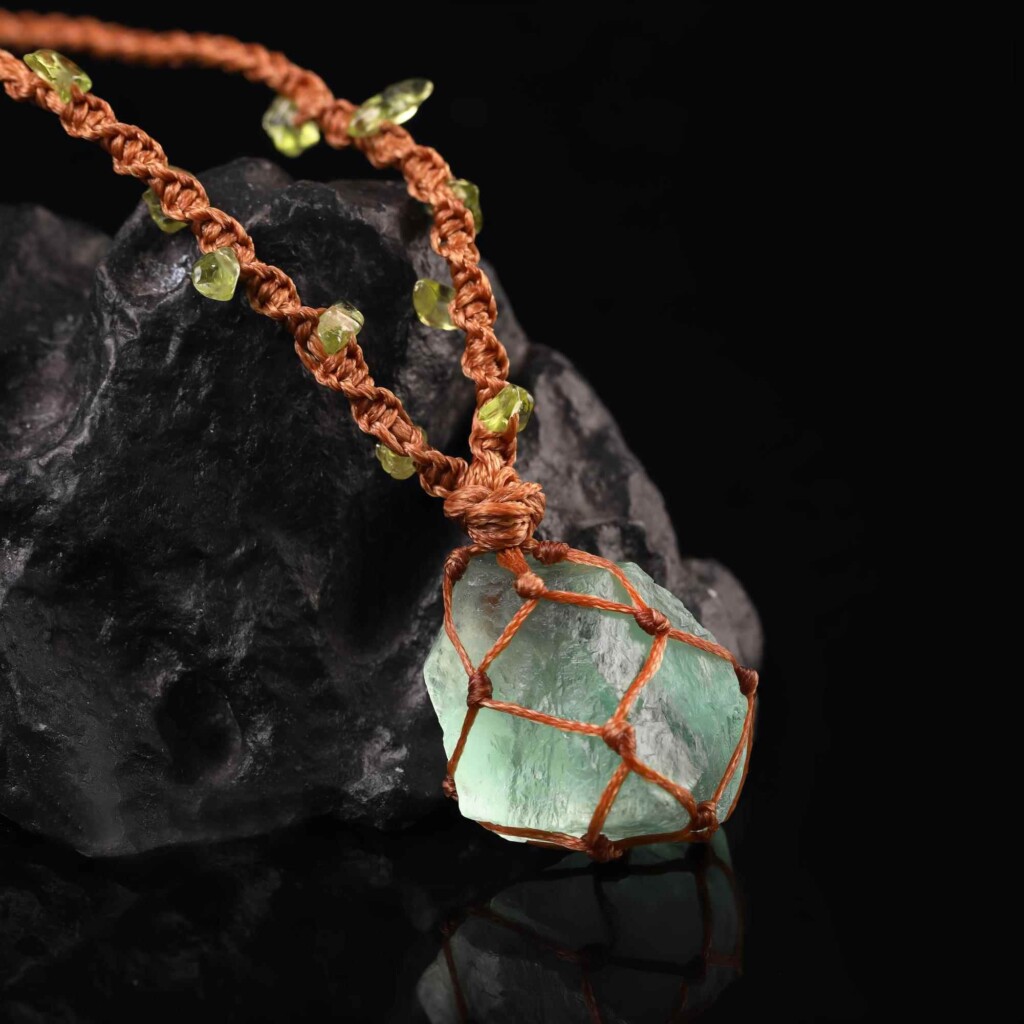
Z-OATH keeps a small raw stone line beside its carved work. The raw stone necklaces collection currently holds three pieces: raw amethyst at $39, raw fluorite at $27, and raw aquamarine at $29, each worn uncut by design.
The studio behind the line comes from a jade-carving background, although no Z-OATH product is jade. That background shapes how raw stones are selected: the same eye that reads a rough stone for carving reads it for crystal form, color bands, and hidden cracks.
Choosing a rough stone always carries a gamble, because the surface never shows everything inside. Raw pieces are chosen so that the gamble ends before the stone reaches a customer.
If you want a first raw stone necklace, the raw amethyst necklace is the gentlest place to start — hard stone, honest color, and a price that lets you learn what you like. And if raw texture ever feels too quiet, the carved side of the shop is one click away.