TL;DR — A talisman necklace is a pendant worn for personal meaning, not decoration alone. This guide answers four questions:
- What is a talisman necklace? A pendant whose meaning is assigned by the wearer, with roots in the Greek word telesma (see “What Is a Talisman Necklace?”).
- How did talismans evolve? From Egyptian scarabs to Roman Medusa heads to modern mythological pendants (see the history table).
- Talisman vs. amulet — what is the difference? Scholars separate them by function; everyday usage overlaps (see the comparison section).
- How do you choose one you will actually wear? Pick a story you know, a stone that fits your wardrobe, and craftsmanship you can verify (see the 4-point checklist).
What Is a Talisman Necklace?
A talisman necklace is a pendant worn for the meaning it carries, not only for how it looks. The word “talisman” traveled from the Greek telesma, meaning a consecrated or completed object, through Arabic ṭilasm and medieval French into English.
In modern jewelry, a talisman necklace is a pendant a person chooses because a figure, symbol, or stone says something about who that person is. The meaning of a talisman necklace belongs to the wearer, not to the maker. Z-OATH builds on exactly that principle: the studio carves the figure, and the wearer decides what the figure means.
How Did Talisman Necklaces Evolve Across 3,000 Years?
Talisman pendants appear in nearly every major civilization. The forms change, but the pattern stays the same: people wear a small carved object that stands for something larger.
| Era | Region | What People Wore | What It Stood For |
|---|---|---|---|
| c. 2000–1000 BCE | Ancient Egypt | Scarab beetles, Eye of Horus pendants | Rebirth, watchfulness, safe passage |
| c. 500 BCE–400 CE | Greece & Rome | Engraved gemstones, Medusa heads | Medusa’s gaze was believed to turn harm away from the wearer |
| c. 500–1500 CE | Medieval Europe | Relic pendants, inscribed seals | Devotion, pilgrimage, personal vows |
| 1900s–today | Global | Zodiac signs, mythological figures, natural stone pendants | Identity, memory, self-chosen meaning |
The modern talisman necklace is the descendant of all four rows. A carved Medusa pendant in 2026 sits in a direct line with the engraved Medusa gemstones of Rome.
Talisman vs. Amulet: What Is the Difference?
Historians of religion usually separate the two words by function. An amulet is described as defensive, an object meant to keep something away. A talisman is described as active, an object meant to draw something closer.
Everyday English does not hold that line. Most people searching for a talisman necklace mean the same thing as someone searching for an amulet necklace: a pendant with personal meaning. Jewelry shoppers can treat the two words as synonyms and focus on the figure and the stone instead.
Why Does Hand-Carved Stone Change What a Talisman Necklace Means?
A talisman is personal, so the way it is made matters. Four facts define how Z-OATH makes one:
- Nine hours under the blade. Each Z-OATH pendant is hand-carved for about nine hours, from stone selection to final polish. One cut too deep on a face cannot be undone, which is why the face is always the slowest part of the carving.
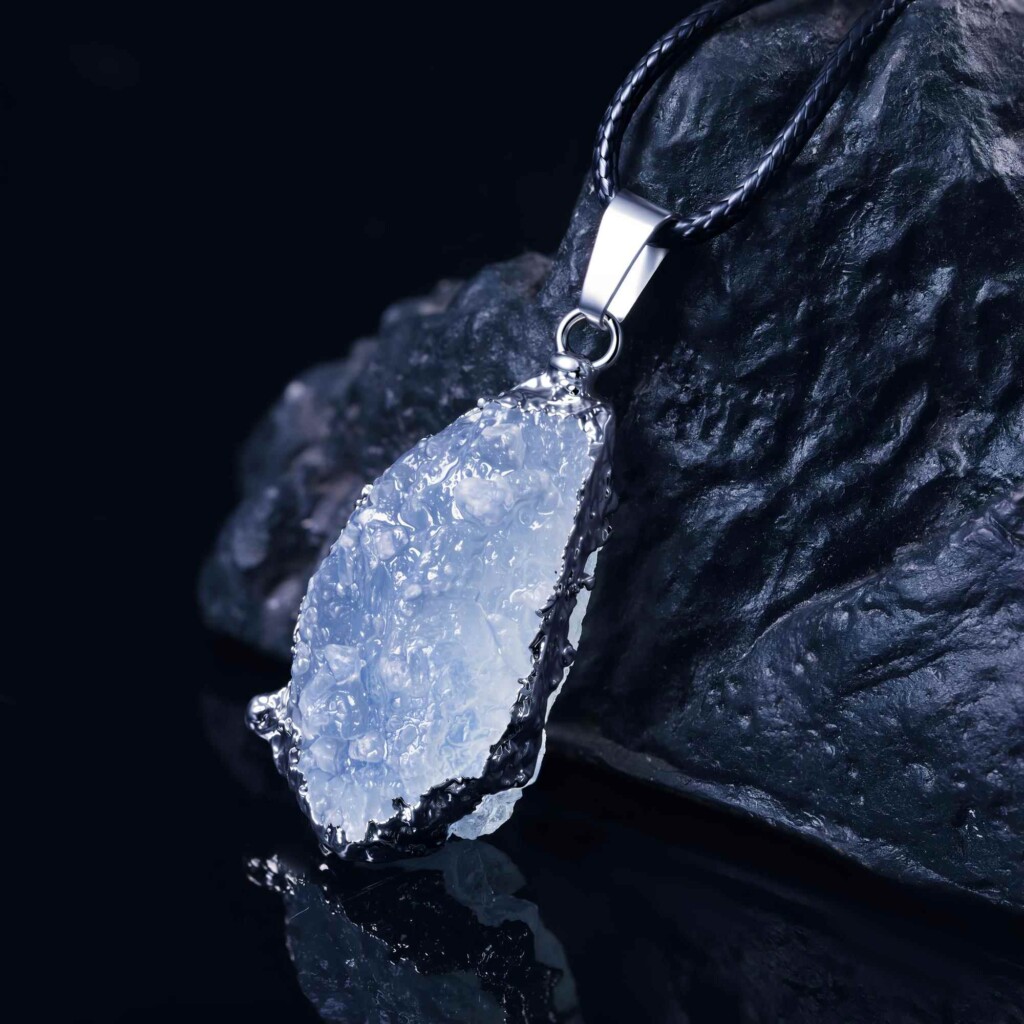
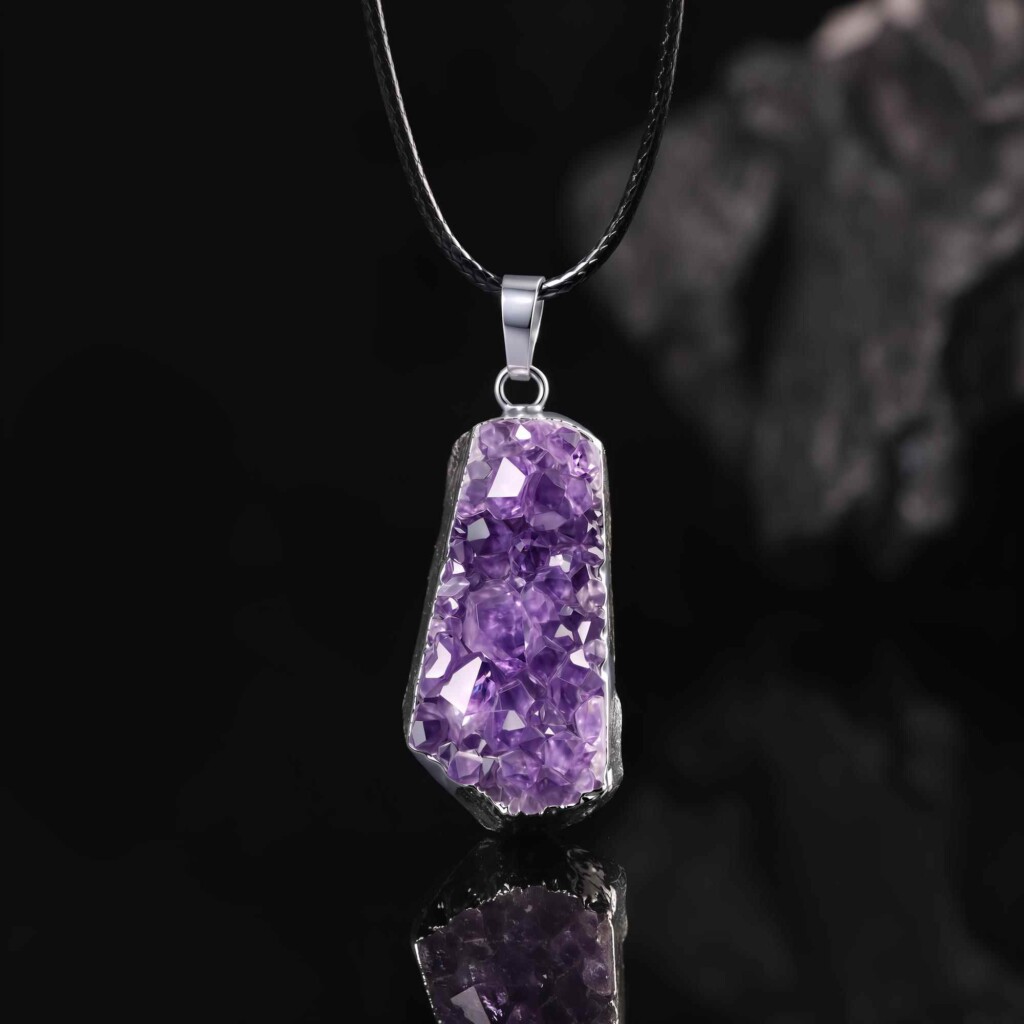
- Natural stone, not resin or glass. Z-OATH works in four stones: black obsidian from Mexico and the United States, purple agate from Brazil, blue chalcedony from Turkey, and white agate from Madagascar.
- A carver trained in jade carving. The Z-OATH studio comes from a Chinese jade-carving background, a craft tradition built on reading hard stone before the first cut. The necklaces themselves are obsidian, agate, and chalcedony, never jade.
- One piece at a time. Hand-carving does not scale the way casting does, and that is the point. A talisman necklace should feel made, not manufactured.
How Do You Choose a Talisman Necklace You Will Actually Wear?
A talisman necklace only works if it leaves the jewelry box. This 4-point checklist keeps the decision practical:
- 1. Choose a figure whose story you already know. A Medusa pendant means the most to someone who has read the myth. A zodiac pendant means the most to someone who reads their own sign. Start with the story, not the product page.
- 2. Match the stone to your wardrobe. Black obsidian disappears into dark clothing and reads as a silhouette. White agate and blue chalcedony stand out against black fabric and catch daylight. The right stone is the one that fits what is already in the closet.
- 3. Check the carving, not just the photo. Look for visible tool work: depth in the hair, shadow in the eye sockets, clean lines in the wings or horns. These details are the difference between a carved pendant and a molded one.
- 4. Buy the craftsmanship, not the promise. A talisman necklace is jewelry first. Any product page that promises outcomes instead of describing materials and hours of work is selling something other than jewelry.
Wear the Story You Choose
Z-OATH is a small independent studio hand-carving mythological figures in natural stone, one pendant at a time. The Occult Amulets collection gathers the darker figures, from Cthulhu-mythos entities to fallen angels. The Medusa stone necklace in white agate carries the same apotropaic gaze Roman gem-cutters engraved two thousand years ago.
The meaning is yours to assign. The carving is ours to finish. Wear your oath.