
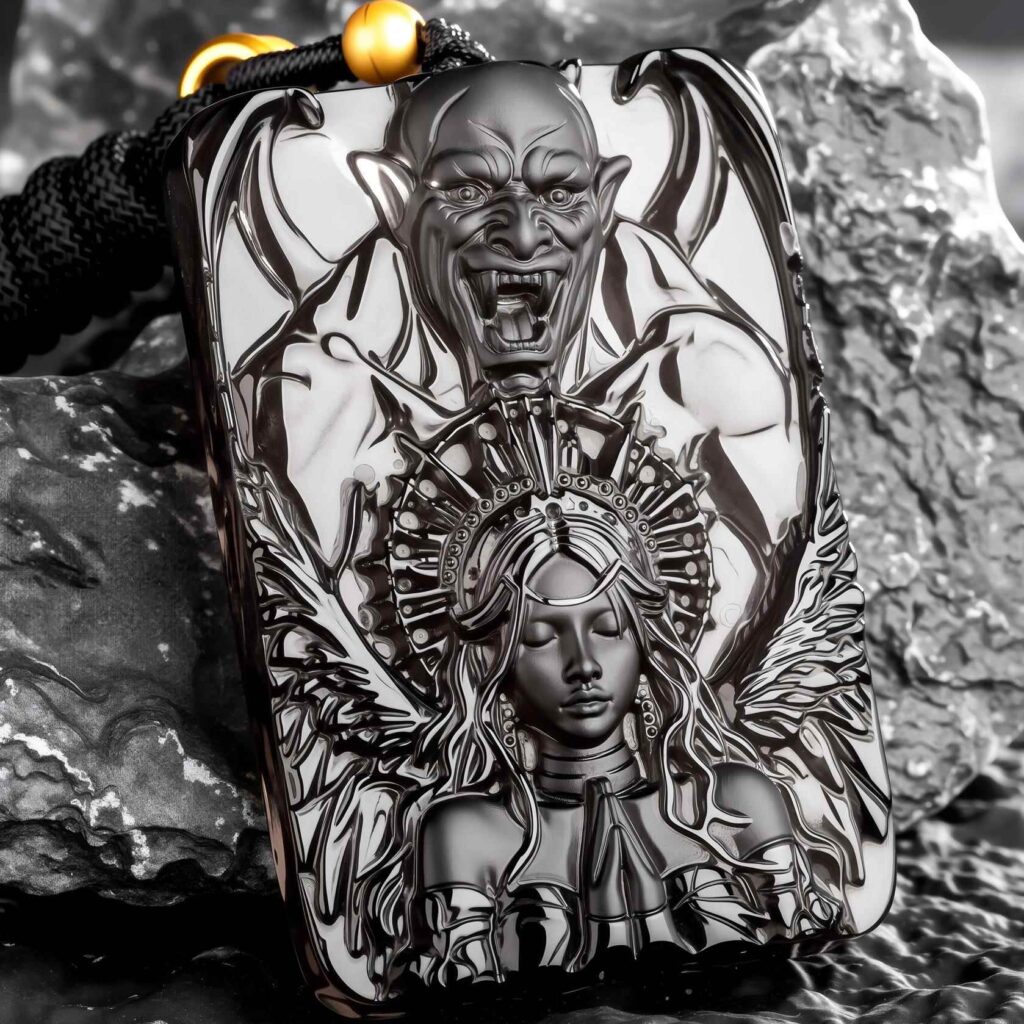
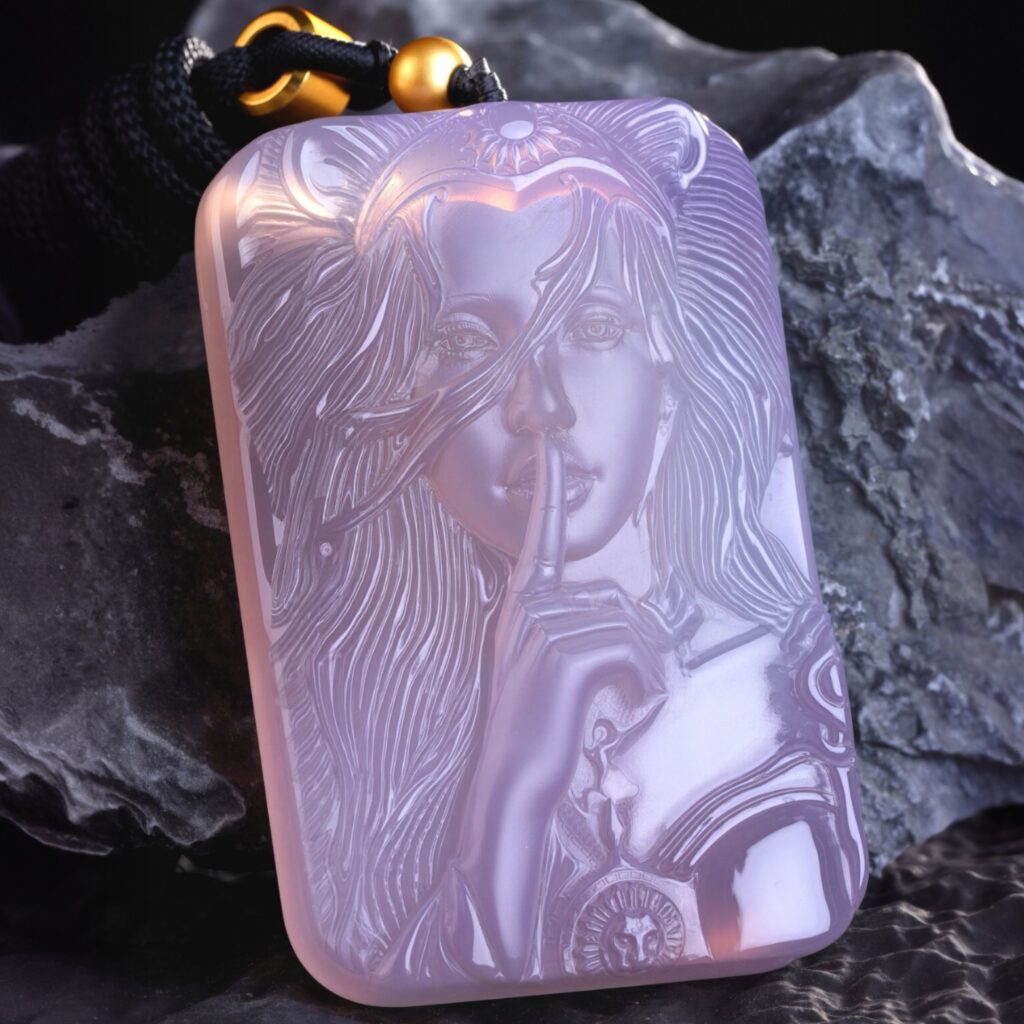
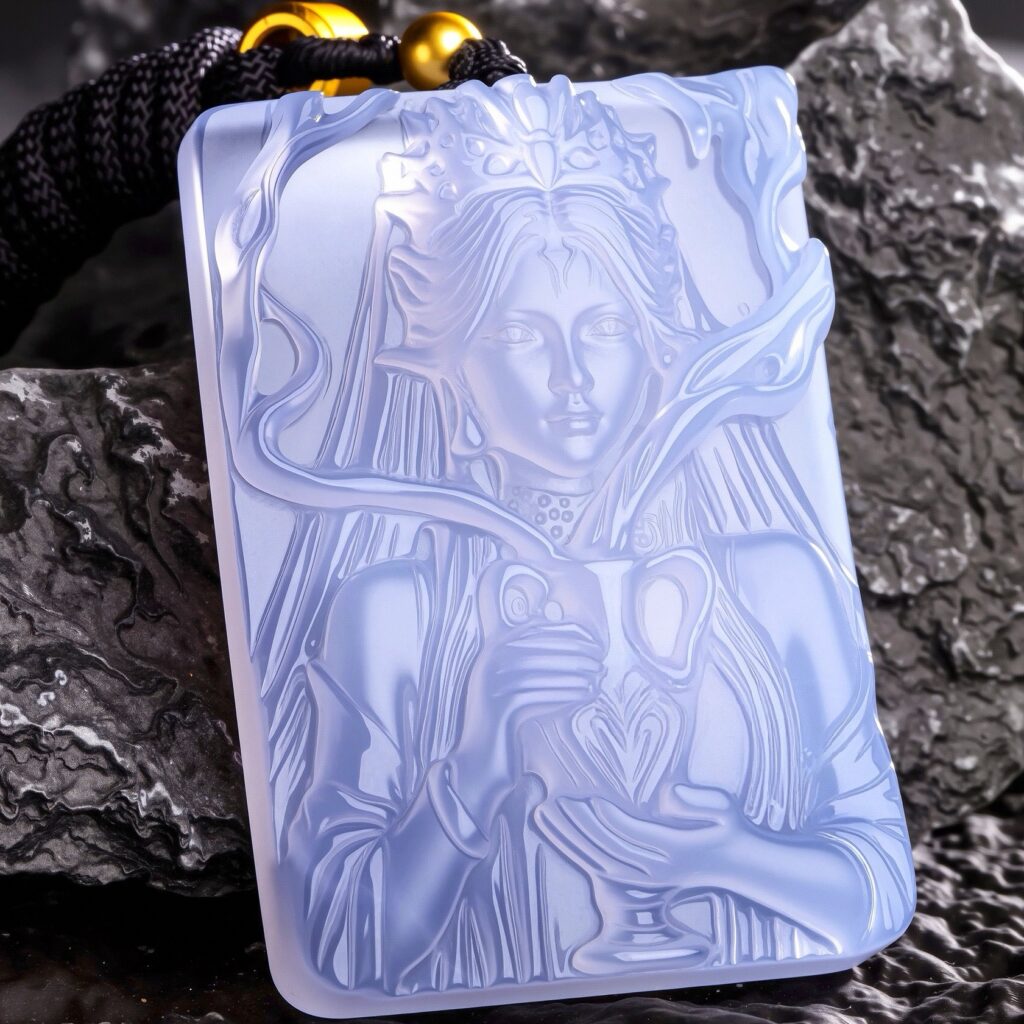
Not Because of Superstition. Because We Need to Be Reminded.
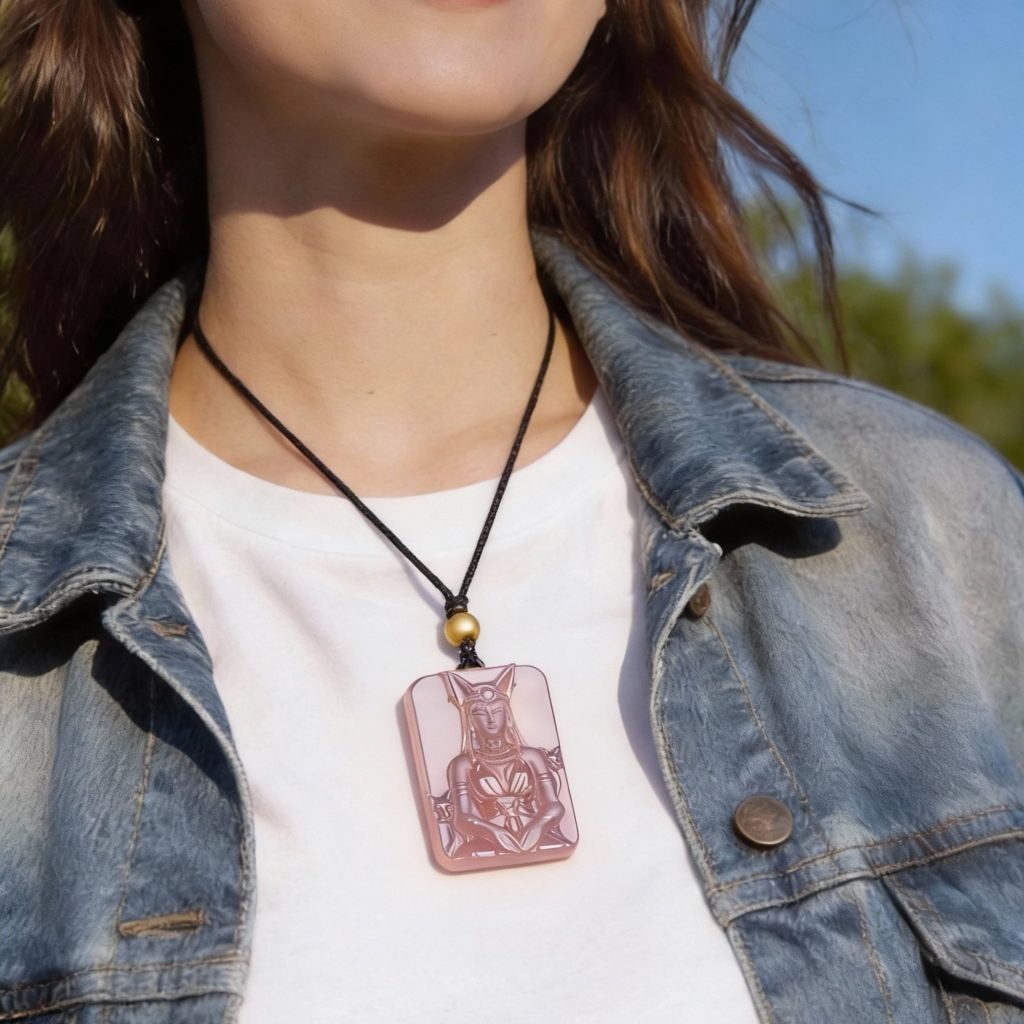
Before stepping out in the morning, hanging a pendant around your neck — the act itself is a ritual. You don’t need to believe it will block anything. You just need to feel it there: heavy, cool, resting against the skin below your collarbone. It reminds you: Today, you chose to be protected.
This is what an amulet means in 2026. Not religion. Not superstition. It is a self-reminder.
The word itself gives the game away: amulet comes from the Latin amuletum — an object that protects. Not decorates. Protects. That meaning has survived two thousand years of language drift intact, because the need underneath it never went away.
The History of Amulets Is Older Than Writing.
The history of humans wearing amulets goes back at least 40,000 years. In Paleolithic caves, archaeologists have found drilled animal teeth, shells, and stones — strung together and worn around the neck. There was no writing then. No religion. And yet someone was already wearing “something,” believing it could protect them.
That makes the amulet older than money, older than agriculture, older than the wheel. It may be the oldest human technology that is still in daily use.
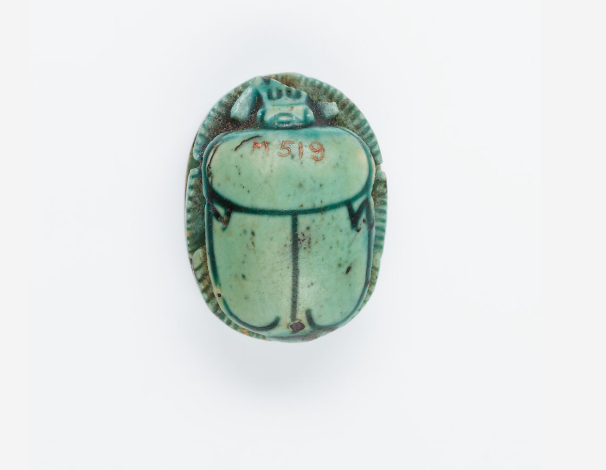
Ancient Egypt: The Scarab symbolized rebirth. The Eye of Horus warded off evil. Pharaohs’ tombs were stuffed with amulets, because the afterlife needed even more protection than the living world.
Mesopotamia: Pazuzu — a demonic face with wings — was worn as an amulet to drive away other, more dangerous spirits. Fighting poison with poison. This was the earliest dark logic.
Ancient Greece and Rome: Children wore the Bulla — a small round box hung around the neck, containing protective inscriptions. Soldiers hid stones carved with the goddess of victory beneath their armor.
China: Jade has been seen as a “spirit-conducting” material since the Neolithic era. The jade pig-dragons of Hongshan, the jade cong of Liangzhu, the jade bi of the Warring States — all amulets. The belief that jade can deflect misfortune has persisted in China for at least 8,000 years.
Four civilizations, separated by deserts and oceans, all arriving at the same object. When independent cultures keep inventing the same thing, the thing is not a trend. It is an instinct.
The Difference Between an Amulet and Jewelry.
Jewelry is for others to see. An amulet is for you to know.
When someone wears a gold chain, you think: “They’ve got money.” When someone wears a hand-carved dark pendant, you think: “There’s something more to this person.”
This is the essence of an amulet: it does not explain itself to the outside world. It speaks only to the wearer.
That is also why the material matters. Mass jewelry is cast by the thousand. An amulet worth wearing is carved — one stone, one blade, one of one. The difference is not visible in a photo. It is visible in the weight.
In 2026, We Need Amulets More Than Ever.
Not because the world is more dangerous. Because it’s louder.
Algorithms, push notifications, alerts, group chats, trending topics — we are bombarded by thousands of external signals every day. An amulet is a counter-signal. It pushes nothing. It simply hangs there in silence, waiting for you to reach for it when you need it.
It reminds you: you are you. Not a row in some dataset.
Psychologists have a drier name for this: a grounding object. It does not change the odds. It changes the person holding it.
What Are You Wearing?
The material and form of an amulet determine its “language”:
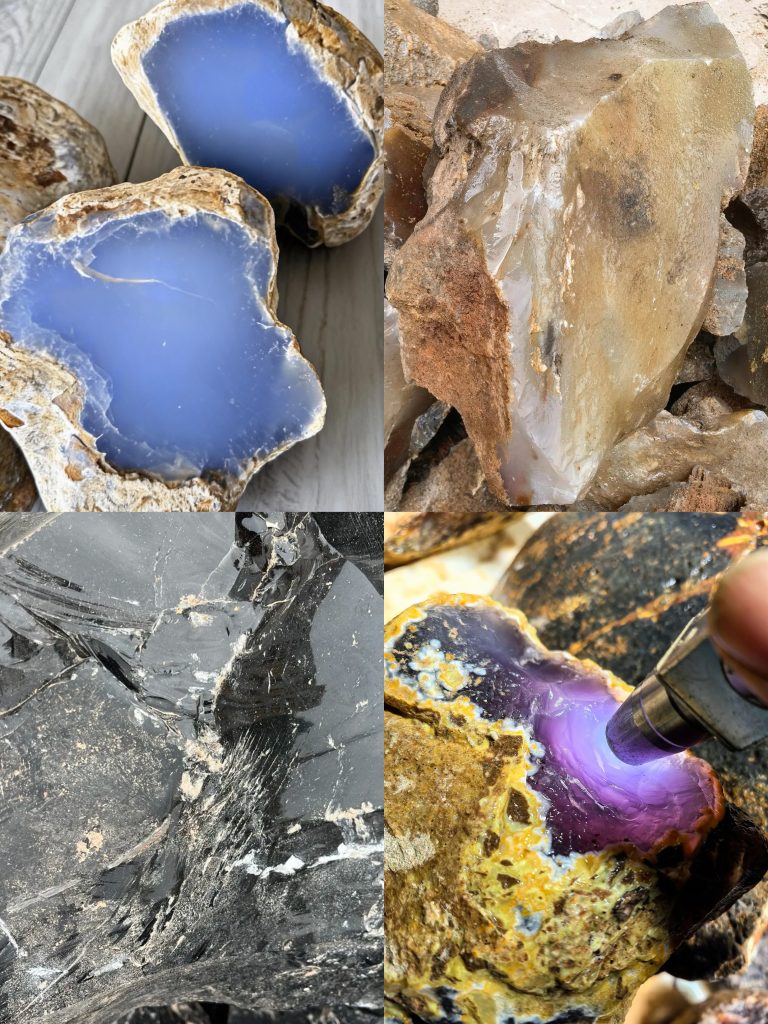
- Black Obsidian: Volcanic glass. Cooled too fast to crystallize. It says: “I keep calm in the chaos.”
- Blue Chalcedony: 65 million years of a light trick. It says: “True power needs no volume.”
- Purple Agate: 135 million years. It says: “Some things grow clearer with time.”
- White Agate: 112 million years. It says: “Purification is not deletion. It is returning to essence.”
Every stone has its own age, its own story, its own silence. Which one you choose is choosing which silence walks beside you.
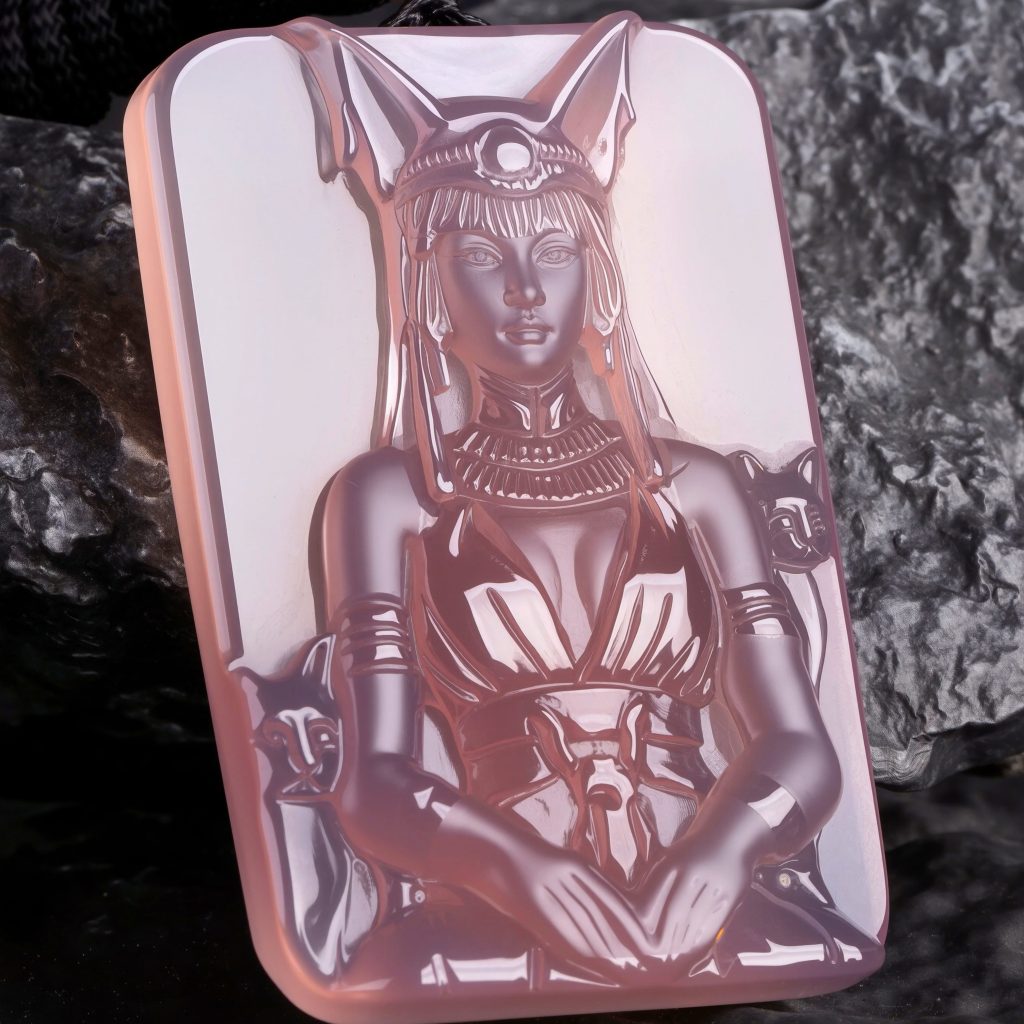
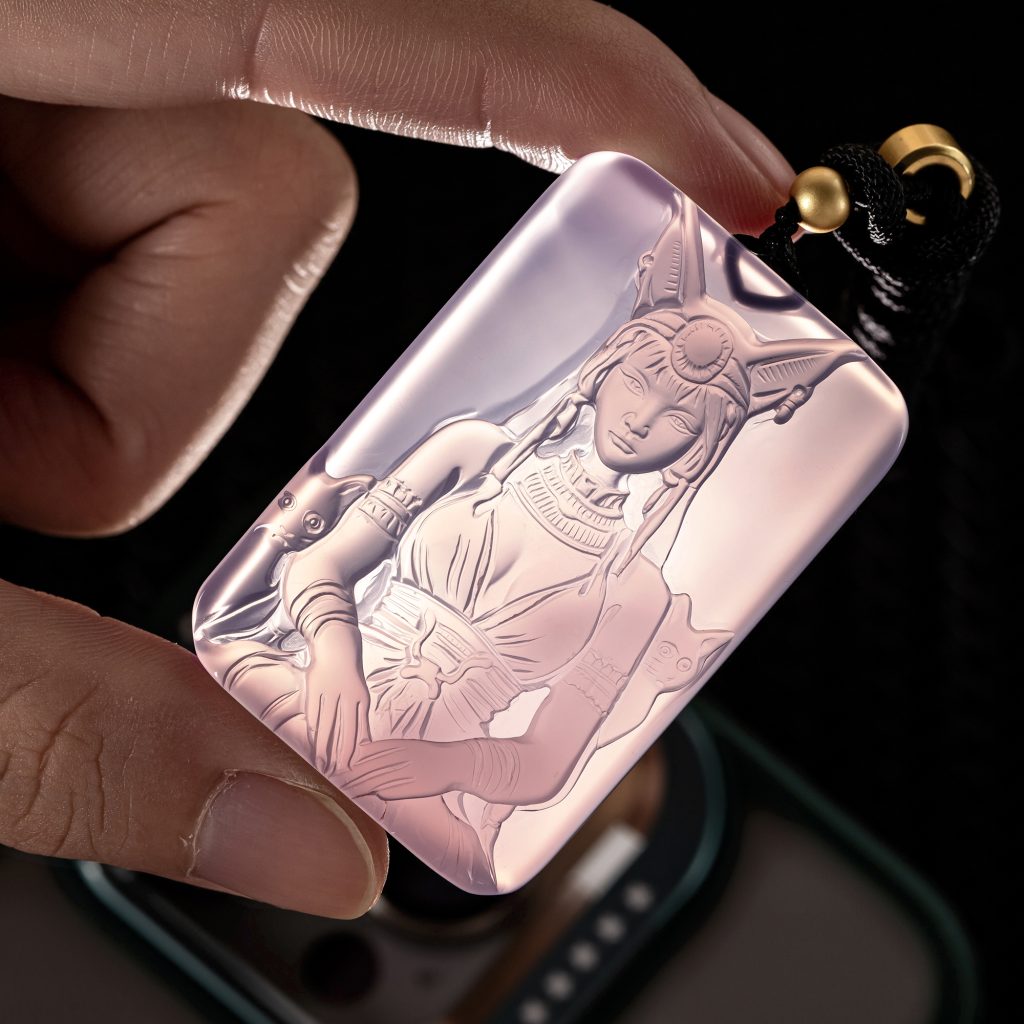
The form speaks too. Our hand-carved Bastet amulet — the cat goddess who guarded Egyptian households for three thousand years — is cut from a single piece of purple agate, and no two stones pattern alike.
Amulet vs. Talisman: Is There a Difference?
People use the two words interchangeably, but the old distinction is worth knowing. An amulet is defensive — it wards something off: illness, ill intent, the evil eye. A talisman is offensive — it draws something in: luck, courage, victory.
An amulet is a shield. A talisman is a magnet. Most carved pendants quietly do both, which is why the words blurred. But if what you want is protection — something between you and the noise — you are looking for an amulet, and you always were.
Do Amulets Actually Work?
Honest answer: no stone has ever stopped a bullet. That was never the mechanism.
What an amulet changes is the wearer. Studies on ritual objects and performance show that people who carry a meaningful object into stressful situations report lower anxiety and higher focus. The stone does not move the world. It moves you — and then you move the world. For 40,000 years, that has been enough.
An Amulet Is Not Faith. It Is a Choice.
You don’t have to believe it has supernatural power. You just need to believe: every morning, when you hang it around your neck, you are reminding yourself — today, you deserve to be protected.
That is why, in 2026, we still wear amulets.
In a world that never stops talking, wear something that knows how to be silent.
Frequently Asked Questions
What is the difference between an amulet and a talisman?
An amulet protects — it wards off harm, bad luck, or ill intent. A talisman attracts — it is carried to draw in luck, strength, or success. Think shield versus magnet. Many carved pendants serve both roles, which is why the terms are often used interchangeably today.
Do amulets really work?
Not by stopping external forces — by steadying the person wearing them. A carried object is a documented grounding practice: it lowers anxiety and sharpens focus. Humans have relied on that effect for at least 40,000 years.
What is the most powerful protection amulet?
Historically, the most repeated answers are the Eye of Horus, the Egyptian scarab, and black obsidian — volcanic glass carried as a guardian stone from Mesoamerica to East Asia. But the most powerful one is always the one whose meaning you personally carry.
How should you wear an amulet?
Traditionally close to the skin, on a cord or chain at the chest, where you can reach it without thinking. Hidden under clothing or worn openly — there is no wrong way. The only rule is consistency: an amulet works through habit, not occasion.
Choose Your Silence
Forty thousand years of wearers can’t all be wrong. Explore our occult amulets collection — every piece hand-carved from natural stone, one of one — or start from the pieces other wearers chose first in our best sellers.