
Not because the world is more dangerous. Because it’s louder.
Forty thousand years ago, an amulet guarded you against wolves and winter. In 2026, the wolves have Wi-Fi.
They arrive as notifications. As feeds that never end. As a thousand voices telling you what to want, what to fear, what to be outraged about — all before breakfast. The average person now checks their phone hundreds of times a day, and every check is a small door opening: something gets in, something is taken.
Your great-grandmother’s demons had names. Yours have apps.
We carve amulets for a living, so you’ll forgive us for noticing the pattern. Here is forty thousand years of it — and why the oldest object in human history might be the only technology that still works.
Forty Thousand Years of the Same Gesture
The oldest amulets predate writing, agriculture, and probably religion. In Paleolithic caves, archaeologists find pierced animal teeth and shells — worn on the body, carried for a reason nobody wrote down. The gesture was already there: this small thing, against the large things.
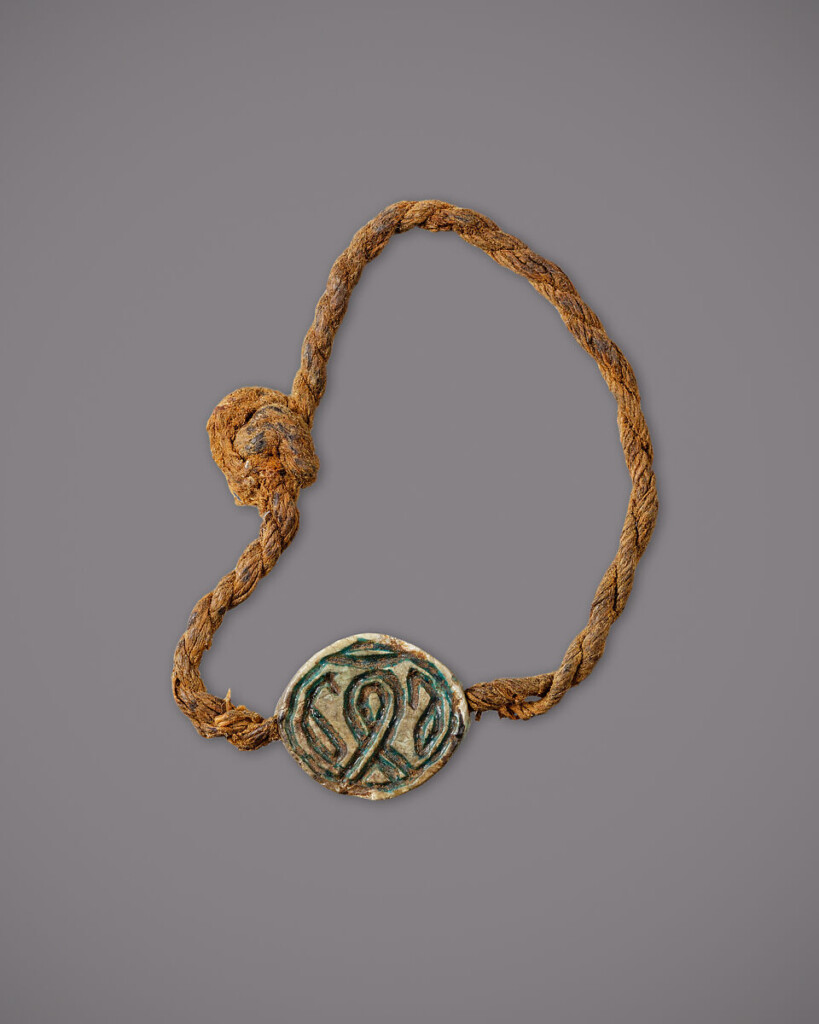
Egypt turned the gesture into an industry. The scarab stood for the sun’s daily rebirth; the Eye of Horus for a body made whole again. Rome wore the gorgoneion against envy. And by the Byzantine centuries the amulet had become personal — a small pendant carrying a holy figure and a line of Greek, worn at the chest of an ordinary person with ordinary fears.

A bronze seal on a woven cord; a saint in hammered metal. Different empires, same object. Every era carves its fears into something small enough to hold.
Amulets Were Never About Magic
Strip away the incense and an amulet is embarrassingly practical: an anchor you can touch. When the mind spins outward — into worry, into noise, into the ten thousand things demanding a reaction — the thumb finds the stone. Cool. Heavy. Real. For one second, attention comes back to the body, and the body is always, stubbornly, in the present.
That is the whole mechanism; no spell required. An amulet won’t silence any of it. But it is the one thing in your day that isn’t asking for your attention — it just sits there, real, cold, heavier than it looks, a reminder that you’re still here under all that noise.
The New Wolves Have Apps
The old wolves were honest. They wanted your food, your warmth, occasionally you. The new wolves want your attention — and they are far better fed. Every notification is a howl engineered by very smart people whose job is to make you look. The feed is a tundra with no far side. Outrage arrives pre-packaged, tuned to your specific fears, delivered before your coffee cools.
None of this makes you weak. It makes you outnumbered. Your nervous system evolved to notice a rustle in the grass; it was never built for a grass that rustles hundreds of times a day, on purpose, for profit.
We can’t quiet the world. We can give you something to hold while it shouts.
Fire That Asks for Nothing
For most of human history, people ended the day the same way: sitting around fire. Fire was the first screen — except it never demanded anything. It didn’t refresh. It didn’t reward outrage. It simply burned, steady and indifferent, and let your thoughts wander somewhere useful. You could say we domesticated fire; you could just as easily say it domesticated us into calm.
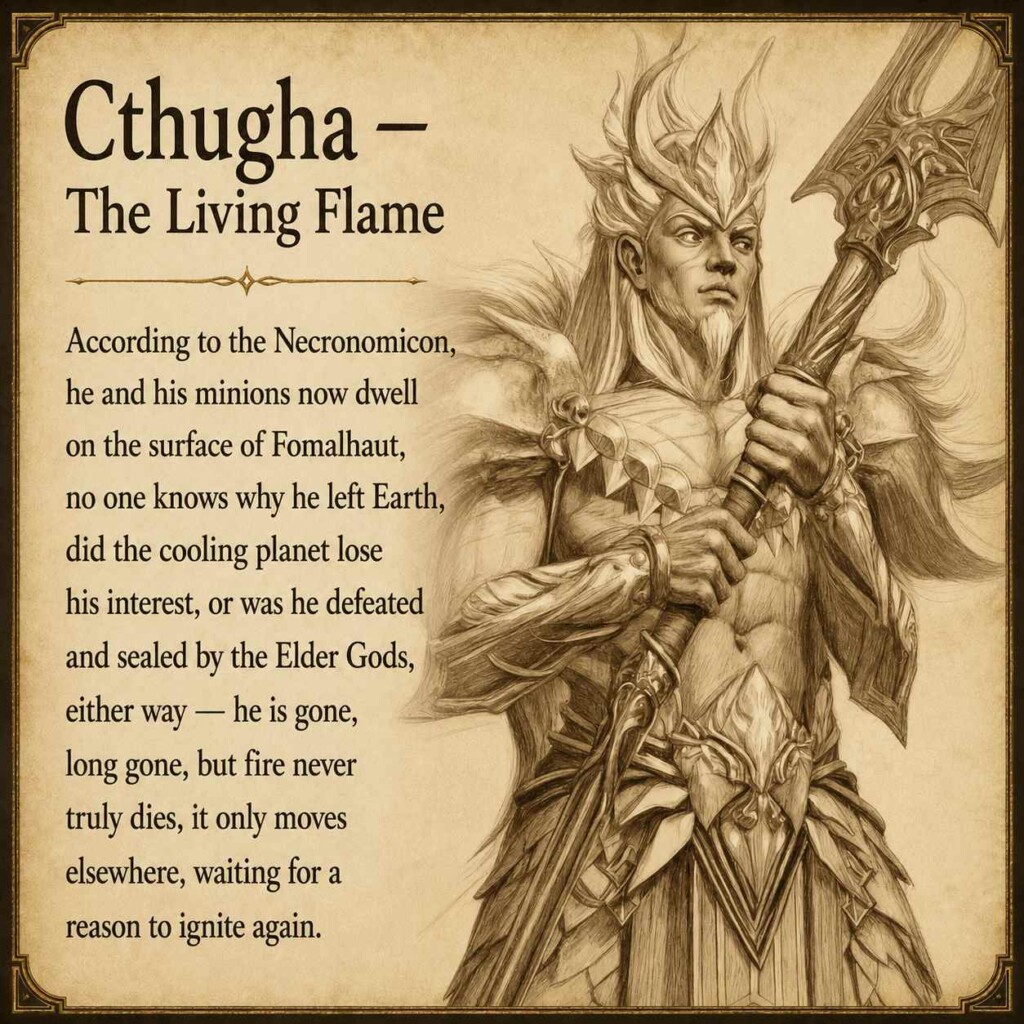
That is the spirit we cut into the Living Flame hand carved white agate necklace — a crowned figure of fire, spear in hand, standing its ground among slow-growing vines. Not a fire that consumes. A fire that holds its post.

Each pendant begins as a raw slab of natural white agate and a pencil sketch. The figure is then cut line by line with hand tools — the crown, the spear, the folds of flame — sanded, and polished. About nine hours of blade work per piece. White agate is a natural chalcedony: cool to the touch, heavier than it looks. Which is exactly the point. Your thumb finds weight, not pixels.
Something to Hold While It Shouts
People ask how you’re supposed to use an amulet in 2026. The same way as 40,000 years ago: wear it, and let it do its one job. Before the meeting, in the crowd, on the train, when the phone buzzes for the twelfth time in an hour — the thumb finds the stone, and for a breath or two you’re somewhere the feed can’t follow.
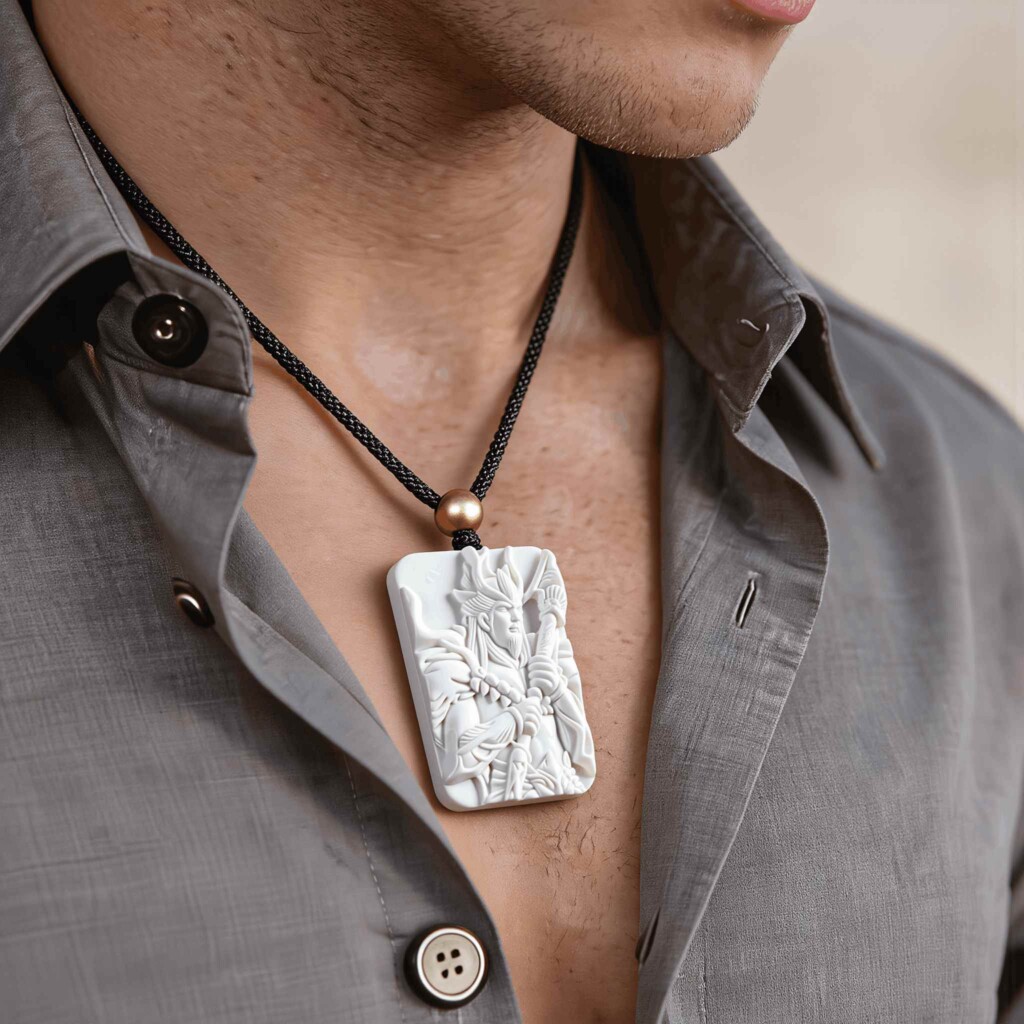
This isn’t about escaping the world. It’s about keeping one unmoving point inside it. The Living Flame pendant is in stock and ships from our studio — and if this one isn’t your fire, the rest of the old guard waits in Occult Amulets, each carved from natural stone, each with its own long story.
So — what would you mute first?
FAQ: Amulets in the Loudest Century
Do amulets actually work?
Not as magic — as anchors. An amulet’s job has always been physical: something real to touch when your mind is being pulled in ten directions. If a stone in your hand brings your attention back to your body for a few breaths a day, it’s doing the same work it did forty thousand years ago.
What is white agate?
White agate is a natural variety of chalcedony — microcrystalline quartz that forms in layers inside volcanic rock over immense spans of time. It’s cool to the touch, pleasantly heavy, and tough enough (around 7 on the Mohs scale) for daily wear. Our pendants are carved from genuine natural stone — never resin, never glass.
Can I wear an amulet every day?
Yes — that’s what it’s for. Take it off before swimming or showering, keep it away from perfumes and harsh cleaners, and wipe it with a soft dry cloth after wearing. The braided cord adjusts with a gentle pull on both knots.
Is an amulet a good gift for someone who’s overwhelmed?
It’s one of the oldest gifts there is. For most of human history, an amulet was how you said “stay safe” without using words. In 2026 it says something just as old: here is something to hold while the world shouts.
Is The Living Flame necklace ready to ship?
Yes — this design is in stock and ships from our studio. Once it leaves the bench, estimated US delivery is 3–7 business days, with tracking sent automatically when your order ships.