
Older than writing. Older than religion. Forty thousand years ago, someone pierced a tooth and wore it on their chest. No one wrote down why — writing would not exist for another 35,000 years. But we keep digging them up.
That is the strange thing about amulets. They were never invented in one place and exported across the world. They appear independently, at different times, in cultures that had no contact with each other — as if wearing a protective object were not a custom at all, but something closer to a reflex.
The First Amulets: Protection Before Civilization
Long before cities, agriculture, or alphabets, early humans were already drilling holes through animal teeth, shells, and small bones — and wearing them. Archaeologists find these objects in Paleolithic burials, placed deliberately against the chest, the wrist, the throat. The placement is the message: these were not decorations. They were carried the way you carry something you cannot afford to lose.
We will never know what the first wearer believed. No one wrote it down — no one could. But the behavior itself is evidence. Forty thousand years ago, a human being looked at a small, hard, beautiful object and decided it would keep them safe. That decision has been repeating ever since.
Egypt: Where the Amulet Became a Technology
No civilization took the amulet further than Egypt. The Egyptians did not just wear protective objects — they engineered them. Every shape had a function, every material had a power, every spell had a number. An amulet was not jewelry; it was equipment.
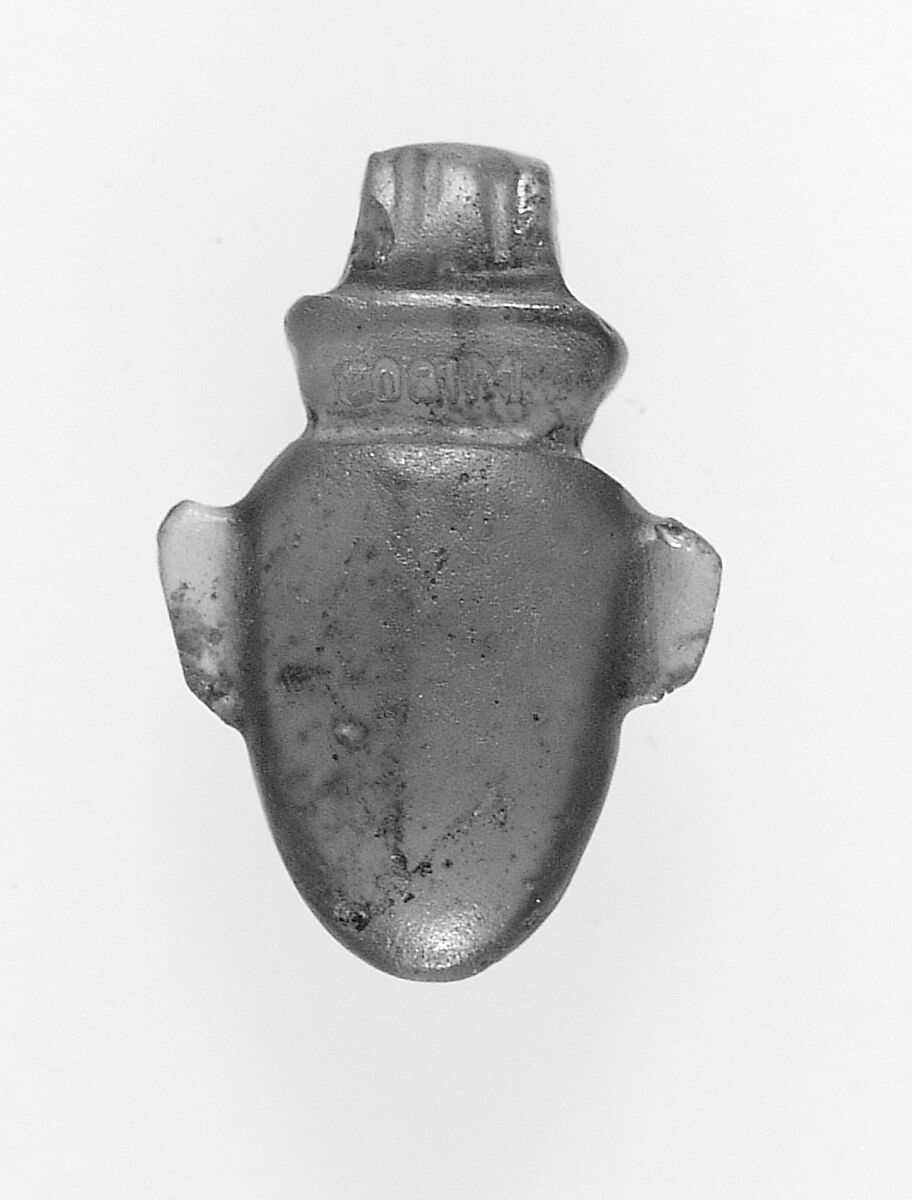
Consider the heart amulet above. The Egyptians believed that after death, the heart would be weighed against the feather of truth — and that it might testify against its owner. So they carved heart-shaped amulets from dark stone, inscribed them with Spell 30B from the Book of the Dead, and placed them over the chest of the mummy. The spell is a plea: do not stand as a witness against me. Of all the organs, the heart was the one the dead could not risk losing.
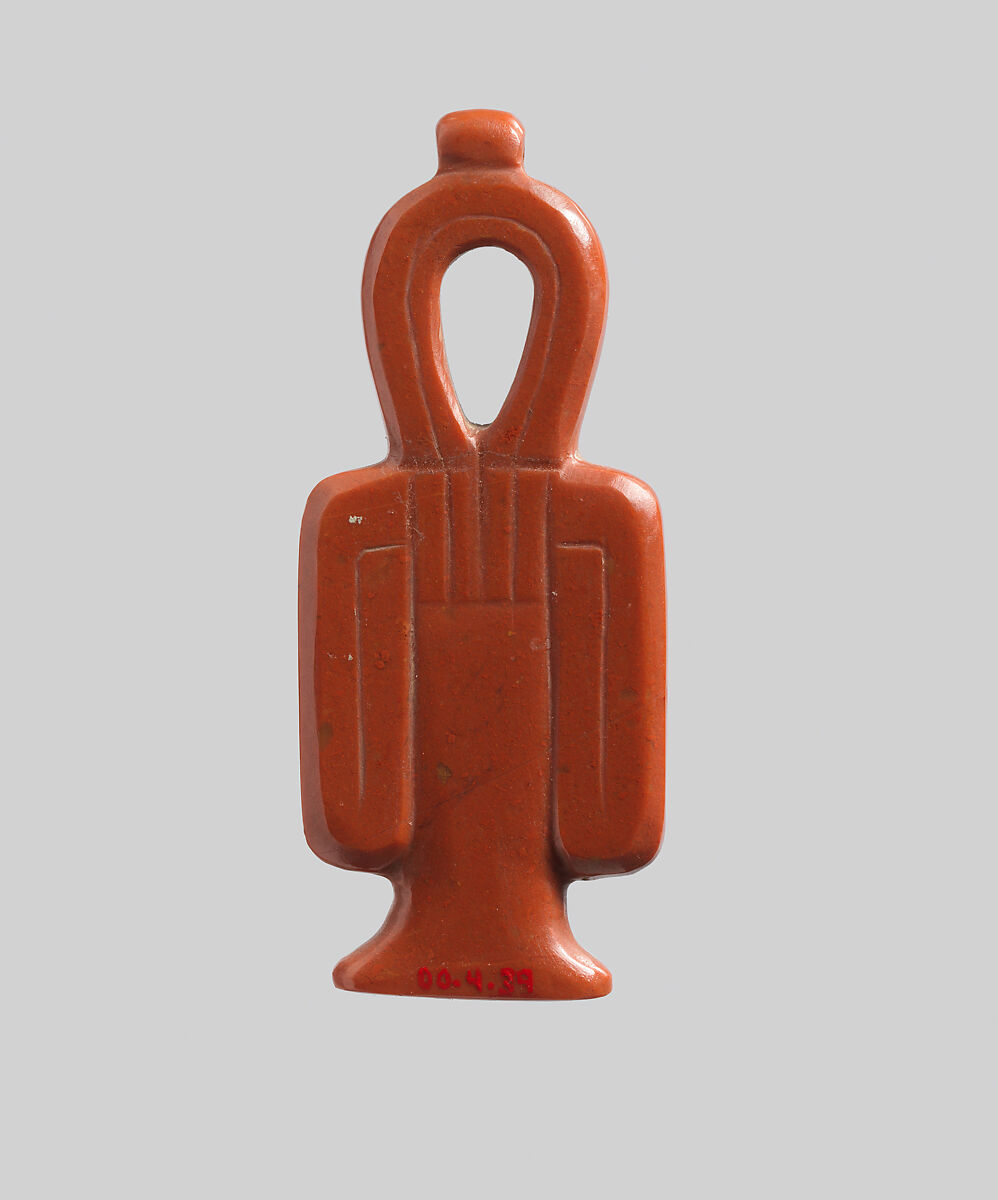
Or the tyet, the Knot of Isis, carved almost always in red — red jasper, carnelian, red glass. Red, because it represented the blood of Isis, and the blood of a goddess was the strongest protection a mortal could borrow. The scarab, the Eye of Horus, the djed pillar: each one a specific tool for a specific fear. Egypt turned the instinct to wear protection into a complete operating system, and ran it for three thousand years.
Obsidian Mirrors and Thunder Hammers
Half a world away, with zero contact, the Aztecs were doing the same thing with volcanic glass. Obsidian belonged to Tezcatlipoca, the god whose name means Smoking Mirror. Priests polished obsidian into black mirrors to see what ordinary eyes could not, and carried obsidian as a guardian — a material born from a volcano, sharp enough to cut, dark enough to hide things. An obsidian amulet was both a mirror and a shield.
Meanwhile, in the cold north, Vikings were wearing Mjölnir — the hammer of Thor — on cords around their necks. Archaeologists have pulled hundreds of these small hammer pendants from Scandinavian graves, most dating from the ninth to eleventh centuries. Some historians read them as a quiet answer to the Christian cross arriving from the south. But the deeper logic is identical everywhere: take the power of a storm god, shrink it down, and hang it over your heart.
No Trade Route Connected Them
This is the part that still gives historians pause. Egypt did not teach the Aztecs. The Vikings learned nothing from either. No merchant carried the idea of the amulet along any route — there was no route. Every civilization invented the amulet on its own, the way every child invents hiding under the blanket. Nobody teaches it. It is simply what a small creature does in a large, uncertain world.
Separated by oceans and millennia, humans kept reaching for the same gesture — pierce it, hang it, wear it, keep going. Some things are not trends. They are instincts.
Why We Still Carve Them by Hand
We did not invent the amulet. We just refuse to let a 40,000-year-old conversation end.
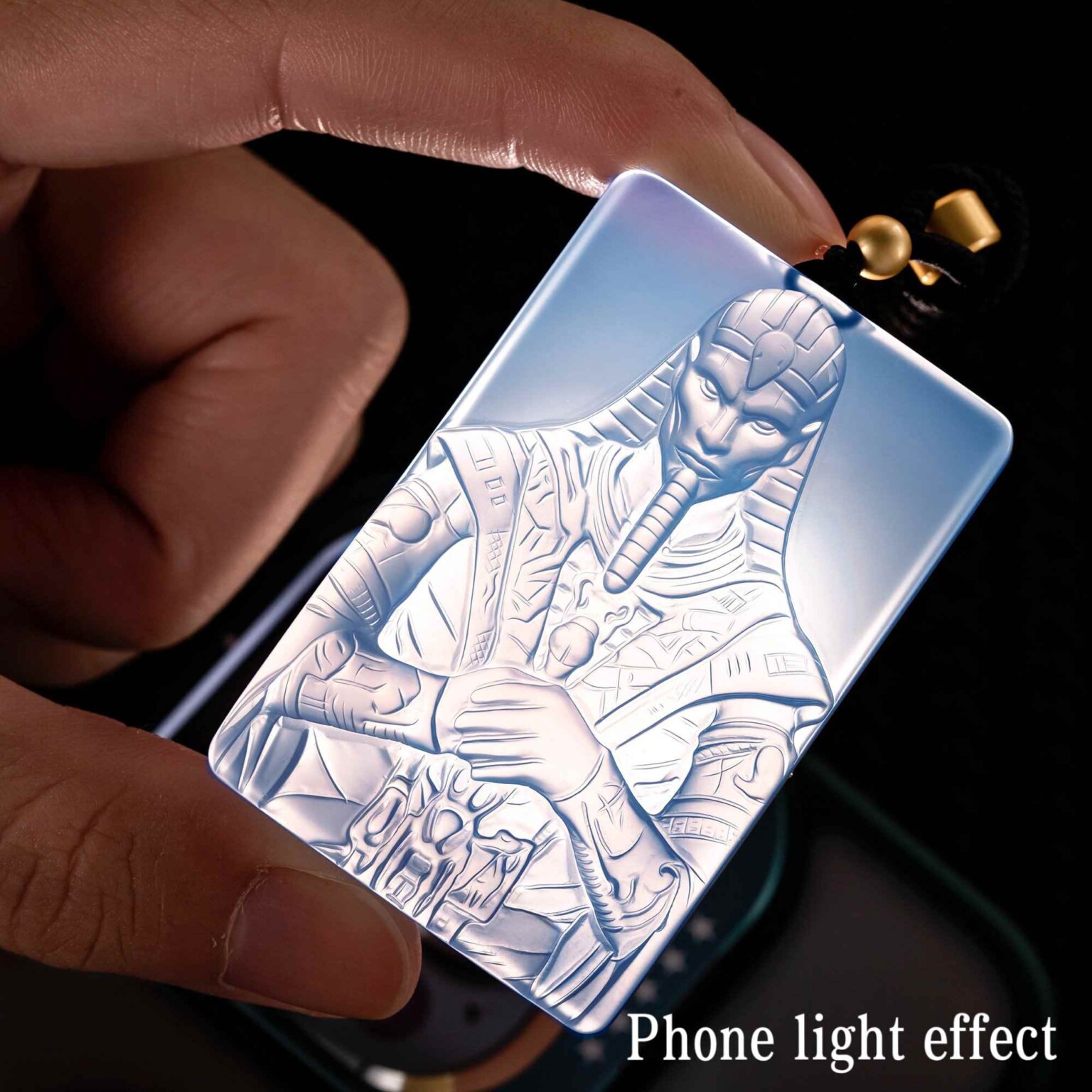
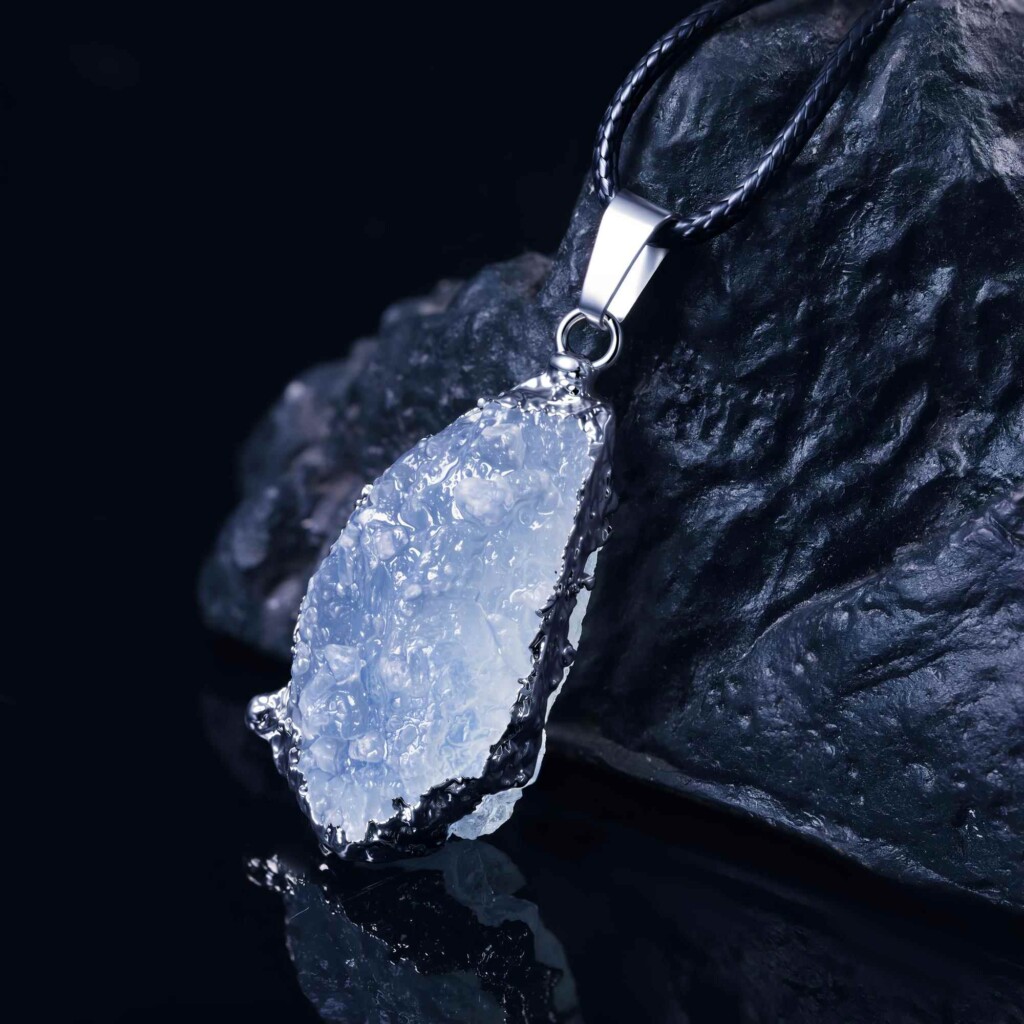
Every Z-OATH piece starts the way the oldest amulets started: as a raw stone that someone decides to trust. The blue chalcedony we carve spent 65 million years forming in the dark before it ever met a blade. Then a human hand takes over — and for hour after hour, line by line, the stone becomes a face.
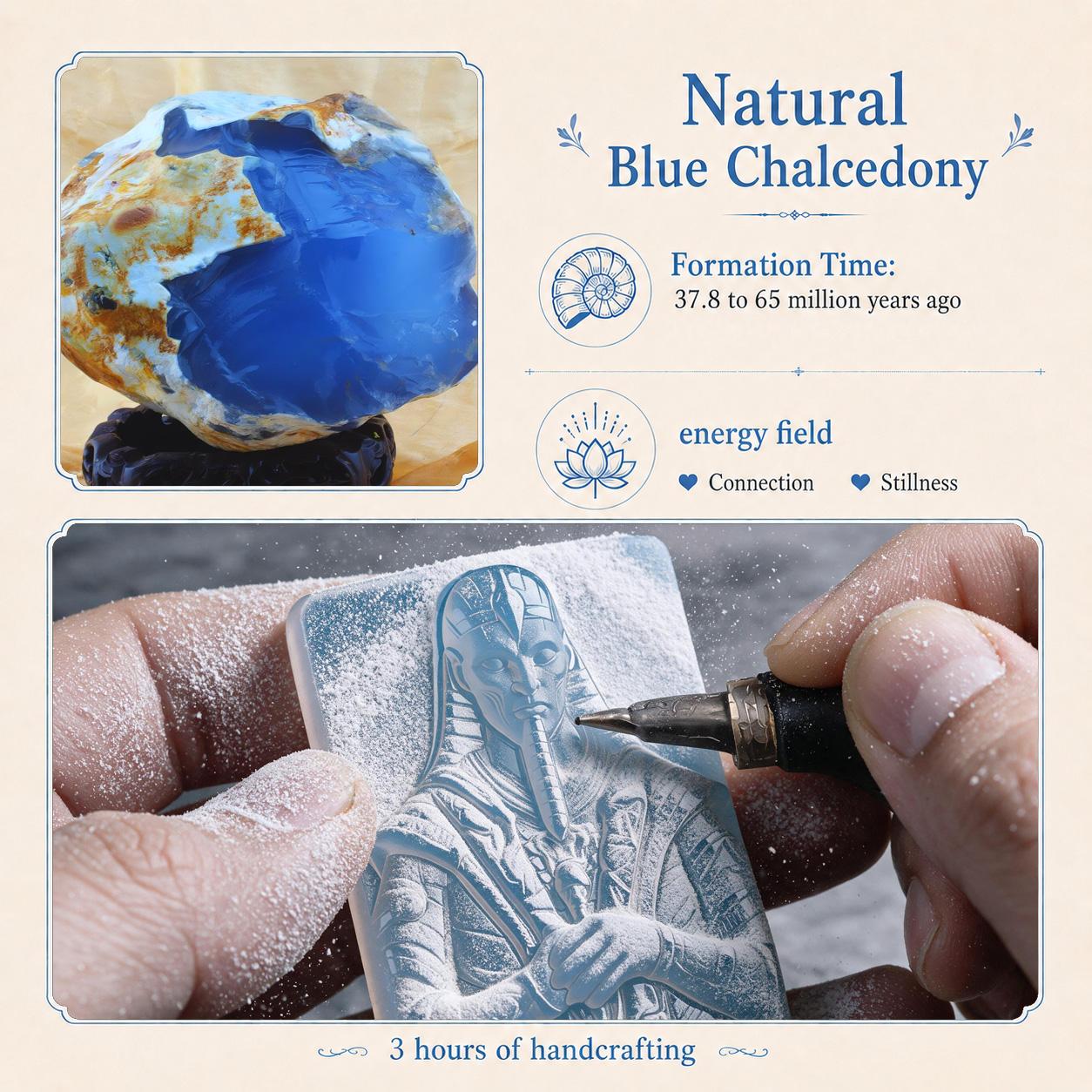
The Nephren-Kah black pharaoh pendant is our nod to the civilization that perfected the amulet: a pharaoh’s face, hand-carved from natural blue chalcedony, the same gesture Egypt made three thousand years ago — a face you can wear, a power you can carry. Hold it up to a light and the stone glows from within, the way only something born in the dark can.
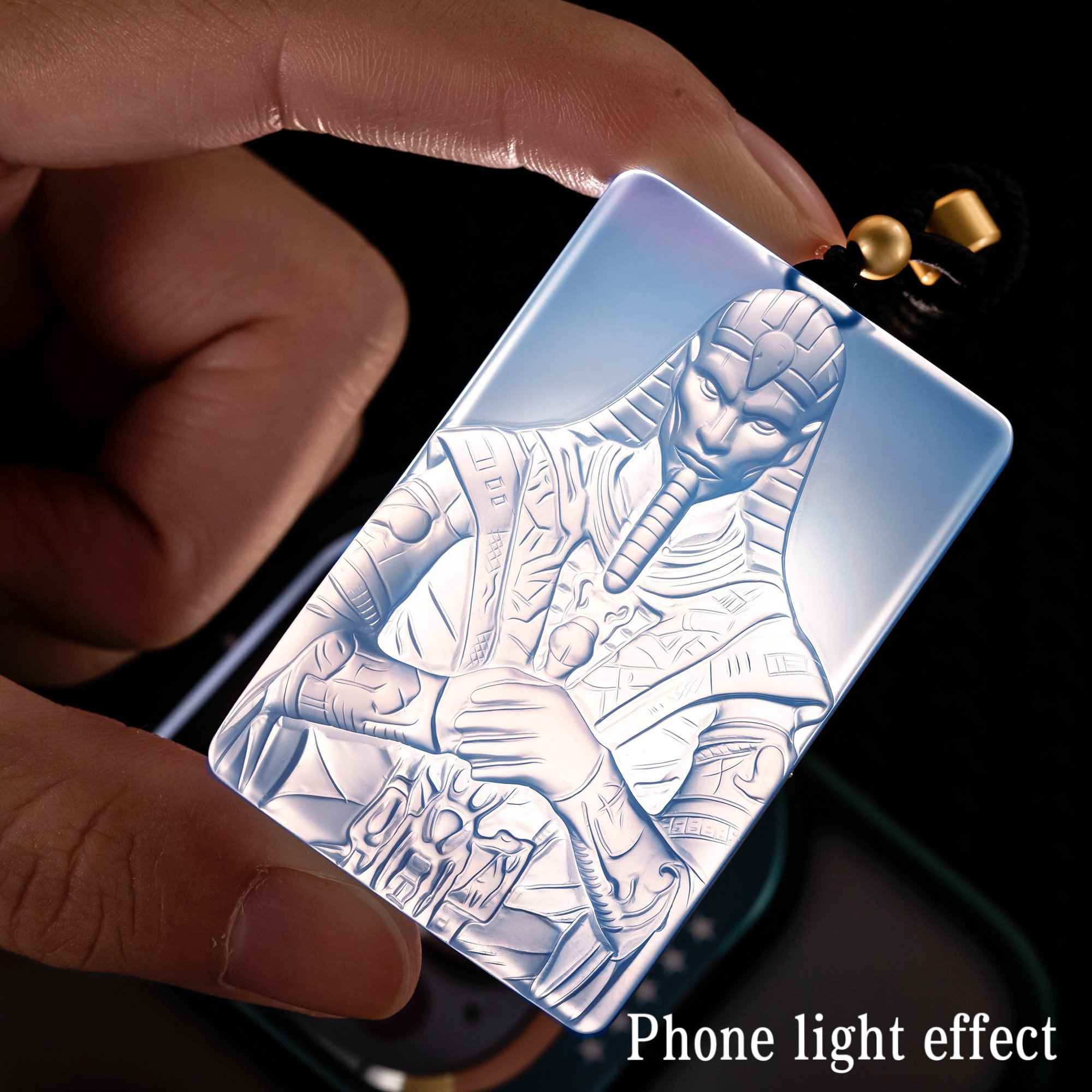
Machines can copy a shape. They cannot copy the reason. A hand-cut line carries the same message it carried forty millennia ago: someone made this for you, slowly, on purpose. If you want to understand why people still reach for that feeling in 2026, we wrote about it here.
So — what’s the oldest thing you own? And who are you keeping safe?
Frequently Asked Questions
What is the oldest amulet ever found?
The oldest known amulets are pierced animal teeth, shells, and small bones worn by Paleolithic humans roughly 40,000 years ago — about 35,000 years before writing existed. Archaeologists identify them as protective objects rather than decoration because of where they are found in burials: deliberately placed against the chest, throat, and wrists of the dead.
Why did ancient Egyptians wear amulets?
Egyptians treated amulets as functional equipment, not jewelry. Each shape had a defined power: the scarab for rebirth, the Eye of Horus for healing, the tyet knot for the protection of Isis, the heart amulet to guard the soul during judgment after death. The living wore them daily, and the dead were buried with them — an Egyptian amulet was expected to work in both worlds.
What does an obsidian amulet symbolize?
In Aztec culture, obsidian was the stone of Tezcatlipoca, the Smoking Mirror — a material used by priests to see hidden things and by warriors for protection. Volcanic glass that is both mirror and blade, obsidian came to symbolize guarded vision: the ability to face darkness without being harmed by it. It remains one of the most-carried guardian stones in the world.
Are amulets still relevant today?
Yes — not as magic, but as anchors. A modern amulet is a grounding object: something solid, chosen, and worn close to the skin that steadies the person carrying it. The function has not changed in 40,000 years. Only the spelling has.