The Grimoire

Home / The Grimoire

Blue Chalcedony: 65 Million Years in the Dark

0

It's Not Blue Pigment. It's a Trick of Light.

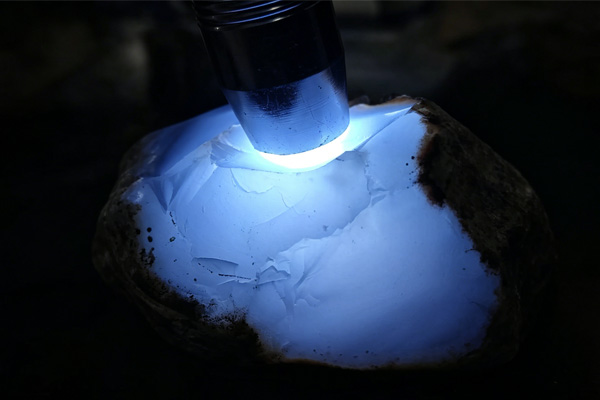
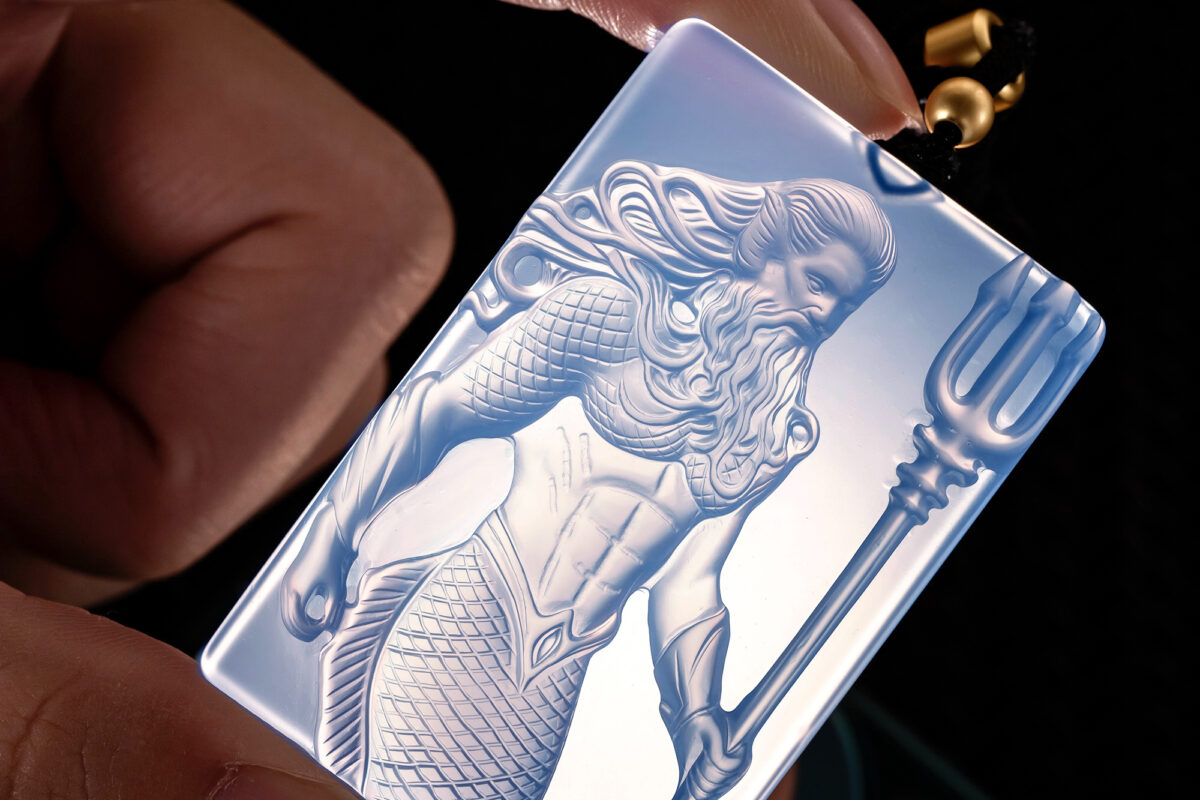
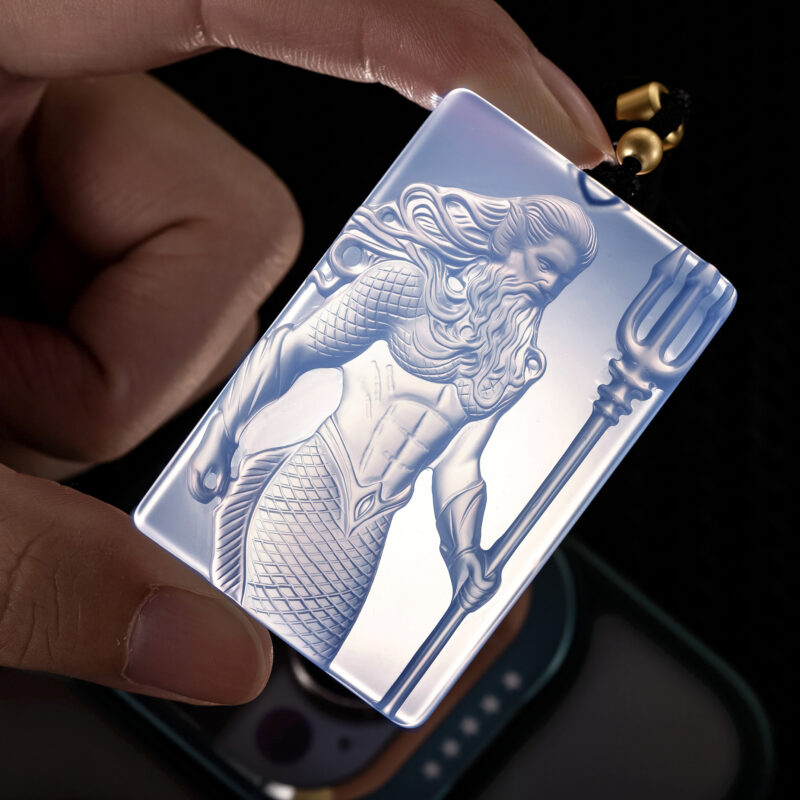
Most blue gemstones rely on impurities — cobalt, copper, iron — trace metals seeping in to create color. Not Blue Chalcedony. Its blue is not dyed by pigment. It happens when light scatters through billions of microscopic pores inside the stone, and only the blue wavelengths escape. Physicists call this the Tyndall Effect — the same reason the sky is blue.

A stone with no pigment, creating color through structure alone. That is dark aesthetics in a nutshell: the truth is not on the surface. It's where you can't see.

It Came from Volcanoes. Literally.

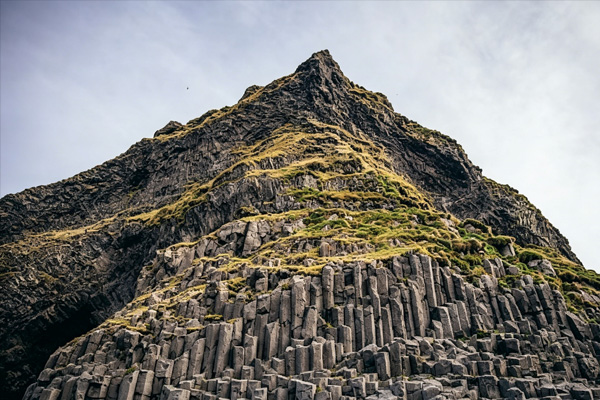
Blue Chalcedony forms in low-temperature hydrothermal environments — after volcanic eruptions, silica-rich groundwater seeps into cavities and fissures, cooling below 200°C and depositing layer by layer. No violent crystallization. No large crystal columns. It is Cryptocrystalline Quartz: countless nanoscale fibrous crystals interwoven, invisible to the naked eye, yielding only a soft, waxy luster.

Mohs hardness 6.5–7. Harder than steel, tougher than glass. Only diamond and sandpaper can scratch it.

Humans Have Worn It for at Least 2,000 Years.

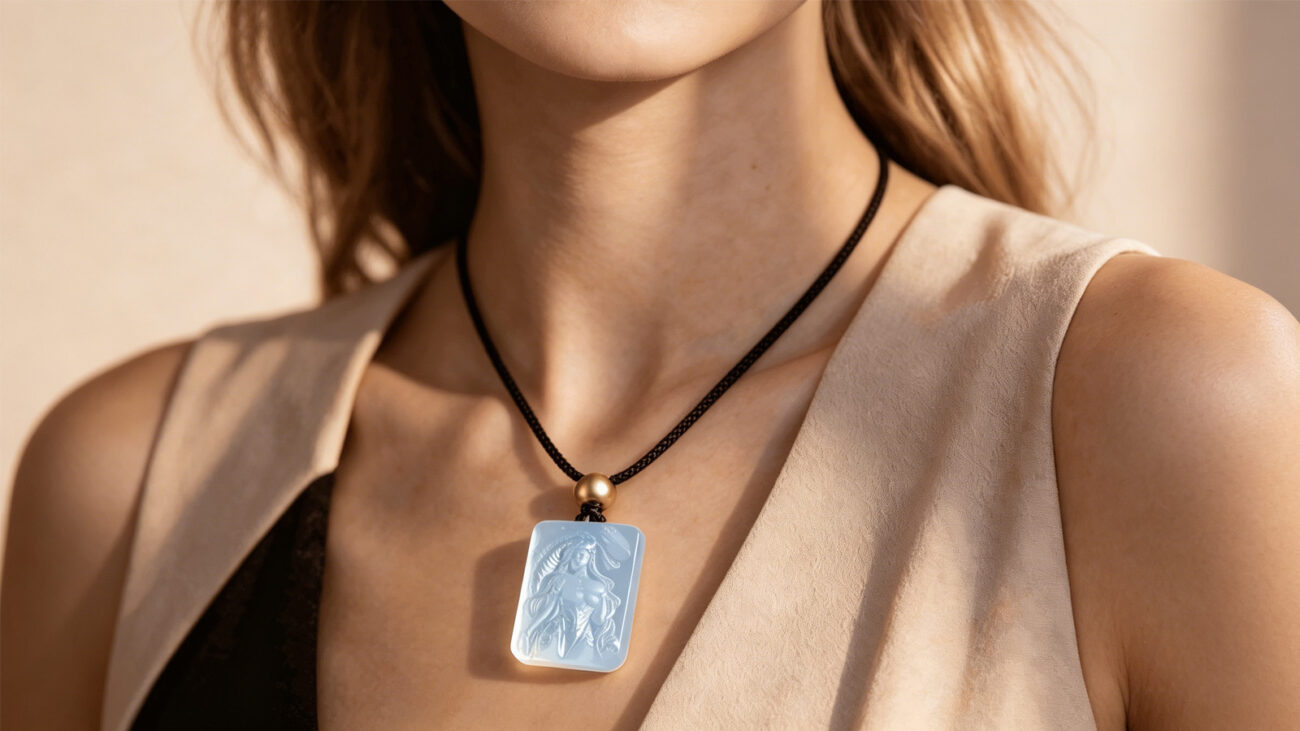
The Sarıcakaya veins in Turkey's Eskişehir region have been mined since Roman times. Carbon isotope dating of the mine tunnels points to around 100 AD — by then, Romans were already turning this "Turkish blue" into rings, necklaces, and amulets, worn around the neck.

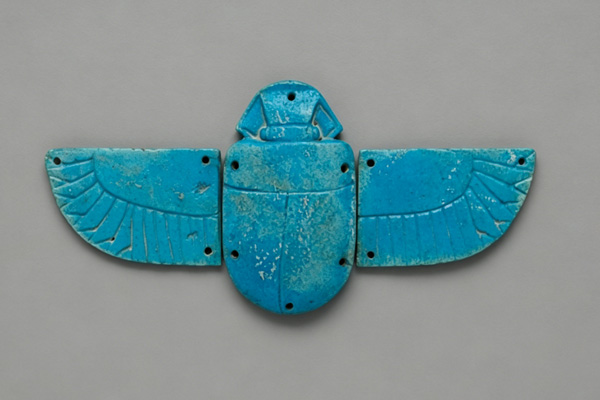
Around the same time, Egyptians were using chalcedony for scarab amulets. The Chinese were mining Blue Chalcedony from the Dulan Mountain in the Coastal Range — veins still exist today in the andesite fissures of eastern Taiwan.

Three continents. Three civilizations. All using it. This is not a coincidence — that translucent, soft blue, as if lifted from deep water, naturally evokes the feeling of something "from another world."

What Happened in 65 Million Years?

years ago. Blue Chalcedony itself, as a member of the chalcedony family, may have begun forming even earlier — in the Miocene or even the Late Cretaceous.

65 million years is a rough but accurate anchor — the age of the dinosaur extinction, the final splitting of the Atlantic, the era when Earth transformed from a "reptile world" into a "mammal world." The pale blue stone in your hand was quietly lying deep in the Earth's crust through all of it, growing layer by layer.

Why We Use It for Amulets.

In crystal healing traditions, Blue Chalcedony is associated with the Throat Chakra — communication, expression, calm. It is considered a stone that "quiets anxiety," suited for those who need to speak important words without being overwhelmed by emotion.

Of course, we are not here to sell spiritual courses. We chose Blue Chalcedony because:

It's hard enough — Mohs 6.5–7, no need for delicate daily care
It's beautiful — a blue not dyed by pigment, shifting in light, deepening in shadow
It's old — 65 million years of silence carries more weight than any brand story

Someone who wears Blue Chalcedony doesn't need to explain why they chose it. The stone speaks for itself.

Three Things to Remember About Blue Chalcedony:

Its blue comes from light scattering, not pigment — physics is more honest than chemistry.
Humans began mining it in Roman times — this is not trendy. It’s archaeology.
It slept underground for tens of millions of years. What you wear is time compressed into stone, older than humanity itself.
The stone doesn’t ask to be worn. It just waits. For 65 million years, that’s been enough.