The Grimoire
Home / The Grimoire
9 Hours Under the Blade: How a Pendant Is Born
Not a Machine Pressing a Button and Shipping in Bulk.
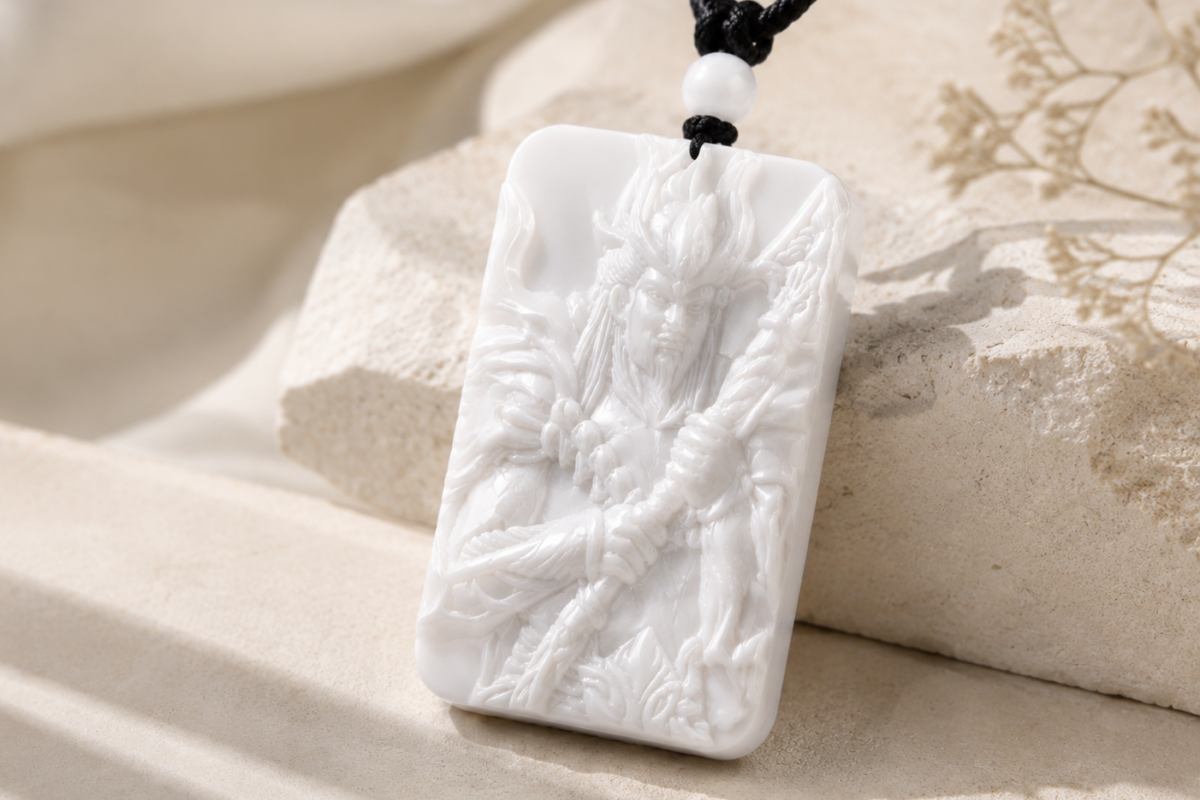
Every Z-OATH pendant goes through five stages from raw stone to finished piece. No molds. No assembly line. The entire process takes roughly 9 hours — sometimes longer, depending on the stone's hardness and the complexity of the carving.
This article is a full disclosure. Not to show off, but because: the value of hand-carving shouldn't live only inside the word "handmade." It should be seen.
Step 1: Cutting the Stone (~1 hour)
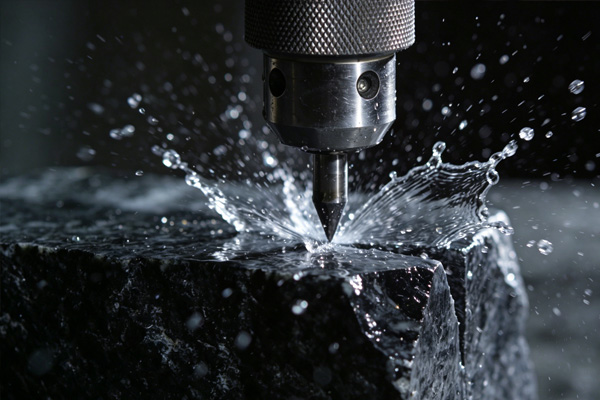
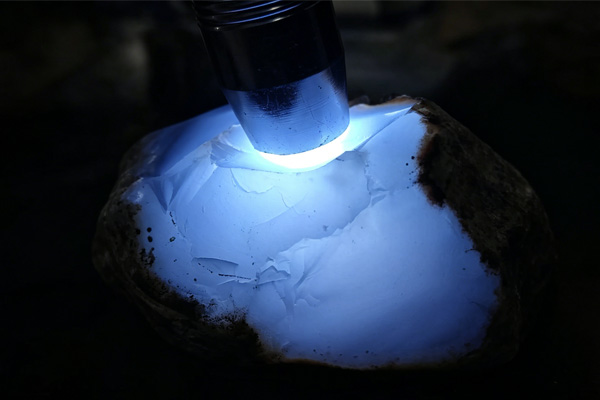
From rough stone to slab, then cut into a piece sized for carving. This is the most violent stage — diamond saw blade spinning at high speed, water and stone chips spraying everywhere, deafening noise. But it's precisely this step that determines the foundation of the entire pendant.
The cut surface must be flat. The thickness must be even. One wrong cut, and the piece is ruined. The stone doesn't give second chances.
Step 2: Drawing on the Stone (~1 hour)
It's not "carve whatever you want." It's "carve what the stone allows you to."
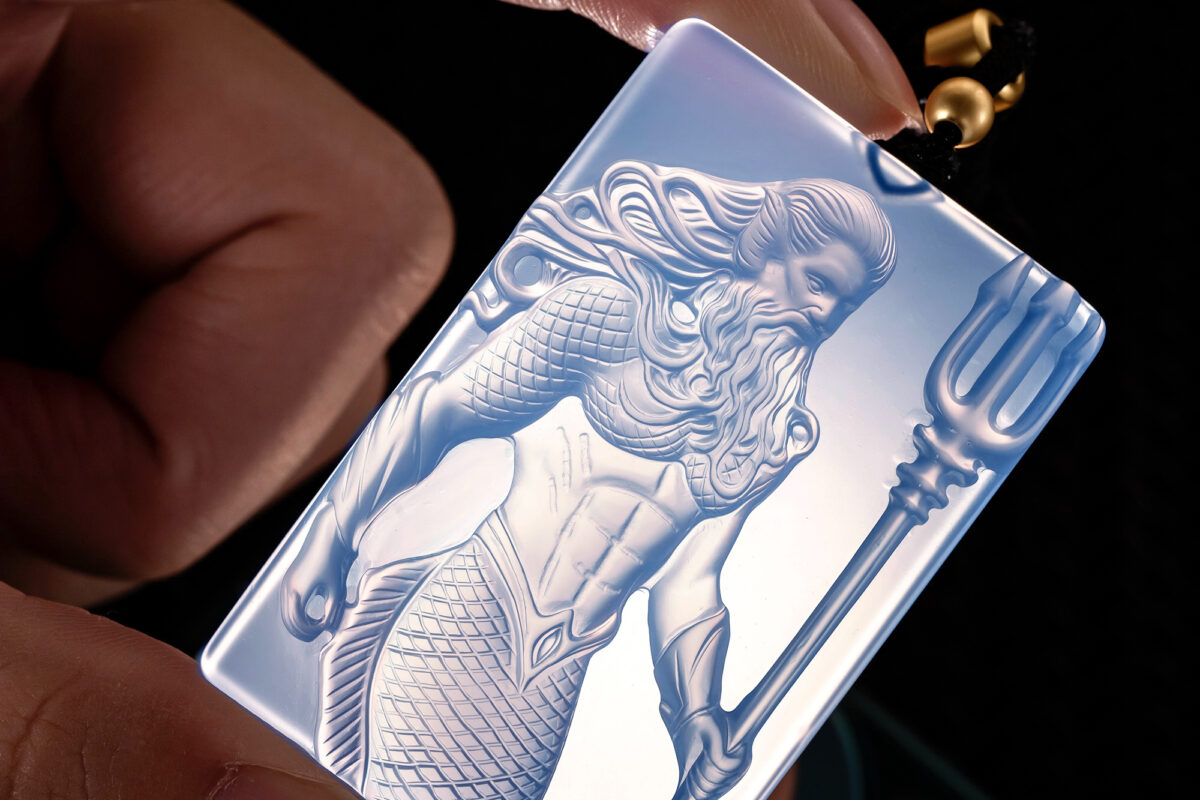
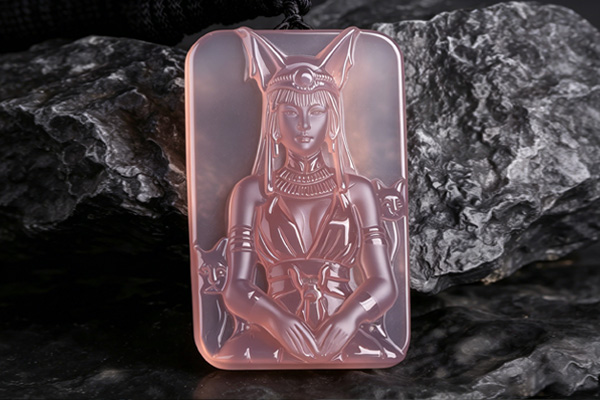
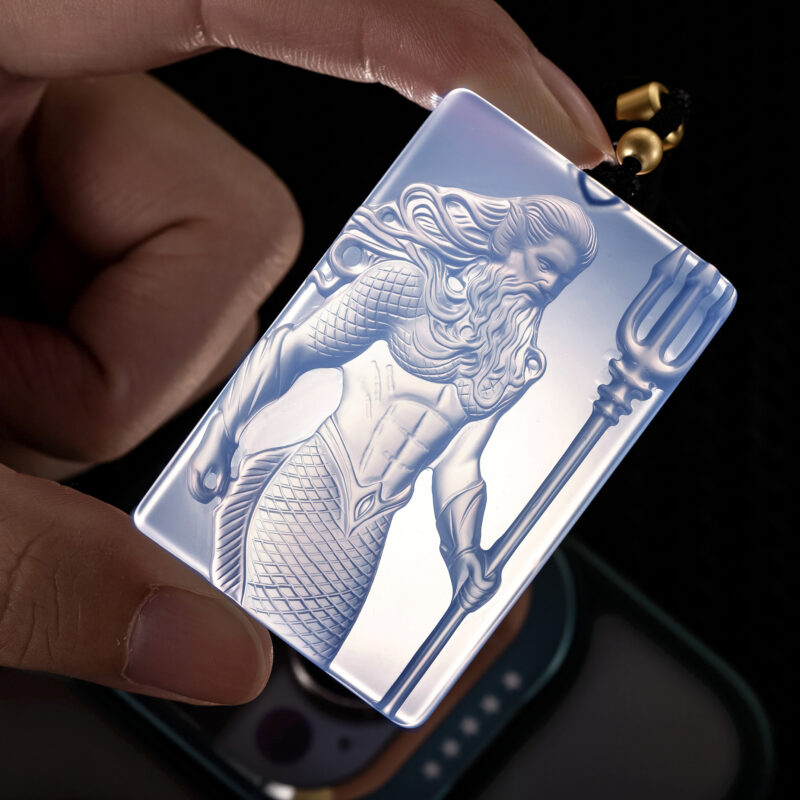
A natural dark arc in a piece of Purple Agate's grain might be exactly where Bastet's cat ears should go. A translucent patch in the upper-middle of a Blue Chalcedony slab might be the perfect spot for the Hydra mermaid's face. Sketch with pencil on the stone surface, erase, sketch again. Until the stone itself nods.
Design is subtraction. What you draw is not "what to keep" — but "what to remove." A relief emerges from beneath the stone's surface. Every stroke you draw decides which parts will be cut away forever.
Step 3: Carving (~3 hours)
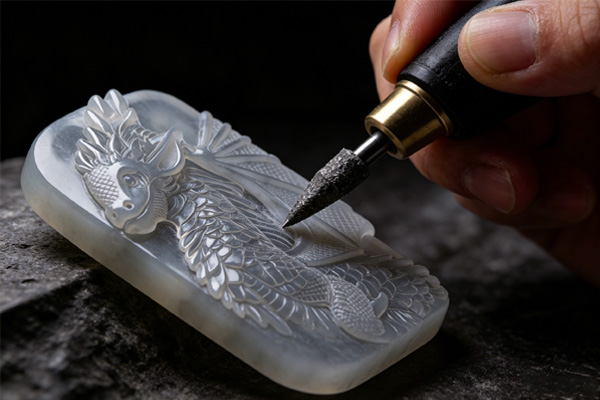
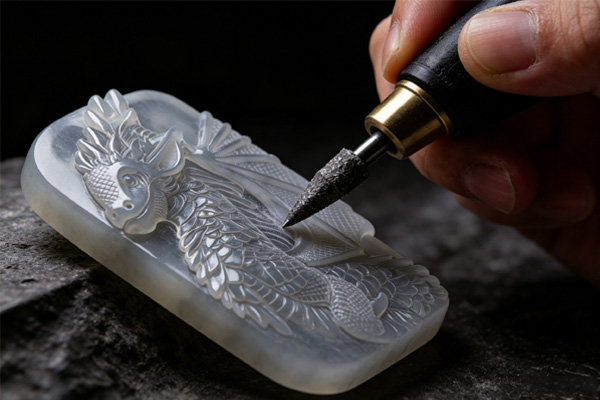
Diamond burrs. One cut at a time. Pulling the relief out from beneath the stone's surface. This is the heart of the entire process — not subtraction, but awakening.
The face — the curve of the eyes, the thickness of the lips, the angle of the forehead. 0.1 mm off, and the expression is wrong.
The attire — the direction of folds, the texture of metal ornaments, the line of a weapon. Every cut is final.
Scales / feathers / hair — some must be carved one by one, others require crosshatching. This is where patience is tested hardest.
There is no shortcut in carving. Stop when tired. Stop when the hand shakes. The stone won't rush you — it has waited tens of millions of years. A few more minutes won't matter.
Step 4: Machine Rough Polishing (~3 hours)
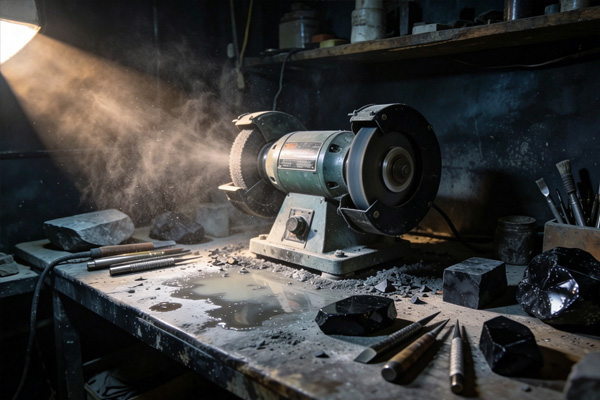
After carving, the pendant's surface is covered with tool marks and rough textures left by the burrs. This stage uses a machine for rough polishing — a vibratory or rotary tumbler with abrasives in different grits, smoothing the relief's surface from rough to refined.
Not grinding away the carved details. It's about letting the stone's natural luster begin to emerge, while keeping every carved detail intact. Chalcedony and Agate have different textures — Blue Chalcedony is softer, Purple Agate is harder. Machine speed and polishing time are adjusted accordingly for each.
Step 5: Hand Finishing (~1 hour)
What the machine can do is "smooth." What the hand can do is "right."
After machine rough polishing, the raised parts of the relief are smooth — but the recessed areas, detail edges, and facial expressions are places the machine can't reach. Fine sandpaper, wool buffing wheels, polishing compound — hand-finishing every spot the machine missed.
And — dark aesthetics rarely go full gloss. The raised parts of the relief might stay matte, while the recessed areas get a polished finish. This lets the relief tell its own story of depth under light. These decisions? A machine can't make them. Only the human eye can.
So, Is 9 Hours Worth It?
1 hour cutting. 1 hour drawing. 3 hours carving. 3 hours machine rough polishing. 1 hour hand finishing.
9 hours. Not for the sake of slowness, but for the sake of getting it right.
The blade doesn't rush. Neither does the stone.